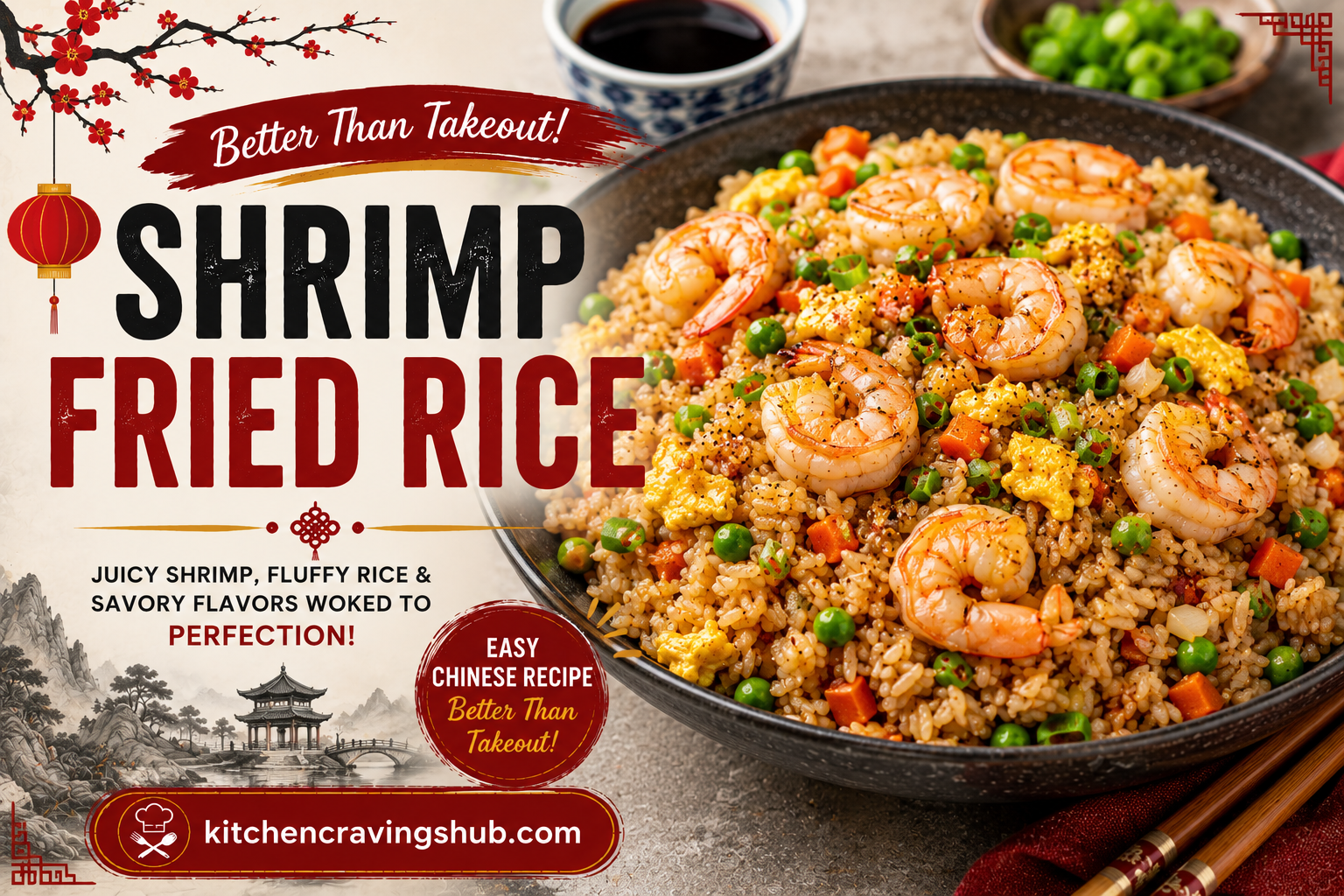
There is something wonderfully satisfying about a big bowl of shrimp fried rice. Fluffy grains of rice, plump juicy shrimp, fluffy scrambled egg, and a mix of vegetables, all tossed together with a savory soy sauce glaze. It is comforting, filling, and endlessly customizable, the kind of dish that makes an ordinary weeknight feel just a little more special. 😋
In this guide, we are going to cover everything you need to know about shrimp fried rice. We will talk about why this dish has become such a beloved staple, the ingredients you need, a full step by step recipe, tips for getting that perfect restaurant style texture, common mistakes to avoid, healthier variations, and answers to the most frequently asked questions. Let us get cooking. 🧑🍳
What Is Shrimp Fried Rice? 🤔
Shrimp fried rice is a stir fried rice dish made with cooked rice, tender shrimp, scrambled egg, and a mix of vegetables like peas, carrots, and onions, all seasoned with soy sauce and stir fried together at high heat. It belongs to the broader family of fried rice dishes that have been a fundamental part of Chinese cooking for centuries, originally developed as a resourceful way to use up leftover rice rather than letting it go to waste.
Cold, day old rice actually works best for fried rice because the grains have had time to dry out slightly, which prevents the dish from turning mushy or clumpy during stir frying. This practical, waste reducing origin is part of why fried rice remains such a beloved and endlessly adaptable dish across Chinese cuisine and beyond.
Shrimp fried rice specifically has become one of the most popular options on Chinese American restaurant menus, prized for pairing the naturally sweet, delicate flavor of shrimp with the comforting, savory base of classic fried rice. It works wonderfully as a complete meal on its own or as a side dish alongside other favorites. 🌟
Why People Love Shrimp Fried Rice ❤️
There are so many reasons this dish has earned such a devoted following.
First, shrimp cooks incredibly quickly, which means this entire dish comes together fast without sacrificing flavor. In just a matter of minutes, the shrimp turns tender and pink, ready to be tossed into the rest of the rice.
Second, it is endlessly customizable. Fried rice welcomes almost any vegetable you have on hand, making it one of the most flexible dishes you can make with whatever is sitting in your fridge.
Third, the flavor combination is universally appealing. The naturally sweet, delicate taste of shrimp pairs beautifully with the savory soy sauce, fluffy rice, and scrambled egg, creating a dish that feels both comforting and a little special.
Finally, it is a fantastic way to use up leftover rice, turning a simple pantry staple into a genuinely satisfying meal packed with protein and vegetables. 🏠
Ingredients You Will Need 🛒
Here is everything required to make a fantastic batch of shrimp fried rice at home.
For the Rice
Cooked white rice, ideally day old and cold from the refrigerator. Freshly cooked rice tends to be too moist and can turn mushy when stir fried.
For the Shrimp
Medium or large shrimp, peeled and deveined. Salt and pepper, for basic seasoning. A small amount of oil, for searing the shrimp.
For the Eggs
Eggs, lightly beaten, for scrambling directly into the fried rice.
For the Vegetables
Peas and carrots, a classic combination, either fresh or frozen. Onion, diced. Garlic, minced, for aromatic depth. Green onions, sliced, for garnish and a fresh finishing touch.
For the Sauce
Soy sauce, the main seasoning for the entire dish. Oyster sauce, optional, for added depth and umami richness. Sesame oil, for a nutty, fragrant finish. A pinch of white pepper, optional, for a subtle warmth common in authentic fried rice recipes.
For Cooking
Vegetable oil or peanut oil, for stir frying at high heat. 🌿
Step by Step Recipe: How to Make Shrimp Fried Rice 👩🍳
This recipe generally serves about four people and takes around twenty five minutes from start to finish, assuming you already have cooked, chilled rice on hand.
Step 1: Prepare Your Ingredients
Since fried rice comes together quickly once you start cooking, it helps to have everything prepped and ready to go beforehand. Pat the shrimp dry, beat the eggs, chop the vegetables, and measure out your sauces before turning on the stove.
Step 2: Cook the Shrimp
Heat a wok or large skillet over medium high heat and add a spoonful of oil. Season the shrimp with a bit of salt and pepper, then add them to the hot pan in a single layer. Cook for about one to two minutes per side, just until pink and opaque. Shrimp cooks very quickly, so watch closely to avoid overcooking. Remove the shrimp from the pan and set aside.
Step 3: Scramble the Eggs
In the same pan, add a touch more oil if needed and pour in the beaten eggs. Let them sit for a few seconds before scrambling gently with a spatula, breaking them into small, fluffy pieces. Once mostly set, remove the eggs from the pan and set them aside with the shrimp.
Step 4: Stir Fry the Vegetables
Add a bit more oil to the pan and increase the heat to high. Add the diced onion and cook for about a minute, then add the garlic and cook for another thirty seconds until fragrant. Add the peas and carrots, stir frying for another minute or two until heated through and just tender.
Step 5: Add the Rice
Push the vegetables to one side of the pan and add the cold, day old rice to the empty space. Break up any large clumps with your spatula, then stir fry the rice for about two to three minutes, tossing it with the vegetables, allowing the rice to heat through and pick up a bit of color from the hot pan.
Step 6: Season the Rice
Drizzle soy sauce and oyster sauce, if using, evenly over the rice, tossing thoroughly so every grain gets coated. Start with a smaller amount and add more gradually to taste, since it is easy to make the rice overly salty or wet with too much sauce added at once.
Step 7: Combine Everything
Return the cooked shrimp and scrambled eggs to the pan, tossing everything together until well combined and heated through. Add a pinch of white pepper if using, which gives the dish a subtle, authentic warmth.
Step 8: Finish and Serve
Drizzle a small amount of sesame oil over the top and give the dish one final toss. Garnish generously with sliced green onions. Serve immediately while everything is hot and fragrant. 🍚
Pro Tips for the Best Shrimp Fried Rice 💡
Use cold, day old rice whenever possible. Freshly cooked rice contains too much moisture and tends to clump together or turn mushy when stir fried. If you only have fresh rice, spread it out on a baking sheet and refrigerate it uncovered for about an hour to dry it out slightly before cooking.
Do not overcook the shrimp. Since shrimp cook so quickly, it is easy to leave them in the pan too long, resulting in a tough, rubbery texture instead of tender bites. Remove them from the heat as soon as they turn pink and opaque.
Cook everything separately before combining. Searing the shrimp, scrambling the eggs, and stir frying the vegetables individually before bringing everything together ensures each component is cooked properly.
Use high heat throughout the cooking process. High heat helps the rice develop a slightly toasted flavor and prevents everything from steaming instead of properly stir frying.
Add soy sauce gradually. It is much easier to add more seasoning than to fix rice that has become too salty or too wet from too much sauce added at once.
Break up rice clumps before adding them to the pan. Cold rice often sticks together in the refrigerator, so gently breaking it apart with your hands or a fork before cooking helps it heat evenly.
Common Mistakes to Avoid ⚠️
Overcooking the shrimp. Since shrimp cook so fast, it is easy to leave them in the pan too long, resulting in a rubbery texture rather than tender, juicy bites.
Using freshly cooked, warm rice. This is one of the most common reasons homemade fried rice turns out mushy instead of light and fluffy.
Adding too much soy sauce at once. This can quickly oversaturate the rice, making it salty and slightly soggy rather than perfectly seasoned.
Overcrowding the pan. Too much rice or too many ingredients at once lowers the pan temperature and prevents that signature slightly toasted, stir fried texture.
Skipping the day old rice step entirely. While it might seem like a minor detail, using rice that has had time to dry out in the refrigerator makes a significant difference in the final texture of the dish.
Healthier Ways to Make Shrimp Fried Rice 🥗
If you want a lighter version of this dish, here are a few simple adjustments to try.
Use brown rice instead of white rice for extra fiber, though keep in mind it has a slightly different texture and may need a touch more oil to prevent sticking.
Substitute cauliflower rice for a lower carbohydrate option, adjusting the cooking time since cauliflower rice cooks much faster than regular rice.
Reduce the amount of oil used for stir frying by working in a well seasoned or nonstick pan.
Load up on extra vegetables like broccoli, snap peas, or bell peppers to increase the fiber and nutrient content of the dish while stretching the recipe further.
Use low sodium soy sauce to help control the overall salt content of the finished dish. 🌾
What to Serve With Shrimp Fried Rice 🍽️
Shrimp fried rice is hearty enough to serve as a complete meal on its own, but it also works wonderfully as a side dish alongside other Chinese favorites like sweet and sour chicken, honey garlic pork, or Szechuan green beans.
For a lighter accompaniment, serve it alongside a simple cucumber salad or a light egg drop soup. If you are hosting a bigger dinner, spring rolls or dumplings make a great starter to round out a full homemade Chinese meal spread. 🥢
Storing and Reheating Leftovers 📦
Store leftover shrimp fried rice in an airtight container in the refrigerator for up to three days. Since shrimp is more delicate than other proteins, it is best enjoyed within a few days rather than stored for an extended period.
To reheat, use a skillet over medium high heat with a small splash of water or oil, stirring gently until heated through. Be careful not to overheat, since shrimp can become rubbery when reheated too aggressively. If using a microwave, cover loosely and heat in short bursts on a lower power setting, stirring in between.
Frequently Asked Questions ❓
Why does fried rice taste better with cold rice? Cold, day old rice has had time to dry out slightly in the refrigerator, which prevents the grains from becoming mushy or clumping together when stir fried. Freshly cooked rice contains too much moisture for the best texture.
Can I make shrimp fried rice with freshly cooked rice if I do not have leftovers? Yes, though it is best to spread the freshly cooked rice out on a baking sheet and let it cool and dry out in the refrigerator for about an hour before using it, which helps mimic the texture of day old rice.
What size shrimp works best for fried rice? Medium sized shrimp tend to work well since they are easy to eat in a single bite alongside the rice, though large shrimp can also be used, just chopped into smaller pieces if desired.
Can I use frozen shrimp for this recipe? Yes, just make sure to thaw the shrimp completely and pat them very dry before cooking, since excess moisture can prevent a proper sear and cause the dish to become watery.
Can I make this dish gluten free? Yes, use gluten free soy sauce and gluten free oyster sauce, both of which are widely available at most grocery stores.
Can I combine shrimp with other proteins in this recipe? Absolutely. Shrimp pairs wonderfully with chicken, pork, or even a fried egg on top, making it easy to customize this dish based on what you have on hand or if you want to stretch it further to feed a bigger group.
Final Thoughts 🌈
Shrimp fried rice is proof that a handful of simple ingredients can come together to create something truly comforting and satisfying. The naturally sweet, tender shrimp pairs beautifully with fluffy rice, fluffy scrambled egg, and a savory soy sauce glaze, resulting in a dish that feels just as good on a busy weeknight as it does when serving guests.
Once you get comfortable with the basic technique of using cold rice, cooking each component separately, and seasoning gradually, this dish becomes a reliable favorite you will want to return to again and again. Feel free to swap in whatever vegetables you have on hand to make it your own.
So save that leftover rice, heat up your pan, and get ready to enjoy the comforting, savory flavor of homemade shrimp fried rice. Happy cooking! 🍳🥳