
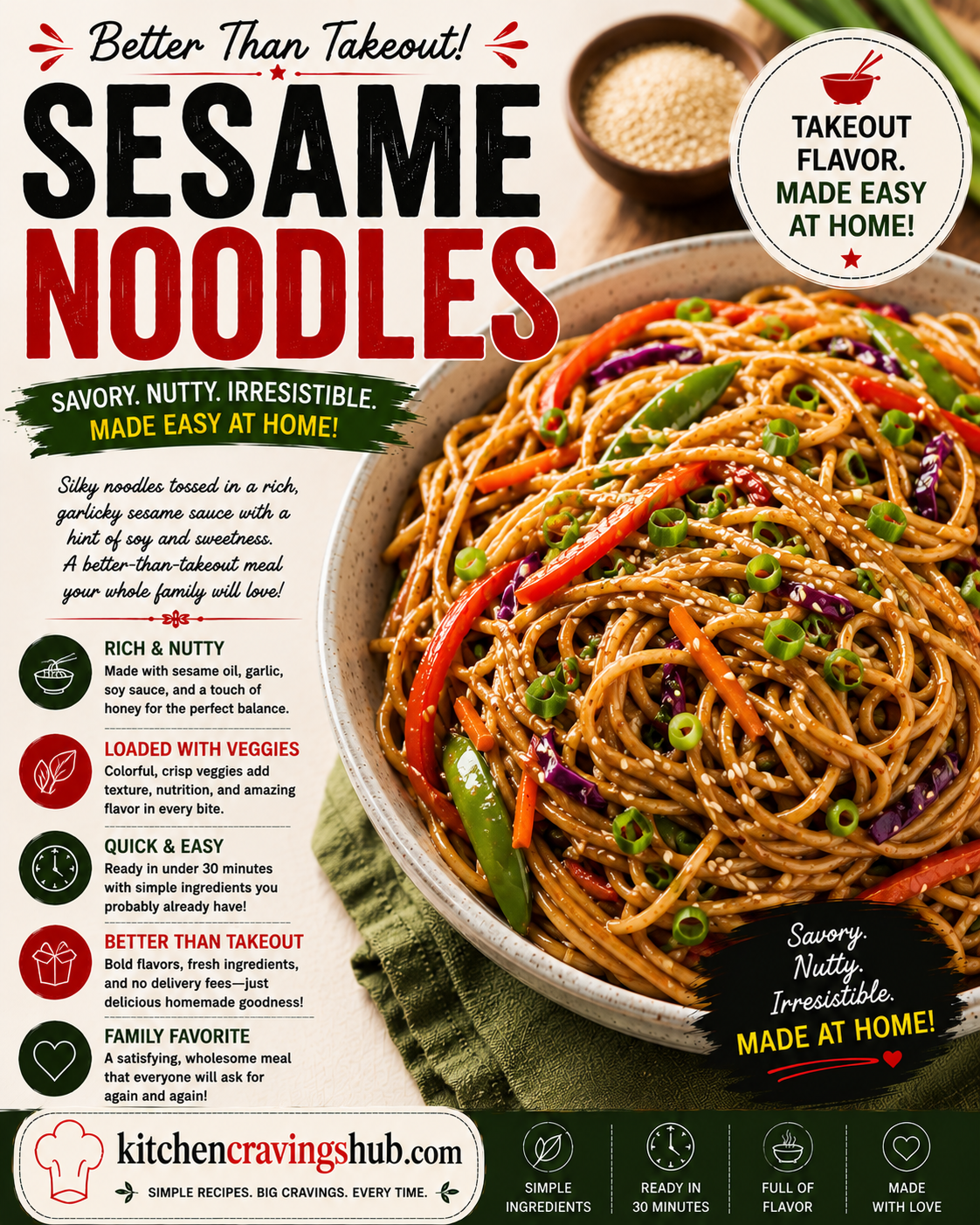
There is something incredibly satisfying about a bowl of cold or warm sesame noodles. Slick, tender noodles coated in a rich, nutty sauce made from sesame paste or peanut butter, balanced with soy sauce, garlic, and a little heat from chili oil. It is creamy, savory, and just a little bit addictive, the kind of dish you find yourself craving on repeat. 😋
In this guide, we are going to cover everything you need to know about sesame noodles. We will talk about where this dish comes from, why it has become such a favorite, the ingredients you need, a full step by step recipe, tips for getting that sauce perfectly smooth and balanced, common mistakes to avoid, healthier variations, and answers to the most frequently asked questions. Let us get into it. 🧑🍳
What Are Sesame Noodles? 🤔
Sesame noodles is a dish featuring wheat noodles tossed in a rich, creamy sauce built primarily from sesame paste, soy sauce, vinegar, garlic, and a touch of sugar, often finished with a drizzle of chili oil for warmth and depth. The dish can be served warm right after tossing, or chilled for a refreshing cold noodle salad, making it a versatile option depending on the season or your mood.
This style of noodle dish has roots in various regions of China, with cold sesame noodles in particular becoming especially popular in Sichuan style cooking, where bold, layered flavors and a bit of heat are common themes. Sesame paste, made from toasted ground sesame seeds, gives the sauce its signature nutty richness, similar in texture to tahini but with a more toasted, robust flavor.
Sesame noodles have become a beloved staple on Chinese American restaurant menus, often served as a cold appetizer or side dish, though they are hearty enough to enjoy as a light main course on their own. 🌟
Why People Love Sesame Noodles ❤️
There are several reasons this dish has earned such a devoted following.
First, the sauce is simply irresistible. The combination of nutty sesame paste, savory soy sauce, a touch of sweetness, and a hint of tang creates a flavor that feels rich and complex despite using relatively few ingredients.
Second, it is incredibly versatile when it comes to temperature. Sesame noodles taste wonderful served warm right after cooking, but they are just as delicious cold, making them a great make ahead option for meal prep or a refreshing dish during warmer months.
Third, it comes together quickly with minimal cooking involved. Since the sauce requires no actual cooking beyond whisking ingredients together, this dish is one of the fastest options when you want something flavorful without much effort.
Finally, it pairs beautifully with almost anything. Sesame noodles work as a light meal on their own, a side dish alongside grilled meats, or a base you can top with shredded chicken, cucumber, or other fresh vegetables. 🥒
Ingredients You Will Need 🛒
Here is everything required to make a fantastic batch of sesame noodles at home.
For the Noodles
Fresh or dried Chinese wheat noodles, sometimes labeled as lo mein noodles or Chinese egg noodles. Spaghetti or linguine can work as a substitute if needed, though the texture will differ slightly.
For the Sesame Sauce
Sesame paste or tahini, which forms the rich, nutty base of the sauce. Peanut butter, optional, sometimes used alongside or in place of sesame paste for extra creaminess and a slightly different flavor profile. Soy sauce, for saltiness and umami depth. Rice vinegar, for a touch of brightness and tang that balances the richness of the sesame paste. Sugar or honey, for a subtle sweetness that rounds out the sauce. Sesame oil, for extra nutty fragrance. Garlic, minced or grated, for aromatic punch. Chili oil or chili crisp, optional, for warmth and a bit of spice. Warm water, used to thin the sauce to the right consistency.
For Garnish and Mix Ins
Cucumber, julienned, for fresh crunch. Green onions, sliced, for a fresh finishing touch. Toasted sesame seeds, for garnish and extra nuttiness. Shredded chicken or crushed peanuts, optional, if you want to turn this into a heartier main dish. 🌿
Step by Step Recipe: How to Make Sesame Noodles 👩🍳
This recipe generally serves about four people and takes around twenty five minutes from start to finish.
Step 1: Cook the Noodles
Bring a large pot of water to a boil and cook the noodles according to the package instructions, usually just a few minutes for fresh noodles or a bit longer for dried. You want the noodles to be tender but still have a slight bite. Drain the noodles and rinse briefly under cold water if you plan to serve them cold, or toss with a small amount of sesame oil if serving warm to prevent sticking.
Step 2: Make the Sesame Sauce
In a bowl, whisk together sesame paste, soy sauce, rice vinegar, sugar, sesame oil, and minced garlic. The mixture will look thick and a bit clumpy at first. Gradually whisk in warm water, a spoonful at a time, until the sauce reaches a smooth, pourable consistency that coats the back of a spoon without being watery. If using chili oil, whisk it in now, adjusting the amount based on how much heat you would like.
Step 3: Taste and Adjust
Taste the sauce and adjust as needed. If it tastes too thick or intense, add a bit more warm water to loosen it. If it needs more brightness, add a splash more rice vinegar. If you prefer it sweeter, add a touch more sugar or honey. This sauce is very forgiving, so feel free to tailor it to your own taste.
Step 4: Toss the Noodles
Pour the sesame sauce over the cooked and drained noodles. Using tongs or two forks, toss thoroughly until every strand of noodle is well coated in that rich, glossy sauce. Take your time with this step since evenly coated noodles make a big difference in the final result.
Step 5: Add Mix Ins
If you are adding cucumber, shredded chicken, or other toppings, toss them in now, or reserve them to layer on top for a more polished presentation.
Step 6: Garnish and Serve
Top the noodles with sliced green onions and a generous sprinkle of toasted sesame seeds. Serve immediately if enjoying warm, or refrigerate for at least thirty minutes if you prefer them cold. 🍚
Pro Tips for the Best Sesame Noodles 💡
Thin the sauce gradually with warm water. Adding all the water at once can make it difficult to control the final consistency, so go slowly and adjust as you go.
Use warm, not cold, water when thinning the sauce. Warm water helps the sesame paste blend more smoothly and prevents the sauce from seizing up or becoming clumpy.
Rinse the noodles under cold water if serving chilled. This stops the cooking process and prevents the noodles from becoming mushy or sticking together as they cool.
Taste as you go. Since sesame paste brands vary quite a bit in thickness and flavor intensity, tasting and adjusting the sauce is the best way to get consistent, delicious results every time.
Toss the noodles thoroughly. Sesame sauce is thick, so make sure to really work it into every strand rather than just pouring it on top and giving a quick stir.
Add chili oil gradually if you are unsure about spice levels. You can always add more, but it is harder to tone down a sauce that has become too spicy.
Common Mistakes to Avoid ⚠️
Adding too much water at once when thinning the sauce. This can make the sauce too thin very quickly, so it is better to add water gradually and check the consistency as you go.
Using cold water to thin the sesame paste. This can cause the paste to seize up and become clumpy rather than smooth, so always use warm water for this step.
Overcooking the noodles. Noodles that are too soft will not hold up well once tossed in the thick sesame sauce and can turn mushy, especially if serving the dish cold.
Not tasting the sauce before serving. Sesame paste brands vary widely in thickness and flavor, so skipping the tasting step can result in a sauce that is either too thick, too thin, or unbalanced in flavor.
Skipping the garnish. Toasted sesame seeds and fresh green onions add both flavor and visual appeal, so do not skip this final touch.
Healthier Ways to Make Sesame Noodles 🥗
If you want a lighter version of this dish, here are a few simple adjustments to try.
Use whole wheat noodles or a vegetable based noodle alternative to increase the fiber content of the dish.
Reduce the amount of sugar or honey in the sauce slightly, letting the natural nuttiness of the sesame paste carry more of the flavor.
Add plenty of fresh vegetables like cucumber, shredded carrots, or bell peppers to boost the nutrient content and add extra crunch.
Top with shredded chicken breast or edamame for a boost of protein that turns this dish into a more balanced, filling meal.
Use a light hand with the sesame oil, since it is calorie dense, relying more on the sesame paste itself for that signature nutty flavor. 🌾
What to Serve With Sesame Noodles 🍽️
Sesame noodles work wonderfully as a light main dish on their own, especially when topped with shredded chicken or tofu for extra protein. They also make a fantastic side dish alongside grilled meats, dumplings, or spring rolls.
For a complete meal, pair sesame noodles with a simple cucumber salad, a light egg drop soup, or a plate of steamed vegetables to round things out. They are also a popular addition to potlucks and picnics since they taste great served cold. 🥢
Storing and Reheating Leftovers 📦
Store leftover sesame noodles in an airtight container in the refrigerator for up to three days. The noodles will continue to absorb the sauce over time, which can make them taste even more flavorful, though they may also become slightly firmer.
Sesame noodles are traditionally enjoyed cold or at room temperature, so reheating is not always necessary. If you prefer them warm, gently reheat in a skillet over low heat with a small splash of water to loosen the sauce, stirring frequently. Avoid microwaving on high heat for too long, since this can cause the sauce to separate.
Frequently Asked Questions ❓
What is sesame paste, and can I substitute something else? Sesame paste is made from toasted ground sesame seeds and has a rich, nutty flavor. If you cannot find it, tahini works as a substitute, though it has a slightly different, less toasted flavor. Peanut butter can also be used, either alone or combined with sesame paste, for a slightly different but equally delicious result.
Are sesame noodles served hot or cold? Both are common. Sesame noodles are delicious served warm right after tossing, but they are equally popular served chilled, especially during warmer months, making this a versatile dish for any season.
Can I make sesame noodles ahead of time? Yes, this dish is great for meal prep. You can make the sauce and cook the noodles a day or two in advance, then toss everything together when you are ready to eat, or store them already combined in the refrigerator.
Can I make this dish gluten free? Yes, use gluten free noodles such as rice noodles, and substitute regular soy sauce with a gluten free soy sauce or tamari.
Is this dish very spicy? Not inherently. The base sauce is nutty and savory rather than spicy, but chili oil is often added for heat. You can adjust the amount of chili oil to control the spice level, or leave it out entirely for a milder version.
Can I add protein to sesame noodles? Absolutely. Shredded chicken, shrimp, tofu, or even a fried egg on top are all popular additions that turn this dish into a heartier, more complete meal.
Final Thoughts 🌈
Sesame noodles prove that a simple, uncooked sauce can deliver just as much flavor and satisfaction as something that spent hours on the stove. The rich, nutty sesame paste combined with savory soy sauce, a touch of sweetness, and optional chili heat creates a sauce that clings beautifully to every strand of noodle, resulting in a dish that feels indulgent yet comes together in under thirty minutes.
Whether you serve it warm on a chilly evening or chilled during the heat of summer, this dish is wonderfully adaptable to whatever mood or season calls for it. Top it with fresh vegetables, add some protein, or enjoy it exactly as is, sesame noodles are a reliable favorite that never seems to disappoint.
So whisk together that sauce, boil your noodles, and get ready to enjoy the rich, nutty comfort of homemade sesame noodles. Happy cooking! 🍳🥳