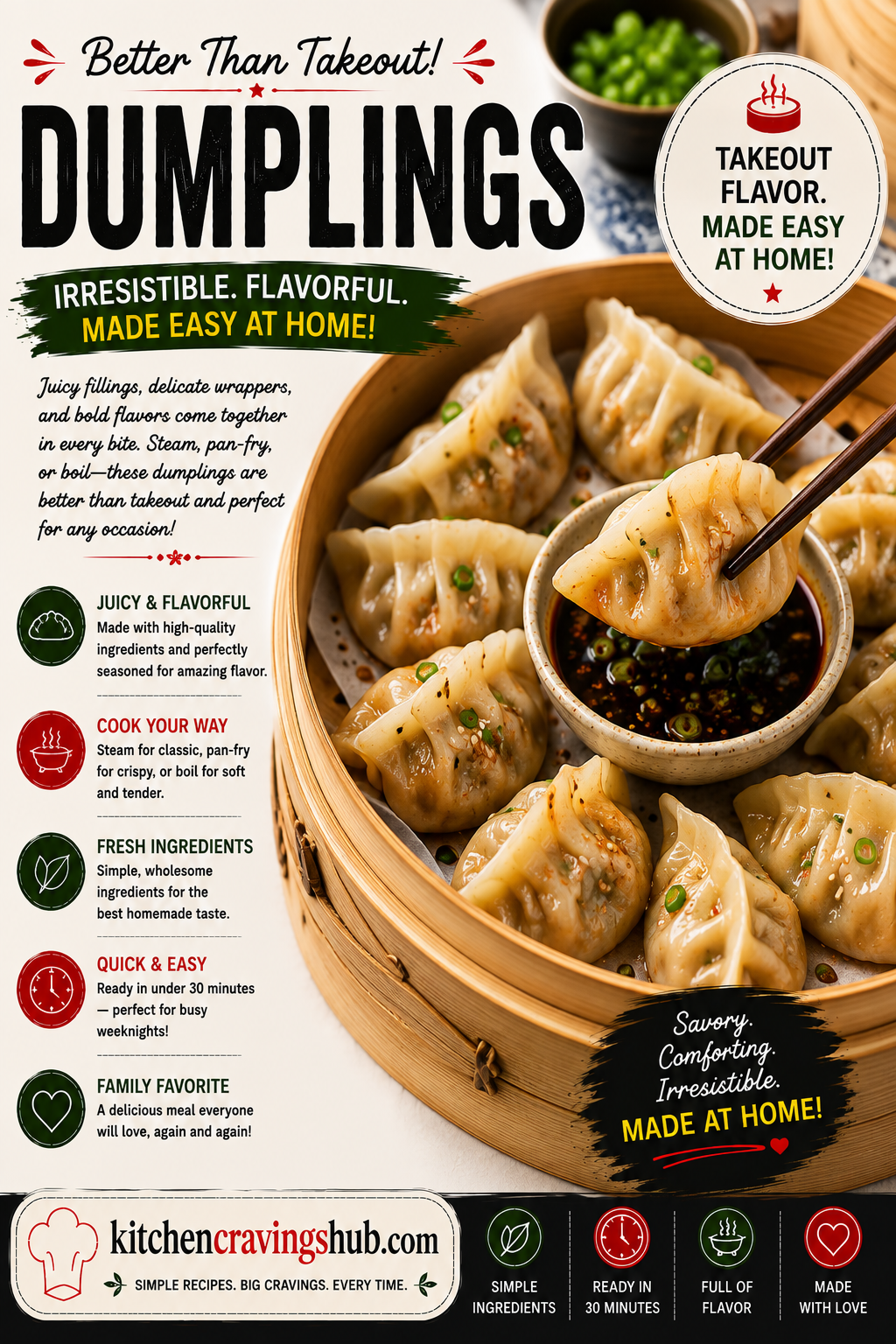
There is something incredibly satisfying about a plate of homemade dumplings. 🥟✨ That first bite, where you get the slightly chewy wrapper, the juicy savory filling, and maybe a little crispy golden bottom if you went the pan fried route, is pure comfort food magic. Dumplings show up in kitchens all across Asia in countless forms, from delicate steamed dim sum to hearty pan fried potstickers, and once you learn how to make them at home, you will understand why so many families spend entire afternoons folding them together.
In this guide, we are going to cover everything you need to know about making dumplings from scratch. We will talk about the different styles of dumplings, the ingredients you need for both the wrapper and the filling, step by step instructions for folding and cooking, tips for getting that perfect texture, common mistakes to avoid, and a few fun variations to try once you have the basics down. Let’s get started. 🎉
What Are Dumplings? 🤔
Dumplings are small parcels of dough wrapped around a savory or sometimes sweet filling, then cooked using methods like boiling, steaming, or pan frying. They exist in nearly every culinary tradition around the world, but this guide focuses on the Chinese style dumpling, often called jiaozi, which typically features a thin wheat flour wrapper filled with a mixture of ground meat and vegetables.
Dumplings can be cooked in several different ways, each giving a slightly different texture and experience.
Boiled dumplings are cooked directly in simmering water, resulting in a soft, tender wrapper.
Steamed dumplings are cooked over simmering water in a steamer basket, giving a delicate, slightly chewy texture.
Pan fried dumplings, often called potstickers, are first seared in a hot pan to develop a crispy golden bottom, then steamed briefly with a splash of water to finish cooking the filling.
Each style has its own charm, and once you have made the dough and filling, you can choose whichever cooking method sounds most appealing. 🍳
Why Make Dumplings at Home? 🏠
Making dumplings from scratch takes a bit of time, but the payoff is more than worth it.
Incredible flavor. Homemade dumplings taste fresher and more flavorful than anything frozen or from a restaurant.
Fully customizable filling. Adjust the seasoning, swap proteins, or make them vegetarian, exactly to your taste.
Great for meal prep. Dumplings freeze beautifully, so a big batch gives you homemade meals for weeks to come. ❄️
A fun activity. Folding dumplings is a wonderful hands on cooking project, especially when done with family or friends gathered around the table. 👨👩👧👦
Budget friendly. A large batch of homemade dumplings costs a fraction of what you would spend ordering them at a restaurant.
The Essential Ingredients 🧂
Dumplings come down to two main components, the wrapper and the filling. You can also buy premade wrappers if you want to save time, but making them from scratch gives you the freshest possible result.
For the Wrapper 🌾
- All purpose flour
- Warm water
- A pinch of salt (optional)
For a Classic Pork and Cabbage Filling 🥬
- Ground pork
- Napa cabbage, finely chopped and salted to remove excess moisture
- Green onions, finely chopped
- Fresh ginger, minced
- Garlic, minced
- Soy sauce
- Sesame oil
- Shaoxing wine (optional)
- White pepper
- A small amount of cornstarch, to help bind the filling
For the Dipping Sauce 🥄
- Soy sauce
- Rice vinegar
- Sesame oil
- Chili oil or chili crisp (optional)
- Finely sliced green onions or garlic
Equipment You Will Need 🛠️
- A large mixing bowl
- A rolling pin
- A clean, floured surface for rolling and folding
- A small bowl of water, for sealing the wrappers
- A steamer basket, a large pot for boiling, or a nonstick skillet with a lid for pan frying
- A slotted spoon
- Parchment paper or a lightly floured tray for holding finished dumplings before cooking
The Classic Homemade Dumpling Recipe 📝
This recipe makes about 40 to 45 dumplings, perfect for a family meal or for freezing extra portions.
For the wrapper dough:
- 2 cups all purpose flour
- ¾ cup warm water
- A pinch of salt
For the filling:
- 1 pound ground pork
- 2 cups finely chopped napa cabbage
- ½ teaspoon salt (for the cabbage)
- 3 green onions, finely chopped
- 1 tablespoon fresh ginger, minced
- 2 cloves garlic, minced
- 2 tablespoons soy sauce
- 1 tablespoon sesame oil
- 1 tablespoon Shaoxing wine (optional)
- ½ teaspoon white pepper
- 1 tablespoon cornstarch
For the dipping sauce:
- ¼ cup soy sauce
- 2 tablespoons rice vinegar
- 1 teaspoon sesame oil
- Chili oil, to taste
- Sliced green onions, for garnish
Step by Step Instructions 👣
Step 1: Make the Dough
In a large bowl, slowly add warm water to the flour while stirring with chopsticks or a spoon, until a shaggy dough forms. Turn it out onto a floured surface and knead for about five to seven minutes, until smooth. Cover with a damp towel and let it rest for at least 30 minutes. This resting time relaxes the gluten and makes the dough much easier to roll out later.
Step 2: Prep the Cabbage
While the dough rests, toss the chopped napa cabbage with the ½ teaspoon of salt and let it sit for about 15 minutes. This draws out excess moisture, which helps prevent soggy dumplings later. Squeeze the cabbage firmly with your hands or a clean towel to remove as much liquid as possible.
Step 3: Mix the Filling
In a large bowl, combine the ground pork, drained cabbage, green onions, ginger, garlic, soy sauce, sesame oil, Shaoxing wine, white pepper, and cornstarch. Mix everything together with your hands or a spoon, stirring in one direction until the mixture becomes slightly sticky and well combined. This helps the filling hold together nicely once cooked.
Step 4: Roll Out the Wrappers
Divide the rested dough into two portions and roll each into a long log about one inch thick. Cut the log into small pieces, roughly the size of a walnut, then roll each piece into a thin circle about three inches wide, keeping the center slightly thicker than the edges. If you are short on time, store bought dumpling wrappers work perfectly well too.
Step 5: Fill and Fold 🥟
Place a small spoonful of filling in the center of each wrapper. Dip your finger in water and run it along the edge of the wrapper, then fold it in half and pinch the center closed. From there, create small pleats along one side, pressing each pleat firmly against the flat opposite edge to seal the dumpling tightly, forming that classic crescent shape. Don’t worry if your folding isn’t perfect at first, it takes practice, and even imperfect dumplings taste delicious.
Step 6: Cook Your Dumplings
Choose your favorite method below.
To boil: Bring a large pot of water to a boil. Add the dumplings in batches, stirring gently so they don’t stick to the bottom. Once they float to the surface, add a splash of cold water and let the pot come back to a boil, repeating this process two or three times, which helps the filling cook through fully. This should take about eight to ten minutes total.
To steam: Line a steamer basket with parchment paper or cabbage leaves to prevent sticking. Arrange the dumplings with space between each one and steam over boiling water for about ten to twelve minutes, until the wrappers turn slightly translucent.
To pan fry: Heat a tablespoon of oil in a nonstick skillet over medium high heat. Arrange the dumplings flat side down and cook for two to three minutes, until golden brown on the bottom. Carefully add about a quarter cup of water to the pan and immediately cover with a lid. Let the dumplings steam for about five to six minutes, until the water has evaporated and the filling is fully cooked. Remove the lid and let them cook for another minute to crisp the bottoms back up.
Step 7: Make the Dipping Sauce
While your dumplings cook, whisk together the soy sauce, rice vinegar, sesame oil, and chili oil in a small bowl. Garnish with sliced green onions.
Step 8: Serve 🍽️
Serve your dumplings hot, alongside the dipping sauce, and enjoy immediately. 🎉
Pro Tips for the Best Dumplings 🌟
Don’t skip salting the cabbage. This step is essential for preventing watery, soggy filling that can make your dumplings fall apart during cooking.
Keep your wrappers covered. Whether store bought or homemade, dumpling wrappers dry out quickly. Keep unused wrappers under a damp towel while you work.
Don’t overfill. It is tempting to pack in as much filling as possible, but overfilled dumplings are much harder to seal and more likely to burst during cooking.
Make sure your seal is tight. A properly sealed dumpling prevents the filling from leaking out into the water or pan while cooking. Press firmly along the pleats to ensure a good seal.
Practice makes perfect. Your first batch of dumplings might not look picture perfect, and that is completely normal. The folding technique becomes much easier with practice.
Common Mistakes and How to Fix Them ⚠️
My dumplings fell apart while cooking. This usually means the seal wasn’t tight enough. Make sure to press the edges firmly and use enough water to help them stick together.
My filling is watery. This is almost always caused by not properly draining the salted cabbage. Be sure to squeeze out as much liquid as possible before mixing it into the filling.
My wrappers tore while rolling. This can happen if the dough wasn’t rested long enough. Let it rest for a full 30 minutes, or even longer, to relax the gluten and make it easier to roll thin without tearing.
My pan fried dumplings stuck to the pan. Make sure to use a good nonstick skillet and enough oil, and avoid moving the dumplings until the bottoms have properly browned and released naturally.
My filling tastes bland. Taste a small cooked spoonful of the filling before assembling all your dumplings, and adjust the soy sauce, ginger, or white pepper as needed.
Fun Variations to Try 🍽️
- Shrimp Dumplings: Swap the ground pork for finely chopped shrimp for a lighter, sweeter filling.
- Chicken Dumplings: Use ground chicken instead of pork for a milder flavor.
- Vegetarian Dumplings: Fill with a mixture of mushrooms, cabbage, carrots, and tofu for a delicious meat free option.
- Spicy Dumplings: Add a spoonful of chili crisp or chili garlic sauce directly into the filling for extra heat.
- Soup Dumplings Inspired Filling: Add a small cube of chilled, gelatinous broth into the center of each dumpling before sealing for a fun, juicy surprise when steamed.
How to Store and Freeze Dumplings ❄️
Freshly made, uncooked dumplings freeze wonderfully. Arrange them in a single layer on a parchment lined baking sheet, making sure they don’t touch, and freeze for about an hour until solid. Once frozen, transfer them to a freezer safe bag or container, where they will keep well for up to three months. You can cook them directly from frozen using any of the methods above, simply adding a few extra minutes to the cooking time.
Cooked leftover dumplings can be stored in an airtight container in the refrigerator for up to three days. Reheat them by pan frying briefly or steaming until warmed through.
Frequently Asked Questions ❓
Can I use store bought dumpling wrappers?
Absolutely. Store bought wrappers save a lot of time and work perfectly well, especially for beginners still getting comfortable with the folding technique.
What is the difference between potstickers and boiled dumplings?
Potstickers are pan fried first for a crispy golden bottom, then steamed briefly to finish cooking, while boiled dumplings are cooked entirely in simmering water for a softer wrapper throughout.
Can I make the filling ahead of time?
Yes, the filling can be made up to a day in advance and stored in the refrigerator, making assembly quicker when you are ready to fold your dumplings.
Why do my dumplings taste bland compared to restaurant versions?
This is often a seasoning issue. Don’t be afraid to taste test a small cooked portion of filling before folding the rest, and adjust the soy sauce, sesame oil, and aromatics until the flavor feels bold and balanced.
Can I make dumplings gluten free?
Yes, you can find gluten free dumpling wrapper alternatives at many specialty grocery stores, or make your own using a gluten free flour blend, though the texture may vary slightly from traditional wheat based wrappers.
Final Thoughts 🥟❤️
Homemade dumplings are one of those dishes that reward patience with pure comfort food joy. Whether you choose to boil them for a soft, tender bite, steam them for a delicate texture, or pan fry them for that irresistible crispy bottom, each method brings out something wonderful in that simple combination of dough and savory filling.
So gather your ingredients, invite a friend or family member to help with the folding, and get ready to enjoy a plate of dumplings made entirely with your own hands. Once you taste homemade dumplings fresh off the stove, juicy, flavorful, and made with love, you will understand exactly why this humble dish has remained a beloved comfort food across so many cultures for centuries. Happy cooking! 🎉🥟