
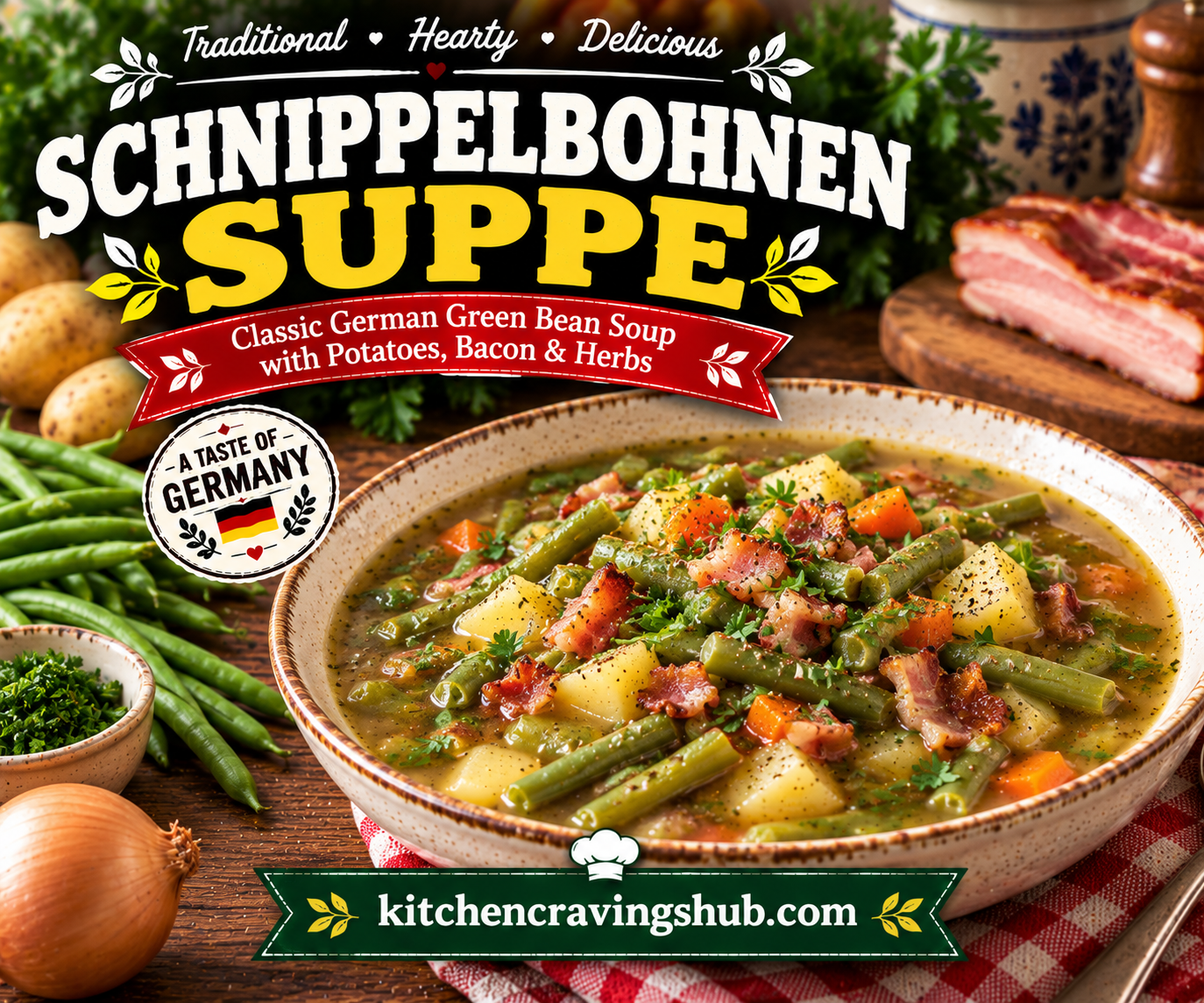
There is a certain charm to a dish with a name as delightfully specific as Schnippelbohnensuppe. This hearty German green bean soup, featuring thinly sliced green beans, tender potatoes, and often a bit of smoky bacon or sausage, is the kind of rustic, comforting meal that has warmed German households for generations. It is humble, satisfying, and packed with the kind of homey flavor that makes you want a second bowl. 😋
In this guide, we are going to cover everything you need to know about Schnippelbohnensuppe. We will talk about what this dish is and where it comes from, why it has become such a beloved comfort food, the ingredients you need, a full step by step recipe, tips for getting that perfect hearty, well balanced soup, common mistakes to avoid, healthier variations, and answers to the most frequently asked questions. Let us get cooking. 🧑🍳
What Is Schnippelbohnensuppe? 🤔
Schnippelbohnensuppe, which translates roughly to sliced bean soup, is a traditional German soup featuring green beans that have been thinly sliced, a technique called schnippeln, cooked together with potatoes, onions, carrots, and often savory bacon or smoked sausage in a rich, hearty broth. The name itself describes the specific preparation method, referring to the way the green beans are finely sliced lengthwise or diagonally before being added to the pot, a technique that helps them cook down and blend beautifully with the other ingredients.
This soup reflects a broader tradition throughout German home cooking of creating hearty, filling meals from humble, affordable ingredients, particularly during the late summer months when green beans are abundant and at their peak freshness. Recipes and specific preparations vary from region to region and household to household, with some versions leaning more heavily on bacon and smoked sausage for a rich, meaty flavor, while others keep things simpler and more vegetable forward.
Schnippelbohnensuppe holds a beloved place in traditional German comfort food, often associated with family recipes passed down through generations, each with their own slight variations and personal touches that make the dish feel distinctly like home cooking rather than a rigid, formal recipe. 🌟
Why People Love Schnippelbohnensuppe ❤️
There are several reasons this soup has earned such a devoted following.
First, it is deeply comforting and hearty, filling enough to serve as a complete meal on its own, making it perfect for a cozy dinner, especially during the transition into cooler autumn weather.
Second, the combination of tender green beans, hearty potatoes, and savory bacon or sausage creates a wonderfully balanced flavor and texture profile, satisfying in a way that feels both rustic and genuinely delicious.
Third, it is a fantastic way to use up an abundance of fresh green beans, particularly during peak growing season, transforming this humble vegetable into a substantial, warming meal.
Finally, it carries genuine nostalgic and cultural significance for many German families, often representing a cherished recipe passed down through generations, evoking memories of home cooked family meals. 🏠
Ingredients You Will Need 🛒
Here is everything required to make a fantastic batch of Schnippelbohnensuppe at home.
For the Soup Base
Fresh green beans, trimmed and thinly sliced lengthwise or diagonally, the traditional Schnippel style cut that gives this soup its name. Potatoes, peeled and diced into bite sized pieces. Onion, diced. Carrots, diced. Celery, diced, optional, for additional aromatic depth. Garlic, minced, optional.
For the Meat, Optional but Traditional
Bacon, diced, for smoky richness. Smoked sausage, sliced, such as a German style smoked sausage, for additional heartiness and flavor.
For the Broth and Seasoning
Chicken broth or vegetable broth, to form the base of the soup. Bay leaf, for subtle background flavor. Fresh or dried savory, known as Bohnenkraut in German, a traditional herb specifically associated with cooking green beans in German cuisine, though thyme can be used as a substitute if savory is unavailable. Salt and black pepper, for seasoning. A small amount of flour or a roux, optional, for slightly thickening the soup, a technique used in some traditional versions. A splash of vinegar, optional, for a touch of brightness at the end. 🌿
Step by Step Recipe: How to Make Schnippelbohnensuppe 👩🍳
This recipe generally serves about six people and takes around one hour from start to finish.
Step 1: Prepare the Green Beans
Trim the ends off the green beans, then slice them thinly lengthwise or on a diagonal, the traditional Schnippel cut. This can be done by hand with a sharp knife or using a specialized bean slicer if you have one, which makes quick work of this step.
Step 2: Cook the Bacon
If using bacon, heat a large pot over medium heat and cook the diced bacon until crispy, about five to six minutes. Remove the bacon with a slotted spoon and set aside, leaving the rendered fat in the pot.
Step 3: Sauté the Aromatics
In the same pot, add the diced onion, carrots, and celery if using, cooking for about five minutes until softened. Add the minced garlic if using and cook for another thirty seconds until fragrant.
Step 4: Add the Beans and Potatoes
Add the sliced green beans and diced potatoes to the pot, stirring to combine with the sautéed vegetables.
Step 5: Add the Broth and Seasonings
Pour in enough chicken or vegetable broth to fully cover the vegetables, generally about six to eight cups depending on your pot size and how brothy or thick you prefer your soup. Add the bay leaf and savory or thyme, stirring to combine.
Step 6: Simmer the Soup
Bring the mixture to a boil, then reduce the heat to low, cover, and let it simmer gently for about thirty to forty minutes, until the green beans and potatoes are tender.
Step 7: Add the Sausage
If using smoked sausage, add it to the pot during the last ten to fifteen minutes of simmering, giving it enough time to heat through and infuse the broth with its smoky flavor.
Step 8: Thicken the Soup, If Desired
If you prefer a slightly thicker soup, you can mix a small amount of flour with cold water to create a slurry, then stir it into the simmering soup, letting it cook for a few more minutes until slightly thickened. This step is optional, since many versions of this soup are enjoyed with a thinner, broth forward consistency.
Step 9: Season and Finish
Remove the bay leaf, then taste the soup and adjust the seasoning with salt and pepper as needed. If desired, add a small splash of vinegar at the end for a touch of brightness that helps balance the richness of the bacon and sausage.
Step 10: Serve
Ladle the hot soup into bowls, topping with the reserved crispy bacon if you set some aside for garnish. Serve with crusty bread alongside. 🍲
Pro Tips for the Best Schnippelbohnensuppe 💡
Slice the green beans thinly for that traditional Schnippel texture. This specific cut helps the beans cook down properly and blend beautifully with the other ingredients, giving the soup its characteristic texture.
Seek out savory, or Bohnenkraut, if possible. This herb has a traditional, specific pairing with green beans in German cooking, offering a unique earthy flavor that thyme, while a reasonable substitute, does not fully replicate.
Do not rush the simmering process. Allowing the potatoes and green beans adequate time to become tender is essential for achieving the right texture throughout the soup.
Add the sausage toward the end of cooking. This prevents it from overcooking and becoming tough, while still giving it enough time to warm through and share its smoky flavor with the broth.
Adjust the thickness to your preference. Whether you enjoy this soup with a thinner, broth forward consistency or prefer it thickened slightly with a flour slurry, this dish is flexible enough to suit different textural preferences.
Finish with a splash of vinegar if you enjoy a bit of brightness. This small addition helps balance the richness of the bacon and sausage, though it is entirely optional based on personal taste.
Common Mistakes to Avoid ⚠️
Cutting the green beans too thick. Since the traditional preparation calls for thinly sliced beans, cutting them too thick can result in a different texture than what this dish is traditionally known for.
Rushing the simmering time. The potatoes and green beans need adequate time to become tender, so cooking at too high a heat or for too short a time can leave them underdone.
Adding the sausage too early. This can cause it to overcook and become tough by the time the rest of the soup is ready, so timing this addition properly helps preserve better texture.
Not seasoning adequately. Since this soup relies on simple, straightforward ingredients, properly seasoning with salt, pepper, and that traditional savory herb is important for achieving a well balanced final flavor.
Skipping the bacon fat as a cooking base. Using the rendered bacon fat to sauté the vegetables adds significant flavor, so pouring it out and starting fresh with a neutral oil misses out on some of that traditional depth.
Healthier Ways to Make Schnippelbohnensuppe 🥗
If you want a lighter version of this dish, here are a few simple adjustments to try.
Reduce the amount of bacon and sausage used, or omit one of the two, relying more on the natural flavors of the vegetables and broth.
Use a leaner smoked sausage option, or substitute with a plant based sausage alternative for a vegetarian version, using vegetable broth and a bit of smoked paprika to mimic some of that smoky flavor.
Increase the proportion of green beans and other vegetables relative to the potatoes to reduce the overall starch content while keeping the soup hearty and filling.
Use a low sodium broth to help control the overall salt content of the finished soup, especially important since bacon and sausage already contribute a good amount of sodium.
Skip the flour thickening step to keep the soup lighter and more broth forward rather than thickened and heavier. 🌾
What to Serve With Schnippelbohnensuppe 🍽️
Schnippelbohnensuppe is hearty enough to serve as a complete meal on its own, but it pairs wonderfully with crusty bread or dark German rye bread, perfect for soaking up any extra flavorful broth. A simple side salad also makes a nice, lighter accompaniment if you want to round out the meal further.
For a more traditional spread, this soup pairs nicely alongside other simple German dishes, or simply enjoyed on its own as a satisfying, complete dinner during the cooler months of the year. 🥖
Storing and Reheating Leftovers 📦
Store leftover Schnippelbohnensuppe in an airtight container in the refrigerator for up to four days. The flavors often deepen after a day or two in the fridge, making leftovers just as delicious, if not more so. It also freezes reasonably well for up to two months, though the texture of the potatoes may soften slightly upon thawing and reheating.
To reheat, warm the soup in a pot over medium heat, stirring occasionally, until heated through, adding a small splash of broth if it has thickened too much in the refrigerator. The microwave also works well for individual portions, just heat in short bursts, stirring in between.
Frequently Asked Questions ❓
What does Schnippelbohnensuppe mean, and why is it called that? The name translates roughly to sliced bean soup, referring specifically to the traditional technique of thinly slicing the green beans, known as schnippeln, before adding them to the soup. This specific preparation method gives the dish its distinctive name and texture.
What is Bohnenkraut, and do I really need it? Bohnenkraut, or savory, is a traditional herb closely associated with cooking green beans in German cuisine, offering a distinctive earthy, slightly peppery flavor. While not strictly required, and thyme can be used as a substitute, seeking out savory if possible provides a more authentic, traditional flavor for this dish.
Can I make this soup vegetarian? Yes, simply omit the bacon and sausage, using vegetable broth as your base, and consider adding a bit of smoked paprika to mimic some of that traditional smoky flavor typically provided by the meat.
Can I use frozen green beans instead of fresh? Fresh green beans are traditional and yield the best texture for this dish, but frozen green beans can be used in a pinch, though you may need to slice them before freezing yourself, since pre sliced frozen beans in the traditional Schnippel style are not commonly available in most markets.
Why is my soup too thin or too thick? The consistency can be adjusted by controlling the amount of broth used or by adding a flour slurry if you prefer a thicker soup. If your soup turns out thicker than desired, simply thin it out with a bit of additional broth or water.
Can I make this dish gluten free? Yes, simply omit or substitute the flour thickening step with a gluten free alternative like cornstarch, and the rest of the ingredients in this dish are naturally gluten free, assuming your specific broth and sausage brands do not contain any gluten based additives.
Final Thoughts 🌈
Schnippelbohnensuppe represents a wonderful piece of traditional German home cooking, transforming humble green beans, potatoes, and a bit of savory bacon or sausage into a genuinely hearty, comforting soup. That combination of tender vegetables and rich, smoky broth creates a dish that feels like a true taste of home cooked German tradition.
Once you get comfortable with that traditional thin bean slicing technique and balancing the flavors of this rustic soup, this recipe becomes a wonderful addition to your regular cooking rotation, especially during the late summer and early autumn months when fresh green beans are at their best.
So slice those beans, simmer your broth, and get ready to enjoy the hearty, homey comfort of homemade Schnippelbohnensuppe. Happy cooking! 🍳🥳