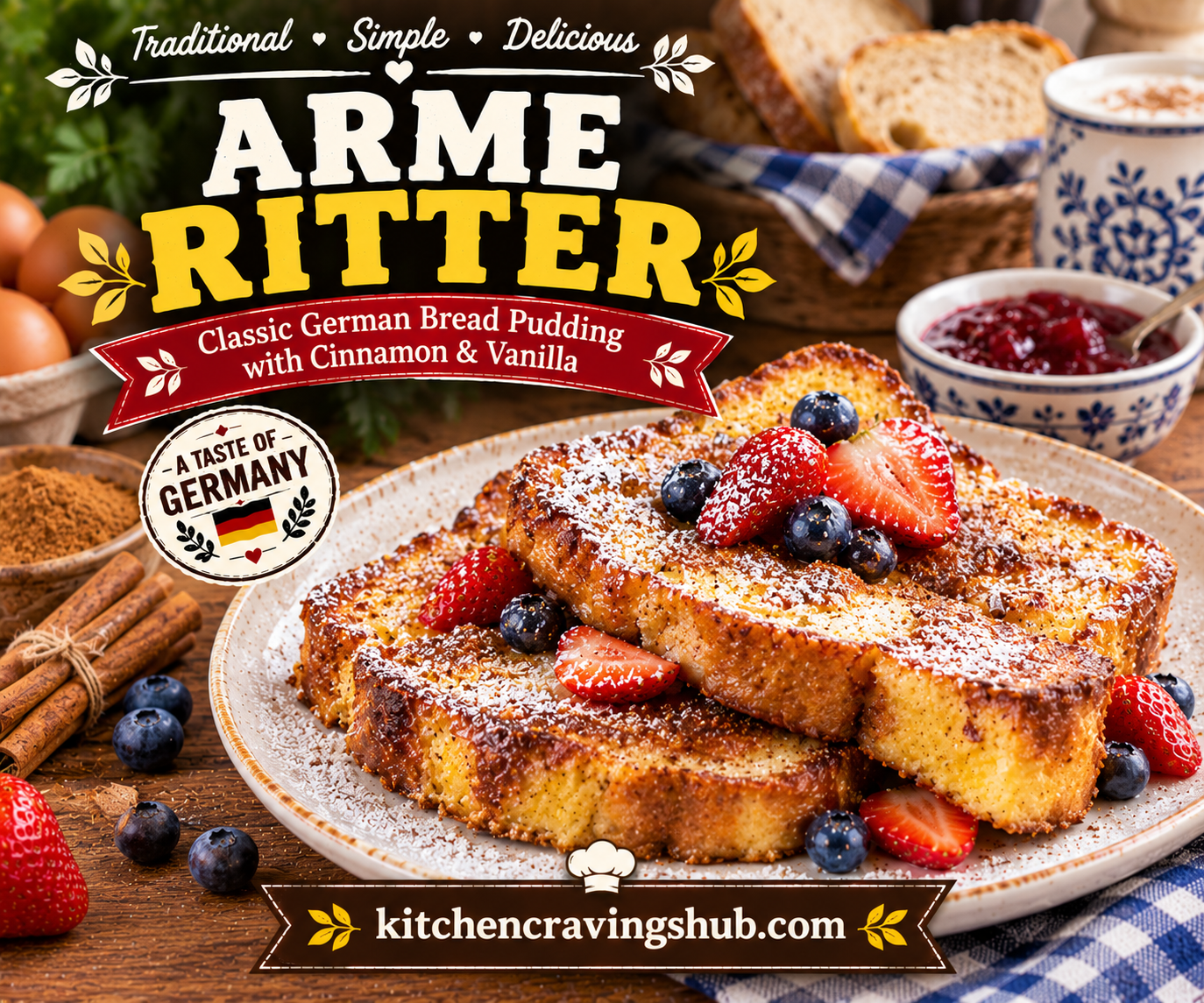
There are few breakfast dishes as universally comforting as a warm, golden slice of French toast, and Germany has its own beloved take on this classic called Arme Ritter. With its crispy, buttery exterior and soft, custardy center, this dish has been a staple in German kitchens for centuries, often served as a way to use up leftover bread while creating something absolutely delicious. Sprinkled with cinnamon sugar or drizzled with a bit of jam, Arme Ritter is proof that simple ingredients can create an incredibly satisfying meal.
In this article, we are going to explore everything you need to know about Arme Ritter. What it actually is, where its unusual name comes from, how to make it at home, and why this humble, rustic dish has remained a beloved comfort food for generations. Let us get into it! 🥚
🍽️ What Exactly Is Arme Ritter?
Arme Ritter is a traditional German dish made by soaking slices of stale or day old bread in a mixture of eggs, milk, and sugar, then pan frying them in butter until golden and crispy on the outside while remaining soft and custardy on the inside. It is essentially Germany’s version of French toast, though it has its own distinct history, name, and cultural significance.
The dish is typically served warm, dusted with cinnamon sugar, and often accompanied by fruit compote, jam, or applesauce for an extra touch of sweetness. Some variations also include a splash of vanilla or rum in the custard mixture for added depth of flavor.
You will often find Arme Ritter:
- 🌅 As a warm, comforting breakfast option
- 🍽️ On the menu at traditional German cafes and restaurants
- 🏠 In home kitchens as a clever way to use up leftover bread
- 🎄 During the holiday season as a cozy, nostalgic treat
📜 The Meaning Behind the Name
The name Arme Ritter translates literally to “poor knights,” and understanding where this name comes from adds a wonderful layer of context to the dish. Historically, the term is believed to reference medieval knights who, despite their noble status, sometimes fell into financial hardship. This humble, resourceful dish, made from stale bread transformed into something rich and satisfying, was seen as fitting nourishment for someone maintaining appearances of nobility while stretching limited resources.
Interestingly, variations of this dish exist across many cultures under different names. In France, it is known as pain perdu, meaning “lost bread,” referencing the practice of rescuing stale bread from being wasted. In English speaking countries, it became known simply as French toast. Despite the different names, the core concept remains the same across cultures, transforming humble, stale bread into a comforting, delicious meal. 🕰️
🧡 Why People Love Arme Ritter
There are plenty of reasons this simple dish has remained a beloved favorite for centuries, and once you try it, you will understand exactly why.
- ♻️ It is a wonderful way to use up stale bread instead of wasting it
- ⏱️ It comes together in under 20 minutes
- 💰 It uses simple, affordable pantry staples
- 🍯 The combination of crispy edges and soft, custardy centers is deeply satisfying
- 🍎 It pairs beautifully with a wide variety of sweet toppings
- 👨👩👧👦 It is a nostalgic recipe often passed down through generations
Whether you are looking for a cozy breakfast, a creative way to reduce food waste, or a nostalgic taste of traditional German home cooking, Arme Ritter checks every box.
🛒 Ingredients You Will Need
The ingredient list for Arme Ritter is refreshingly simple, relying on pantry staples you likely already have on hand.
🍽️ Core Ingredients Table
| Ingredient | Quantity | Notes |
|---|---|---|
| 🍞 Stale bread slices | 4 to 6 slices | White bread or brioche works especially well |
| 🥚 Eggs | 2 large | Room temperature for best blending |
| 🥛 Milk | 200 milliliters | Whole milk creates the richest custard |
| 🍬 Sugar | 2 tablespoons | Plus extra for the cinnamon sugar coating |
| 🌿 Cinnamon | 1 teaspoon | Plus extra for the finishing coating |
| 🍨 Vanilla extract | 1 teaspoon | Adds warmth and depth of flavor |
| 🧈 Butter | 3 tablespoons | For pan frying until golden |
| 🍯 Jam or fruit compote | For serving | Optional, but highly recommended |
👩🍳 How to Make Arme Ritter at Home
This recipe is wonderfully simple and comes together quickly, making it perfect for a cozy weekend breakfast or a quick weeknight dessert. Here is a step by step guide.
Step by Step Instructions
- 🥚 In a shallow bowl, whisk together the eggs, milk, sugar, cinnamon, and vanilla extract until fully combined
- 🍞 Place the stale bread slices into the custard mixture, allowing each side to soak for about 30 seconds to 1 minute, depending on how dry the bread is
- 🔥 Heat butter in a large skillet over medium heat until melted and slightly foamy
- 🍞 Carefully place the soaked bread slices into the skillet, cooking for 2 to 3 minutes per side, or until golden brown and crispy
- 🔁 Add more butter to the skillet as needed between batches to prevent sticking
- 🍬 While still warm, sprinkle the finished slices generously with cinnamon sugar
- 🍯 Serve immediately with jam, fruit compote, or applesauce on the side
And that is it! A warm, comforting German breakfast classic ready to enjoy in under 20 minutes.
🎨 Popular Variations to Try
While the classic cinnamon sugar version is beloved for a reason, there are plenty of fun variations worth exploring.
🍴 Variation Comparison Table
| Variation Name | Key Addition | Flavor Profile |
|---|---|---|
| 🍫 Chocolate Arme Ritter | Cocoa powder added to the custard mixture | Rich and chocolatey |
| 🍎 Apple Arme Ritter | Warm cinnamon apples served on top | Sweet and comforting |
| 🥃 Rum Arme Ritter | A splash of rum added to the custard | Deep and warmly spiced |
| 🍓 Berry Arme Ritter | Fresh berries and whipped cream on top | Bright and refreshing |
| 🥥 Coconut Arme Ritter | Bread coated in shredded coconut before frying | Nutty and tropical |
Feel free to experiment with different toppings and flavor additions based on your personal preferences. This dish is wonderfully forgiving and welcomes creativity.
🥤 What to Pair With Arme Ritter
Since this dish is warm, sweet, and comforting, it pairs beautifully with a variety of drinks, especially for a cozy breakfast or brunch spread.
- ☕ A hot cup of coffee or cappuccino
- 🍵 A warm cup of tea, especially a lightly spiced blend
- 🥛 A cold glass of milk, especially for kids
- 🍹 Fresh squeezed orange juice for a bright, refreshing contrast
- 🍷 A glass of dessert wine if serving as an evening treat
🌍 Where Arme Ritter Fits Into German Food Culture
Arme Ritter holds a cherished, nostalgic place within German culinary tradition. It is often associated with:
- 🏠 Family breakfast recipes passed down through generations
- 🍽️ Traditional German cafes and gasthauses
- ♻️ A resourceful, waste conscious approach to home cooking
- 🎄 Cozy holiday breakfasts and comforting winter meals
As more people around the world embrace mindful, sustainable cooking practices, dishes like Arme Ritter feel more relevant than ever, proving that reducing food waste and creating something absolutely delicious go hand in hand.
💡 Tips for the Best Arme Ritter
To make sure your Arme Ritter turns out perfectly every time, keep these helpful tips in mind.
- 🍞 Use genuinely stale bread since fresh bread can become overly soggy once soaked in custard
- ⏳ Do not oversoak the bread, a quick dip on each side is usually enough
- 🔥 Keep the heat at medium to ensure the bread cooks through without burning the outside
- 🧈 Use real butter rather than oil for the most authentic, rich flavor
- 🍬 Coat the slices in cinnamon sugar while still warm so it sticks evenly
❓ Frequently Asked Questions
Can I use fresh bread instead of stale bread? It is best to use slightly stale or dried out bread since it absorbs the custard mixture much better without falling apart.
Can I make it ahead of time? Arme Ritter is best enjoyed fresh and warm, but you can prepare the custard mixture in advance to speed up the cooking process.
What type of bread works best? Thick cut white bread, brioche, or even day old rolls all work wonderfully for this recipe.
Is Arme Ritter the same as French toast? It is very similar in concept, though Arme Ritter has its own distinct history and cultural significance within German cuisine, along with slightly different traditional toppings and serving styles.
🍽️ Final Thoughts
Arme Ritter is a beautiful example of how humble, practical ingredients can transform into something deeply comforting and satisfying. Born from centuries old traditions of avoiding food waste, this simple dish has remained a beloved staple in German households, cherished for its crispy, golden exterior and soft, custardy center.
Whether you are looking for a cozy breakfast, a creative way to use up leftover bread, or simply a nostalgic taste of traditional German comfort food, Arme Ritter is well worth adding to your recipe collection. Once you take that first warm, cinnamon sugar coated bite, you will understand exactly why this humble dish has stood the test of time for so many centuries. 🧡🍞🍯
Have you ever tried Arme Ritter before? I would love to hear about your favorite toppings or family traditions surrounding this cozy German classic in the comments below!