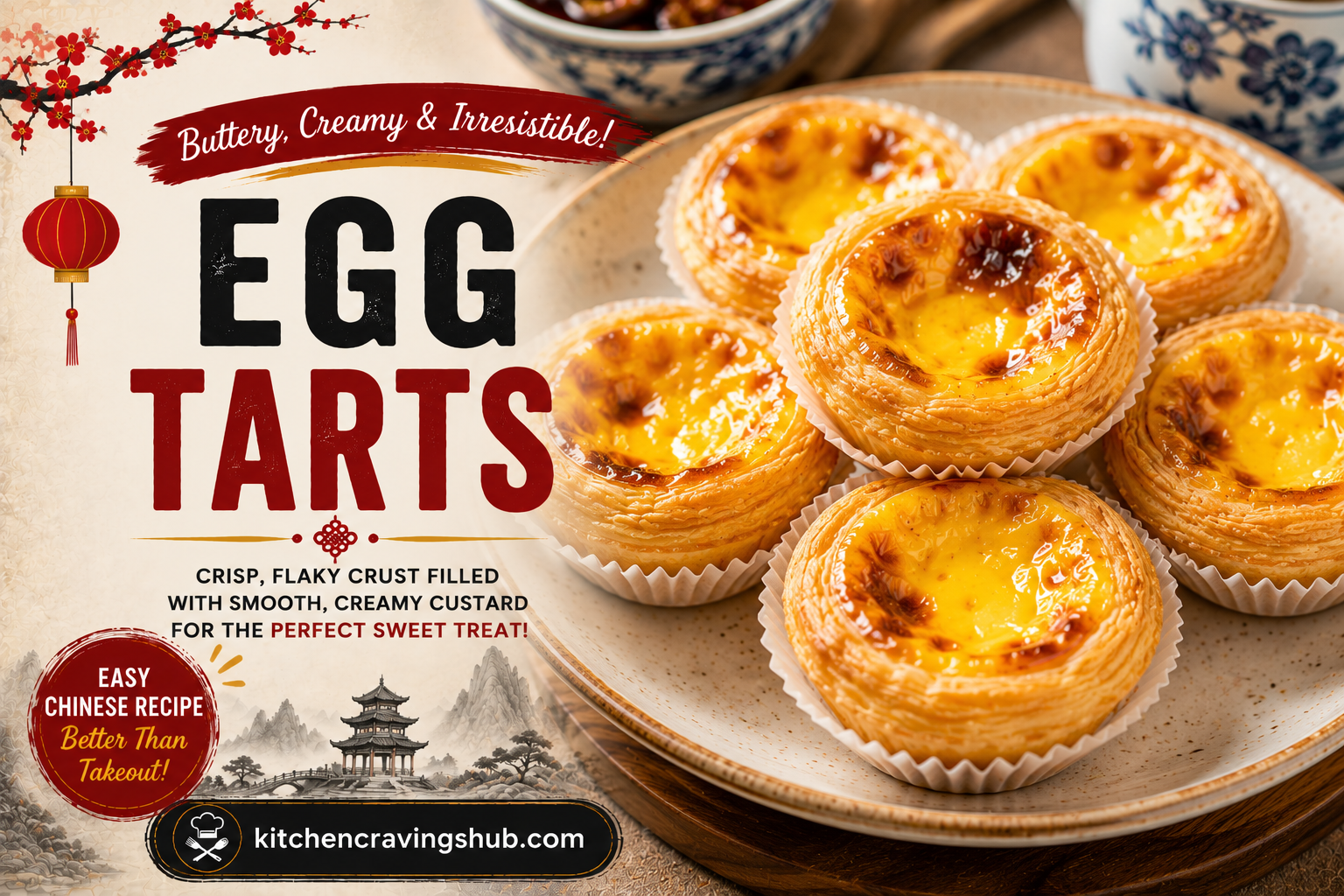
There is something irresistible about a warm, freshly baked egg tart. A flaky, buttery crust cradling a smooth, silky custard filling that jiggles just slightly when you pick it up. It is the kind of treat that feels equally at home on a dim sum cart or as an afternoon snack with a cup of tea. Sweet, comforting, and endlessly satisfying. 😋
In this guide, we are going to cover everything you need to know about egg tarts. We will talk about where this treat comes from, why it has become such a beloved favorite, the ingredients you need, a full step by step recipe, tips for getting that perfect silky custard and flaky crust, common mistakes to avoid, variations you might enjoy, and answers to the most frequently asked questions. Let us get baking. 🧑🍳
What Are Egg Tarts? 🤔
Egg tarts, known as dan tat in Cantonese, are small pastries consisting of a flaky or shortcrust pastry shell filled with a smooth egg custard, then baked until the custard sets into a delicate, slightly wobbly texture reminiscent of creme brulee, though without the caramelized sugar top. They are a beloved staple of Cantonese dim sum, often served warm alongside tea as part of a larger spread of small dishes.
The origins of egg tarts trace back to a fascinating blend of cultures. While custard tarts have existed in various forms throughout European baking traditions for centuries, the Hong Kong style egg tart specifically emerged in the early twentieth century, influenced by British colonial rule and the introduction of Western style baking to the region. Over time, Cantonese bakers adapted the concept, creating their own distinct version that eventually became a defining feature of Hong Kong bakeries and dim sum restaurants.
There are two main styles of Hong Kong egg tarts. One uses a flaky, laminated pastry similar to puff pastry, creating distinct buttery layers. The other uses a shortcrust pastry, more similar to a cookie like crust, which is denser and slightly sweeter. Both styles share that same silky egg custard filling, and both remain popular today depending on personal preference and regional tradition. 🌟
Why People Love Egg Tarts ❤️
There are so many reasons this treat has earned such a devoted following.
First, the texture contrast is simply wonderful. The crisp, buttery crust paired with the smooth, delicate custard creates a bite that feels indulgent without being overly heavy or overly sweet.
Second, egg tarts are comforting in a way that feels both nostalgic and universally appealing. Their mild sweetness and creamy texture make them a treat that is easy to enjoy any time of day, whether as breakfast, an afternoon snack, or dessert after a meal.
Third, they are a beautiful example of culinary fusion, blending Western pastry techniques with Cantonese culinary sensibilities to create something distinct and beloved in its own right.
Finally, making them at home means you get to enjoy that warm, fresh from the oven experience, something that even the best bakery cannot always replicate once the tarts have cooled and traveled home in a box. 🏠
Ingredients You Will Need 🛒
Here is everything required to make a fantastic batch of Hong Kong style egg tarts at home. This recipe uses a flaky pastry style crust, which tends to be the more popular option, though a shortcrust version can be made by substituting the pastry method.
For the Pastry
All purpose flour, for the base of the dough. Cold unsalted butter, cut into small cubes, essential for creating those flaky, buttery layers. Sugar, for a touch of sweetness in the crust. A pinch of salt, to balance the flavors. Cold water, to bring the dough together. An egg, for an egg wash to help the pastry brown beautifully in the oven, optional.
For the Egg Custard Filling
Eggs, at room temperature, the star ingredient that gives the filling its structure and rich flavor. Granulated sugar, for sweetness. Hot water, used to dissolve the sugar completely before combining with the eggs. Evaporated milk, for richness and that signature silky texture. A small splash of vanilla extract, optional, for added depth of flavor. 🌿
Step by Step Recipe: How to Make Egg Tarts 👩🍳
This recipe generally makes about twelve tarts and takes around one hour and fifteen minutes from start to finish, including chilling and baking time.
Step 1: Make the Pastry Dough
In a large bowl, combine the flour, sugar, and salt. Add the cold cubed butter and use your fingers or a pastry cutter to work the butter into the flour until the mixture resembles coarse crumbs with some larger pea sized pieces of butter still visible. Gradually add cold water, a tablespoon at a time, mixing gently until the dough just comes together. Avoid overworking the dough, since this can make the final pastry tough rather than flaky.
Step 2: Chill the Dough
Shape the dough into a disc, wrap it in plastic wrap, and refrigerate for at least thirty minutes. This resting period allows the gluten to relax and the butter to firm back up, both of which contribute to a flakier final texture.
Step 3: Prepare the Tart Shells
Once chilled, divide the dough into twelve equal portions. Press each portion into a tart tin or muffin tin, working the dough evenly up the sides to form a small shell. Prick the bottom of each shell lightly with a fork to prevent excessive puffing during baking. Return the shaped shells to the refrigerator for another fifteen minutes while you prepare the custard filling.
Step 4: Make the Sugar Water
In a bowl, dissolve the granulated sugar completely in hot water, stirring until no grains remain. Let this mixture cool slightly before moving to the next step, since adding hot liquid directly to the eggs can cause them to cook prematurely.
Step 5: Prepare the Egg Custard
In a separate bowl, whisk the eggs gently, being careful not to incorporate too much air, since this can create unwanted bubbles on the surface of the finished tarts. Slowly whisk in the cooled sugar water, followed by the evaporated milk and vanilla extract if using. Strain the custard mixture through a fine mesh sieve to remove any bits of unmixed egg white, which helps create that signature smooth, silky texture.
Step 6: Fill the Tart Shells
Preheat your oven to around 400 degrees Fahrenheit. Carefully pour the strained custard mixture into the chilled tart shells, filling each about three quarters full to allow a bit of room for the custard to rise slightly during baking without overflowing.
Step 7: Bake the Tarts
Place the tarts in the preheated oven and bake for about ten minutes at the higher temperature, then reduce the oven temperature to around 325 degrees Fahrenheit and continue baking for another fifteen to twenty minutes, until the custard is just set with a slight jiggle in the center and the pastry edges turn a light golden color. Baking at a lower temperature for the second half helps the custard set gently without curdling or developing bubbles.
Step 8: Cool and Serve
Allow the tarts to cool in the tin for about ten minutes before carefully removing them. Egg tarts are traditionally enjoyed warm, so serve them shortly after baking for the best texture and flavor. 🍮
Pro Tips for the Best Egg Tarts 💡
Keep your butter and water cold throughout the pastry making process. Cold ingredients are essential for creating those distinct flaky layers, so work quickly and chill the dough whenever it starts to feel soft or warm.
Do not overwork the pastry dough. Mixing it too much develops the gluten, resulting in a tough crust rather than a tender, flaky one.
Whisk the eggs gently rather than vigorously. Incorporating too much air into the custard can create unwanted bubbles on the surface of the baked tarts.
Always strain the custard mixture before filling the shells. This simple step removes any stray bits of egg white and results in that signature ultra smooth, silky texture.
Bake at a high temperature initially, then lower it. This two stage baking method helps the pastry crisp up nicely while allowing the custard to set gently without curdling or overcooking.
Let the tarts cool slightly before removing them from the tin. This helps them hold their shape and prevents the delicate custard from breaking apart.
Common Mistakes to Avoid ⚠️
Overworking the pastry dough. This develops too much gluten, resulting in a tough, chewy crust instead of a light, flaky one.
Using warm butter or water in the pastry. Warm ingredients prevent the butter from creating those distinct flaky layers, resulting in a denser, less appealing texture.
Whisking the eggs too vigorously. This incorporates excess air, leading to bubbles and an uneven surface on the finished custard.
Skipping the straining step. Without straining, small bits of egg white can remain in the custard, disrupting that signature silky smooth texture.
Baking at too high a temperature for too long. This can cause the custard to curdle, bubble, or crack rather than setting into that smooth, delicate texture egg tarts are known for.
Variations You Might Enjoy 🍽️
While the classic Hong Kong style flaky crust egg tart is incredibly popular, there are a few variations worth exploring. Portuguese style egg tarts, popularized in Macau, feature a similar custard filling but with a caramelized, slightly bruleed top, giving them a deeper flavor and a distinct scorched sugar pattern. Shortcrust style egg tarts use a denser, cookie like crust rather than the flaky laminated version, offering a slightly different but equally delicious texture. Some bakers also experiment with flavored custards, incorporating ingredients like matcha, coconut, or pandan for a fun twist on the traditional recipe. 🥧
Storing and Reheating Leftovers 📦
Store leftover egg tarts in an airtight container in the refrigerator for up to three days. Since the pastry is at its best when fresh, texture will soften somewhat over time, though the flavor remains delicious.
To reheat, warm the tarts in an oven or toaster oven at around 300 degrees Fahrenheit for about five to eight minutes, which helps revive some of the pastry’s original crispness. Avoid microwaving if possible, since this method tends to make the crust soggy rather than restoring its flaky texture.
Frequently Asked Questions ❓
What is the difference between Hong Kong style and Portuguese style egg tarts? Hong Kong style egg tarts typically feature a smooth, pale custard top and either a flaky or shortcrust pastry, while Portuguese style egg tarts, popularized in Macau, have a caramelized, slightly bruleed top created by baking at a very high temperature, giving them a distinct scorched sugar pattern and deeper flavor.
Why did my custard turn out bubbly or uneven? This usually happens from whisking the eggs too vigorously, which incorporates excess air, or from baking at too high a temperature for too long. Whisking gently and straining the mixture before baking helps prevent this issue.
Can I make the pastry dough ahead of time? Yes, the pastry dough can be made a day or two in advance and stored in the refrigerator, tightly wrapped, until you are ready to shape and bake the tarts. It can also be frozen for longer storage.
Why is my pastry tough instead of flaky? This is usually caused by overworking the dough or using butter and water that were not cold enough during the mixing process. Handling the dough as little as possible and keeping all ingredients cold helps ensure a flaky final texture.
Can I use a muffin tin instead of a tart tin? Yes, a standard muffin tin works perfectly well for shaping and baking egg tarts if you do not have specialty tart tins on hand.
How do I know when the egg tarts are done baking? The custard should be just set, with a slight jiggle remaining in the very center when you gently shake the tin. It will continue to set slightly as it cools, so it is better to slightly underbake than overbake, since overbaking can cause the custard to crack or become rubbery.
Final Thoughts 🌈
Egg tarts represent a beautiful piece of culinary history, blending Western pastry technique with Cantonese tradition to create something truly special. That combination of a crisp, buttery crust and a smooth, delicate custard filling makes for a treat that feels both comforting and just a little bit elegant, perfect for sharing over tea or enjoying all on your own.
Once you get comfortable with keeping your pastry cold, whisking the custard gently, and mastering that two stage baking method, this recipe becomes a wonderful treat you can bake again and again, whether for a special occasion or simply because you are craving something warm and sweet straight from your own oven.
So chill that dough, whisk up your custard, and get ready to fill your kitchen with the warm, sweet aroma of homemade egg tarts. Happy baking! 🍳🥳