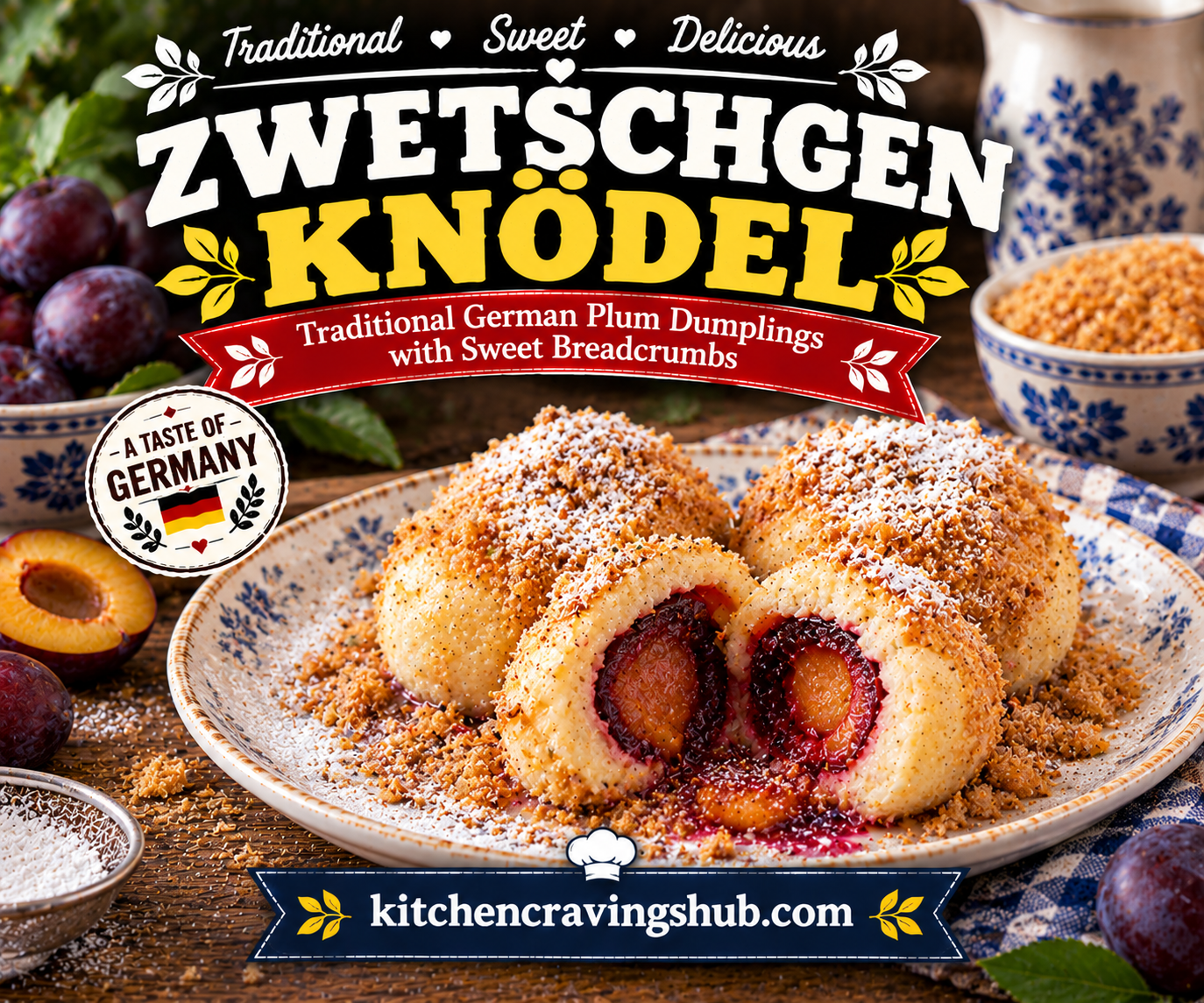
There is something truly special about biting into a warm plum dumpling and discovering that soft, tender potato dough giving way to a juicy, slightly tart plum center, all dusted with buttery breadcrumbs and a touch of cinnamon sugar. Zwetschgenknödel, beloved throughout Austria, Bavaria, and much of Central Europe, is the kind of dessert that feels equally at home as a sweet main course or an indulgent end to a meal. 😋
In this guide, we are going to cover everything you need to know about Zwetschgenknödel. We will talk about where this dish comes from, why it has become such a beloved seasonal treat, the ingredients you need, a full step by step recipe, tips for getting that perfect tender dough and juicy filling, common mistakes to avoid, variations you might enjoy, and answers to the most frequently asked questions. Let us get cooking. 🧑🍳
What Is Zwetschgenknödel? 🤔
Zwetschgenknödel, also known as plum dumplings, is a beloved Austrian and Bavarian dish featuring whole plums, traditionally the small, oval Zwetschgen variety, wrapped in a soft potato based dough, then boiled until tender. The finished dumplings are typically rolled in buttery toasted breadcrumbs and finished with a dusting of cinnamon sugar, creating a delightful combination of sweet, juicy fruit and comforting, pillowy dough.
This dish holds a cherished place in Central European culinary tradition, particularly popular during the late summer months when plums are at their peak ripeness and abundance. In many Austrian and Bavarian households, plum dumplings are considered a seasonal treat eagerly anticipated each year, often prepared using family recipes passed down through generations, with slight variations in dough recipe or serving style from household to household.
While Zwetschgenknödel can be enjoyed as a dessert, it is also commonly served as a sweet main course in Austrian cuisine, a category of dishes known as Mehlspeisen, which includes various sweet dishes enjoyed as a complete meal rather than strictly a dessert following a savory course. 🌟
Why People Love Zwetschgenknödel ❤️
There are so many reasons this dish has earned such a devoted following.
First, the combination of textures is simply wonderful. That soft, tender dough gives way to a juicy, slightly tart plum center, creating a satisfying contrast with every bite.
Second, it is deeply tied to seasonal tradition, with many people eagerly anticipating plum season specifically so they can make this beloved dish, adding a wonderful sense of anticipation and connection to the changing seasons.
Third, the combination of sweet, buttery breadcrumbs and warm cinnamon sugar coating creates a delightful finishing touch that elevates the simple combination of dough and fruit into something genuinely special.
Finally, it represents comforting, nostalgic home cooking for many Austrian and Bavarian families, often associated with cherished memories of family gatherings and seasonal celebrations. 🏠
Ingredients You Will Need 🛒
Here is everything required to make a fantastic batch of Zwetschgenknödel at home.
For the Dough
Potatoes, boiled and riced or mashed very smoothly while still warm. All purpose flour, to bind the dough together. Egg, for structure. A pinch of salt. A small amount of butter, softened, for richness.
For the Filling
Fresh plums, ideally the small oval Zwetschgen variety if available, though any small, firm plum can work as a substitute. Pitted, with a sugar cube or a small pinch of sugar and cinnamon tucked inside each one.
For the Topping
Breadcrumbs, for toasting until golden and buttery. Butter, for toasting the breadcrumbs. Sugar, for dusting. Cinnamon, for dusting alongside the sugar. Powdered sugar, optional, for an additional finishing touch. 🌿
Step by Step Recipe: How to Make Zwetschgenknödel 👩🍳
This recipe generally makes about twelve dumplings and takes around one hour and fifteen minutes from start to finish, including time to cool the potatoes.
Step 1: Boil and Rice the Potatoes
Boil the potatoes whole and unpeeled until very tender, about twenty five to thirty minutes. Drain, then peel while still warm, since the skins come off more easily at this stage. Rice or mash the potatoes very smoothly, then let them cool to room temperature, since warm potatoes can make the dough overly sticky.
Step 2: Prepare the Plums
While the potatoes cool, prepare the plums by removing the pits. This is typically done by cutting a small slit into one side of each plum and gently pushing the pit out, keeping the plum otherwise intact. Tuck a small sugar cube or a pinch of sugar and cinnamon into the center of each pitted plum.
Step 3: Make the Dough
In a large bowl, combine the cooled riced potatoes with flour, the egg, a pinch of salt, and softened butter. Mix gently until a soft, cohesive dough forms. Be careful not to overwork the dough, since this can result in a tougher texture once cooked.
Step 4: Divide the Dough
Divide the dough into twelve equal portions, rolling each into a ball.
Step 5: Wrap the Plums
Flatten each dough portion into a small disc, then place a prepared plum in the center. Carefully wrap the dough up and around the plum, pinching and sealing the edges completely so no fruit or filling is exposed, then gently roll the dumpling between your palms to smooth it into a neat round shape.
Step 6: Boil the Dumplings
Bring a large pot of salted water to a gentle boil. Carefully lower the dumplings into the water, working in batches if necessary to avoid overcrowding the pot. Cook for about twelve to fifteen minutes, until the dumplings float to the surface and are cooked through.
Step 7: Toast the Breadcrumbs
While the dumplings cook, melt a generous amount of butter in a skillet over medium heat and add the breadcrumbs, stirring frequently until golden and toasted, about four to five minutes. Remove from heat.
Step 8: Remove and Coat the Dumplings
Using a slotted spoon, carefully remove the cooked dumplings from the water and let any excess water drain off briefly. Roll each warm dumpling in the toasted breadcrumbs until evenly coated.
Step 9: Finish and Serve
Arrange the coated dumplings on a serving plate and dust generously with a mixture of sugar and cinnamon, along with a bit of powdered sugar if desired. Serve warm. 🍑
Pro Tips for the Best Zwetschgenknödel 💡
Let the potatoes cool completely before making the dough. Warm potatoes can make the dough overly sticky and difficult to work with, so allowing them to reach room temperature first helps achieve the right consistency.
Do not overwork the dough. Handling it too much can develop excess starch and result in a tougher, denser final texture rather than the soft, tender dumpling this dish is known for.
Seal the dumplings completely around the plum. Any gaps can cause the filling to leak out during boiling, so take your time to pinch and seal the edges thoroughly.
Do not overcrowd the pot while boiling. Giving the dumplings enough space allows them to cook evenly without sticking together.
Toast the breadcrumbs until properly golden. This step adds significant flavor and a lovely buttery crunch that complements the soft dumpling beautifully.
Serve the dumplings warm, shortly after cooking. This dish is best enjoyed fresh, while the dough is still soft and the plum filling is warm and juicy.
Common Mistakes to Avoid ⚠️
Using warm potatoes for the dough. This can result in a dough that is too sticky and difficult to shape properly, so allowing the potatoes to cool completely first is an important step.
Overworking the dough. This develops excess starch, resulting in a denser, tougher final texture rather than the light, tender dumpling this dish is meant to have.
Not sealing the dumplings completely. Gaps in the dough around the plum can cause the filling to leak out during boiling, resulting in a messier final result and a less satisfying dumpling.
Overcrowding the pot while boiling. This can cause the dumplings to stick together or cook unevenly, so working in batches if needed helps ensure the best results.
Skipping the toasted breadcrumb coating. This step adds essential flavor and texture, so do not skip this classic finishing touch.
Variations You Might Enjoy 🍽️
While the classic version featuring small Zwetschgen plums and a potato based dough remains the most beloved, there are a few variations worth exploring. Some regions use a Topfen, or quark based dough instead of potato, resulting in a slightly different, tangier flavor and texture. Apricot dumplings, made using the same basic technique but substituting apricots for plums, are another popular seasonal variation enjoyed during apricot season. Some cooks also add a touch of vanilla or lemon zest to the dough for additional aromatic complexity. 🍒
Storing and Reheating Leftovers 📦
Store any leftover Zwetschgenknödel in an airtight container in the refrigerator for up to two days. Since this dish is best enjoyed fresh, texture will change somewhat upon storage and reheating, though the flavor remains delicious.
To reheat, gently warm the dumplings in a steamer basket over simmering water for a few minutes, or in a covered pan with a small splash of water over low heat, until heated through. Avoid microwaving if possible, since this method can result in an uneven, sometimes tough texture. Freshly toasted breadcrumbs can be added again after reheating for the best flavor and texture.
Frequently Asked Questions ❓
What are Zwetschgen, and can I use a different type of plum? Zwetschgen are a small, oval, deep purple plum variety traditionally used for this dish, prized for their firm texture and balanced sweet tart flavor. If unavailable, other small, firm plum varieties can be used as a substitute, though the exact flavor and texture may vary slightly from the traditional version.
Why did my dumplings fall apart while boiling? This is usually caused by not sealing the dough completely around the plum, leaving gaps where water can seep in and cause the dumpling to break apart. Taking extra care to pinch and seal the edges thoroughly helps prevent this issue.
Can I make the dough ahead of time? It is best to make the dough fresh and shape the dumplings shortly before boiling, since the potato based dough can become difficult to work with if left to sit for too long. However, you can boil the potatoes and let them cool ahead of time to save some prep work.
Can I freeze Zwetschgenknödel? Yes, uncooked, shaped dumplings can be frozen on a baking sheet until solid, then transferred to a freezer bag for longer storage. Boil directly from frozen, adding a few extra minutes to the cooking time.
Is this dish considered a dessert or a main course? In Austrian cuisine, Zwetschgenknödel falls into a category called Mehlspeisen, sweet dishes that can be enjoyed as a complete meal rather than strictly a dessert following a savory course, though it is equally beloved as a dessert depending on personal preference and tradition.
Can I make this dish gluten free? This can be tricky since the dough traditionally relies on wheat flour for binding. Some cooks experiment with gluten free flour blends, though the texture and handling may differ somewhat from the traditional version, requiring some adjustment and experimentation.
Final Thoughts 🌈
Zwetschgenknödel represents a beautiful, seasonal celebration of ripe plums, transformed into a comforting, beloved dish through the simple combination of tender potato dough and buttery, cinnamon spiced breadcrumbs. That wonderful contrast between soft dough and juicy fruit filling makes this dish a genuinely special treat, eagerly anticipated each year when plum season arrives.
Once you get comfortable with preparing the potato dough and properly sealing the plums inside, this recipe becomes a wonderful seasonal tradition to look forward to, connecting you to a cherished piece of Austrian and Bavarian culinary heritage. Whether enjoyed as a sweet main course or a comforting dessert, these dumplings are well worth the effort.
So boil those potatoes, prepare your plums, and get ready to enjoy the warm, comforting sweetness of homemade Zwetschgenknödel. Happy cooking! 🍳🥳