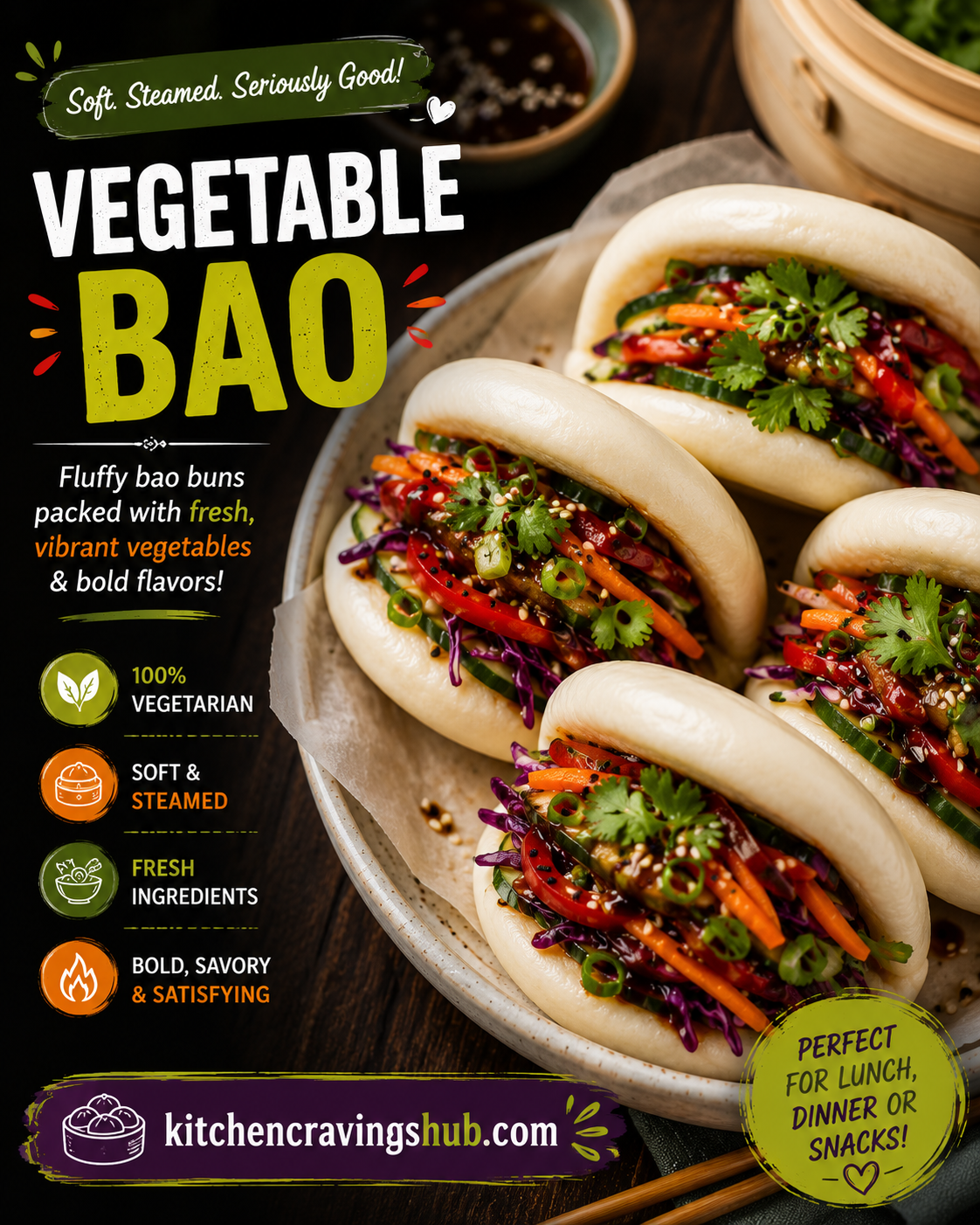
There is something genuinely magical about opening a steamer and finding a batch of pillowy, fluffy bao waiting inside. Vegetable bao, with their soft, cloud like exterior and a savory, veggie packed filling tucked inside, are the kind of comfort food that feels both nostalgic and exciting every single time. Whether enjoyed as a snack, appetizer, or light meal, these little steamed buns have a way of making everyone at the table happy. 😋
In this guide, we are going to cover everything you need to know about vegetable bao. We will talk about where these steamed buns come from, why they have become such a beloved favorite, the ingredients you need, a full step by step recipe for both the dough and the filling, tips for getting that perfect fluffy texture, common mistakes to avoid, healthier variations, and answers to the most frequently asked questions. Let us get steaming. 🧑🍳
What Is Vegetable Bao? 🤔
Bao, short for baozi, refers to a broad category of Chinese steamed buns, typically made from a soft, slightly sweet yeasted dough wrapped around a filling and then steamed until fluffy and cooked through. While bao can be filled with all sorts of ingredients, from barbecue pork to red bean paste, vegetable bao specifically features a savory filling made from a mix of vegetables, often combined with mushrooms, tofu, or vermicelli noodles for added texture and heartiness.
Steamed buns have a long history in Chinese cuisine, with countless regional variations found throughout the country. Vegetable bao in particular has become a popular choice for those seeking a vegetarian option, offering all the comforting, fluffy texture of traditional bao without any meat, while still delivering plenty of savory flavor through a well seasoned vegetable filling.
These buns are beloved not just in China but around the world, showing up on dim sum carts, in Asian bakeries, and increasingly in home kitchens as more people discover just how satisfying and achievable making them from scratch can be. 🌟
Why People Love Vegetable Bao ❤️
There are so many reasons these steamed buns have earned such a devoted following.
First, the texture is simply irresistible. That soft, pillowy, slightly chewy exterior contrasts beautifully with the savory, flavorful filling inside, creating a bite that feels comforting in a way few other foods manage.
Second, they are wonderfully portable and easy to enjoy. Bao make for a fantastic grab and go snack or light meal, requiring no utensils and holding up well whether eaten warm right after steaming or packed for later.
Third, vegetable bao offer a satisfying vegetarian option that does not feel like an afterthought. The combination of mushrooms, vegetables, and aromatics creates a filling that is hearty and flavorful in its own right.
Finally, making bao at home is a genuinely rewarding process. There is something deeply satisfying about watching a simple dough rise, shaping each bun by hand, and then unveiling a steamer full of fluffy, finished buns. 🏠
Ingredients You Will Need 🛒
Here is everything required to make a fantastic batch of vegetable bao at home.
For the Dough
All purpose flour, for the base of the dough. Some recipes use a specific bao flour or cake flour for an even softer, whiter result, though all purpose flour works perfectly well. Instant yeast, to help the dough rise and become light and fluffy. Sugar, which feeds the yeast and adds a subtle sweetness to the dough. Baking powder, added later to help the buns puff up nicely during steaming. Warm water or warm milk, to activate the yeast and bring the dough together. A small amount of oil, for a tender, soft texture.
For the Vegetable Filling
Shiitake mushrooms, finely chopped, for a rich, savory, umami depth. Cabbage, finely shredded, for texture and a bit of natural sweetness. Carrots, finely diced or shredded, for color and crunch. Firm tofu, crumbled, optional, for added protein and heartiness. Glass noodles or vermicelli, soaked and chopped, optional, for extra texture. Garlic and ginger, minced, for aromatic depth. Green onions, sliced, for freshness.
For the Filling Seasoning
Soy sauce, for saltiness and depth. Sesame oil, for a nutty, fragrant finish. Sugar, for a touch of balance. White pepper, for subtle warmth. Cornstarch, to help bind the filling together slightly. 🌿
Step by Step Recipe: How to Make Vegetable Bao 👩🍳
This recipe generally makes about twelve buns and takes around two hours from start to finish, including dough rising time.
Step 1: Activate the Yeast
In a small bowl, combine warm water, sugar, and instant yeast. Let it sit for about five to ten minutes, until it becomes foamy, which indicates the yeast is active and ready to use.
Step 2: Make the Dough
In a large bowl, combine the flour with the activated yeast mixture and a small amount of oil. Mix until a shaggy dough forms, then knead for about eight to ten minutes, either by hand or with a stand mixer, until the dough becomes smooth and elastic.
Step 3: Let the Dough Rise
Place the dough in a lightly oiled bowl, cover it with a damp cloth or plastic wrap, and let it rise in a warm place for about one hour, or until it has doubled in size.
Step 4: Prepare the Filling
While the dough rises, prepare the filling. Heat a small amount of oil in a pan over medium heat and sauté the garlic and ginger until fragrant. Add the chopped mushrooms, cabbage, and carrots, cooking for about five minutes until softened. If using tofu or glass noodles, fold them in now as well.
Step 5: Season the Filling
Add soy sauce, sesame oil, sugar, and white pepper to the vegetable mixture, stirring to combine. If the filling seems too wet, sprinkle in a small amount of cornstarch to help bind everything together. Remove from heat and let the filling cool completely before using, since a warm filling can make the dough difficult to work with.
Step 6: Punch Down and Divide the Dough
Once the dough has doubled in size, punch it down gently to release excess air. Knead in the baking powder at this stage, then divide the dough into twelve equal pieces, rolling each into a smooth ball.
Step 7: Shape the Buns
Flatten each dough ball into a small round, slightly thicker in the center and thinner around the edges. Place a spoonful of the cooled vegetable filling in the center, then gather the edges of the dough up and around the filling, pinching and twisting at the top to seal each bun completely.
Step 8: Let the Buns Rest
Place each shaped bun on a small square of parchment paper and arrange them in your steamer basket, leaving space between each one to allow for expansion. Let them rest for about fifteen to twenty minutes before steaming, which allows for a final rise and results in fluffier finished buns.
Step 9: Steam the Buns
Bring water to a boil in your steamer pot, then reduce to a gentle simmer. Place the steamer basket over the simmering water, cover, and steam the buns for about twelve to fifteen minutes, until they are puffed up and cooked through.
Step 10: Serve
Carefully remove the buns from the steamer and let them cool for just a minute or two before serving. Vegetable bao are best enjoyed warm, straight from the steamer. 🥟
Pro Tips for the Best Vegetable Bao 💡
Make sure your yeast is properly activated before proceeding. If the mixture does not become foamy after several minutes, your yeast may be inactive, and it is worth starting over with a fresh batch to ensure your dough rises properly.
Let the filling cool completely before assembling the buns. A warm filling can soften the dough too much, making it difficult to shape and seal properly.
Do not overfill the buns. While it is tempting to add a generous amount of filling, overfilling can make sealing the dough difficult and increase the risk of the filling leaking out during steaming.
Give the shaped buns time to rest before steaming. This final proofing step is essential for achieving that light, fluffy texture, so do not skip it even if you are eager to start steaming right away.
Use parchment paper squares under each bun. This prevents sticking to the steamer basket and makes it much easier to remove the finished buns without damaging their shape.
Avoid opening the steamer lid during cooking. Lifting the lid releases steam and can cause temperature fluctuations that affect how evenly the buns cook and rise.
Common Mistakes to Avoid ⚠️
Using inactive yeast. If your yeast mixture does not foam after several minutes, the dough will not rise properly, resulting in dense, heavy buns rather than light and fluffy ones.
Skipping the resting period before steaming. This final rise is essential for achieving that signature fluffy texture, so do not rush straight to steaming after shaping the buns.
Overfilling the buns. Too much filling makes sealing difficult and increases the likelihood of the filling leaking out during the steaming process.
Using a warm filling when assembling the buns. This can soften the dough too much, making it harder to shape and seal properly, so always let the filling cool completely first.
Opening the steamer lid too often during cooking. This releases steam and heat, which can result in unevenly cooked or less fluffy finished buns.
Healthier Ways to Make Vegetable Bao 🥗
If you want a lighter version of this dish, here are a few simple adjustments to try.
Use whole wheat flour for part of the dough to increase the fiber content, though keep in mind this may result in a slightly denser final texture compared to using all purpose flour.
Reduce the amount of oil used in both the dough and the filling preparation slightly, without eliminating it entirely, since a small amount is important for texture.
Load up the filling with extra vegetables to boost the nutrient content while keeping the overall dish light, since steaming is already a healthier cooking method compared to frying.
Use low sodium soy sauce in the filling to help control the overall salt content of the finished buns.
Add tofu to the filling for an extra boost of plant based protein, making the buns more filling and nutritionally balanced. 🌾
What to Serve With Vegetable Bao 🍽️
Vegetable bao work wonderfully as a light meal on their own, especially when paired with a simple dipping sauce like a mixture of soy sauce, rice vinegar, and a touch of chili oil. They also make a fantastic addition to a larger dim sum spread, served alongside other favorites like dumplings or spring rolls.
For a more complete meal, pair vegetable bao with a light soup, such as hot and sour soup or a simple vegetable broth, to round out the meal with something warm and comforting alongside the buns. 🥢
Storing and Reheating Leftovers 📦
Store leftover vegetable bao in an airtight container in the refrigerator for up to three days, or freeze them for up to two months for longer storage, making them a great option for meal prep.
To reheat refrigerated buns, steam them again for about five to seven minutes until warmed through, which helps restore their original fluffy texture. For frozen buns, you can steam them directly from frozen, just extend the steaming time to about twelve to fifteen minutes. Avoid microwaving if possible, since this method can make the buns tough and chewy rather than soft and fluffy.
Frequently Asked Questions ❓
Can I make the dough ahead of time? Yes, you can prepare the dough through the first rise, then refrigerate it overnight. Let it come back to room temperature before shaping and proceeding with the recipe, or you can also freeze shaped, unsteamed buns for later use.
Why did my buns turn out dense instead of fluffy? This is usually caused by inactive yeast, insufficient rising time, or skipping the final rest period before steaming. Make sure your yeast is properly activated and give the dough adequate time to rise at each stage.
Can I use a different filling in this same dough recipe? Absolutely. This same bao dough works wonderfully with other fillings, such as barbecue pork, chicken, or even sweet fillings like red bean paste, making it a versatile base for many different variations.
Do I need a special steamer to make bao? A traditional bamboo steamer works beautifully and is worth the investment if you plan to make bao regularly, but a metal steamer basket set over a pot of simmering water works just as well if that is what you have on hand.
Can I make this recipe vegan? Yes, this recipe is naturally vegan as written, using no animal products in either the dough or the vegetable filling, making it a great option for those following a plant based diet.
Why do my buns look wrinkled or collapsed after steaming? This can happen from opening the steamer lid too abruptly, causing a sudden temperature change, or from underproofing the buns before steaming. Letting the buns rest properly before steaming and allowing them to cool gradually after cooking can help prevent this issue.
Final Thoughts 🌈
Vegetable bao represent everything wonderful about Chinese steamed buns, soft, pillowy dough wrapped around a savory, satisfying filling, all achieved through a process that feels genuinely rewarding from start to finish. While making bao from scratch does take a bit of time and patience, the result, a steamer full of fluffy, homemade buns, is well worth the effort.
Once you get comfortable with activating the yeast properly, shaping the buns, and timing the steaming process just right, this recipe becomes a wonderful skill to have in your back pocket, perfect for meal prep, entertaining, or simply enjoying a comforting homemade snack any time the craving strikes.
So activate that yeast, prepare your filling, and get ready to enjoy the fluffy, comforting satisfaction of homemade vegetable bao. Happy steaming! 🍳🥳