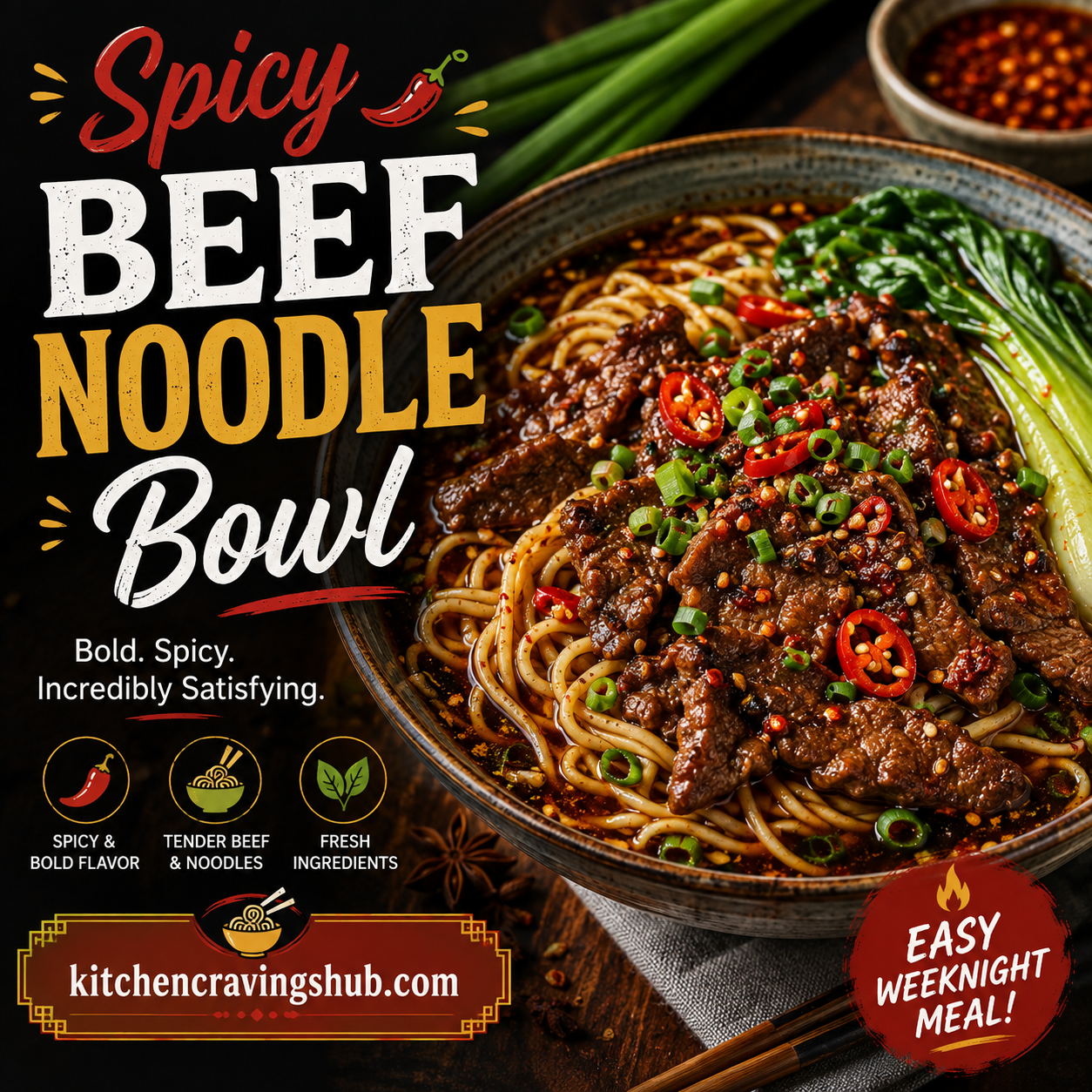
There is nothing quite like a steaming bowl of spicy beef noodles on a cold day, or honestly, any day. Tender, slow simmered beef swimming in a rich, fiery broth, tangled up with chewy wheat noodles and topped with fresh herbs, pickled greens, and a drizzle of chili oil. It is deeply comforting and boldly flavorful all at once, the kind of dish that makes you want to slurp every last drop of broth from the bowl. 😋
In this guide, we are going to cover everything you need to know about spicy beef noodle bowls. We will talk about where this style of dish comes from, why it has become such a beloved comfort food, the ingredients you need, a full step by step recipe, tips for getting that deep, rich broth flavor, common mistakes to avoid, healthier variations, and answers to the most frequently asked questions. Let us get cooking. 🧑🍳
What Is a Spicy Beef Noodle Bowl? 🤔
Spicy beef noodle bowl refers to a style of noodle soup featuring tender braised beef, wheat noodles, and a deeply flavorful, spiced broth, most closely associated with Sichuan and Taiwanese cooking traditions, though variations exist throughout China and beyond. The broth typically gets its warmth and complexity from a combination of doubanjiang, or fermented chili bean paste, along with star anise, cinnamon, ginger, garlic, and dried chili peppers, all simmered together with beef and aromatics for an extended period until the flavors deepen and the beef becomes fall apart tender.
This dish is closely related to the beloved Taiwanese beef noodle soup, known as niu rou mian, which itself has roots tracing back to Sichuan style spicy braising techniques brought to Taiwan by military families in the mid twentieth century. Over the decades, it evolved into its own distinct, celebrated dish, so beloved in Taiwan that it even has an annual festival dedicated entirely to celebrating different versions of the soup.
While there are countless regional variations, the core concept remains the same, richly spiced broth, tender braised beef, and chewy noodles come together to create one of the most comforting and satisfying noodle soups in Chinese and Taiwanese cuisine. 🌟
Why People Love Spicy Beef Noodle Bowls ❤️
There are so many reasons this dish has earned such a devoted following.
First, the broth is simply incredible. Hours of slow simmering allow the beef, spices, and aromatics to meld together into something deeply savory, warming, and layered with flavor that a quick cooking method simply cannot replicate.
Second, it is the ultimate comfort food. There is something inherently soothing about a big bowl of hot soup and noodles, and the added warmth from the spices makes it feel especially cozy during colder months.
Third, the beef becomes incredibly tender through the slow braising process, practically falling apart with each bite, which adds a wonderfully satisfying texture to every spoonful.
Finally, it is a complete meal in one bowl. With protein, noodles, and a flavorful broth all combined, this dish does not require much else to feel like a truly satisfying dinner. 🍲
Ingredients You Will Need 🛒
Here is everything required to make a fantastic batch of spicy beef noodle bowls at home.
For the Beef and Broth
Beef shank, brisket, or short ribs, cut into large chunks. These tougher cuts become wonderfully tender through slow braising. Beef broth or water, to form the base of the soup. Doubanjiang, or fermented chili bean paste, which gives the broth its signature spicy, fermented depth. Soy sauce and dark soy sauce, for saltiness and rich color. Shaoxing wine or dry sherry, for depth of flavor. Star anise, cinnamon stick, and bay leaves, for warm, aromatic spice. Dried chili peppers, for heat. Garlic cloves, smashed. Fresh ginger, sliced. Rock sugar or brown sugar, to balance the savory and spicy elements.
For the Noodles
Fresh or dried wheat noodles, thick and chewy, which hold up well in a rich broth.
For Toppings
Bok choy or other leafy greens, blanched. Pickled mustard greens, optional, for a tangy contrast. Green onions, sliced. Fresh cilantro, chopped. Chili oil, for extra heat and richness. 🌿
Step by Step Recipe: How to Make Spicy Beef Noodle Bowls 👩🍳
This recipe generally serves about four people and takes around two and a half hours from start to finish, most of which is hands off simmering time.
Step 1: Sear the Beef
Cut the beef into large chunks, about two inches each. Heat a large pot or Dutch oven over medium high heat with a bit of oil, then sear the beef in batches until browned on all sides, about five to six minutes per batch. Remove the beef and set aside.
Step 2: Build the Aromatic Base
In the same pot, add the smashed garlic, sliced ginger, and dried chili peppers, cooking for about a minute until fragrant. Add the doubanjiang and cook for another minute, stirring constantly, until the oil turns a deep red and the paste becomes very fragrant.
Step 3: Deglaze and Add Spices
Pour in the Shaoxing wine, scraping up any browned bits from the bottom of the pot. Add the star anise, cinnamon stick, and bay leaves, stirring everything together for about thirty seconds.
Step 4: Add the Beef and Liquid
Return the seared beef to the pot, then pour in the beef broth along with the soy sauce, dark soy sauce, and rock sugar. The liquid should mostly cover the beef, so add more broth or water if needed.
Step 5: Simmer Low and Slow
Bring everything to a boil, then reduce the heat to low, cover the pot, and let it simmer gently for about two hours, checking occasionally and adding more liquid if the level gets too low. The beef is ready when it is fork tender and practically falling apart.
Step 6: Skim the Broth
Throughout the simmering process, skim off any excess fat or foam that rises to the top of the broth. This helps keep the final soup clean and flavorful rather than greasy.
Step 7: Cook the Noodles
While the beef finishes simmering, bring a separate pot of water to a boil and cook the noodles according to the package instructions. Drain and divide the noodles among serving bowls.
Step 8: Prepare the Toppings
Blanch the bok choy or other leafy greens briefly in boiling water until just tender, then set aside.
Step 9: Assemble the Bowls
Ladle the hot, spicy beef and broth over the noodles in each bowl, making sure everyone gets a generous portion of beef. Top with the blanched greens, pickled mustard greens if using, sliced green onions, and fresh cilantro.
Step 10: Finish and Serve
Drizzle chili oil over each bowl to taste, adjusting the heat level to your preference. Serve immediately while everything is piping hot. 🍜
Pro Tips for the Best Spicy Beef Noodle Bowl 💡
Sear the beef properly before braising. Those browned bits and rendered fat add significant depth to the final broth, so do not rush this initial step.
Do not skip cooking the doubanjiang until fragrant. This step is essential for developing that deep, spicy, fermented flavor that defines the broth.
Be patient with the simmering time. Low and slow cooking is what transforms tougher cuts of beef into that signature fall apart tender texture, so resist the urge to rush this process with higher heat.
Skim the broth periodically while it simmers. This keeps the final soup clean and flavorful rather than overly greasy or cloudy.
Cook the noodles separately from the broth. This prevents the noodles from becoming overly soft or absorbing too much of the broth before serving, and it also makes it easier to portion out individual bowls.
Customize your toppings generously. Fresh herbs, pickled vegetables, and a drizzle of chili oil all add important layers of flavor and texture to the finished bowl, so do not skip this final step.
Common Mistakes to Avoid ⚠️
Rushing the braising process. Beef shank, brisket, and short ribs need time to become tender, so cooking at too high a heat or for too short a time will result in tough, chewy meat.
Skipping the searing step for the beef. This misses out on developing those flavorful browned bits that add so much depth to the finished broth.
Not cooking the doubanjiang long enough. This fermented paste needs to be cooked in oil until fragrant and deeply red to fully develop its flavor, so give it the time it needs.
Overcooking the noodles. Since the noodles are cooked separately and then combined with hot broth, slightly undercooking them helps prevent them from becoming mushy by the time you actually eat the dish.
Forgetting to skim the broth. Skipping this step can result in a cloudier, greasier final soup rather than the clean, rich broth this dish is known for.
Healthier Ways to Make Spicy Beef Noodle Bowl 🥗
If you want a lighter version of this dish, here are a few simple adjustments to try.
Trim excess fat from the beef before searing, and skim the broth thoroughly throughout the simmering process to reduce the overall fat content.
Use a leaner cut of beef, though keep in mind that fattier cuts like shank and brisket generally yield a more tender, flavorful result through slow braising.
Add extra vegetables like bok choy, mushrooms, or bean sprouts to increase the fiber and nutrient content of each bowl.
Use a lighter hand with the chili oil and doubanjiang to reduce the overall spice level and fat content if desired.
Serve smaller portions of noodles alongside a larger serving of broth and vegetables to help balance out the meal. 🌾
What to Serve With Spicy Beef Noodle Bowl 🍽️
Spicy beef noodle bowls are hearty enough to serve as a complete meal on their own, but a few simple sides can round out the experience nicely. Steamed or pan fried dumplings make a classic pairing, as does a simple plate of blanched greens with a drizzle of sesame oil.
For something to help balance the heat, consider serving alongside a light cucumber salad or a small dish of pickled vegetables. This dish is often enjoyed as a satisfying standalone meal, especially during colder months. 🥟
Storing and Reheating Leftovers 📦
Store the beef and broth separately from the noodles in airtight containers in the refrigerator for up to four days. Keeping the noodles separate prevents them from becoming overly soft as they sit in the broth over time. The broth and beef also freeze very well for up to three months, making this a great dish for batch cooking.
To reheat, warm the broth and beef together in a pot over medium heat until heated through, then cook fresh noodles or reheat previously cooked noodles briefly in hot water before assembling the bowls with your desired toppings.
Frequently Asked Questions ❓
What cut of beef is best for this dish? Beef shank, brisket, and short ribs are all excellent choices since they become wonderfully tender through the slow braising process. Leaner cuts are not recommended since they can turn tough rather than tender with this cooking method.
Is this dish very spicy? The spice level can vary quite a bit depending on how much doubanjiang and chili oil you use. Feel free to adjust the amounts to suit your personal spice tolerance, starting with less and adding more to taste.
Can I make this dish in a slow cooker or Instant Pot? Yes, both methods work well. For a slow cooker, sear the beef and cook the aromatic base on the stovetop first, then transfer everything to the slow cooker and cook on low for about six to eight hours. For an Instant Pot, use the pressure cooking function to significantly reduce the overall cooking time while still achieving tender beef.
What type of noodles should I use? Thick, chewy wheat noodles are traditional and hold up beautifully in the rich broth. If you cannot find specific Chinese or Taiwanese style noodles, udon noodles can work as a reasonable substitute.
Can I make this dish ahead of time? Yes, this dish actually tends to taste even better the next day, once the flavors have had more time to meld together. Store the broth and beef separately from freshly cooked noodles for the best texture when reheating.
Can I make this dish gluten free? This can be tricky since some doubanjiang and soy sauce products contain wheat, and traditional wheat noodles are not gluten free. Look for gluten free soy sauce and doubanjiang alternatives, and substitute rice noodles for the wheat noodles if needed.
Final Thoughts 🌈
Spicy beef noodle bowl is the kind of dish that rewards patience with an incredibly deep, satisfying result. That rich, spiced broth, built from hours of slow simmering, paired with fall apart tender beef and chewy noodles, creates a meal that feels like a warm hug in a bowl, with just enough heat to keep things exciting.
While this dish does take some time to prepare, most of it is hands off simmering, making it a wonderful option for a weekend cooking project or a big batch you can enjoy throughout the week. Once you taste that rich, complex broth, you will understand exactly why this dish holds such a beloved place in Sichuan and Taiwanese cuisine alike.
So sear that beef, build your spiced broth, and get ready to enjoy the bold, comforting warmth of a homemade spicy beef noodle bowl. Happy cooking! 🍳🥳