
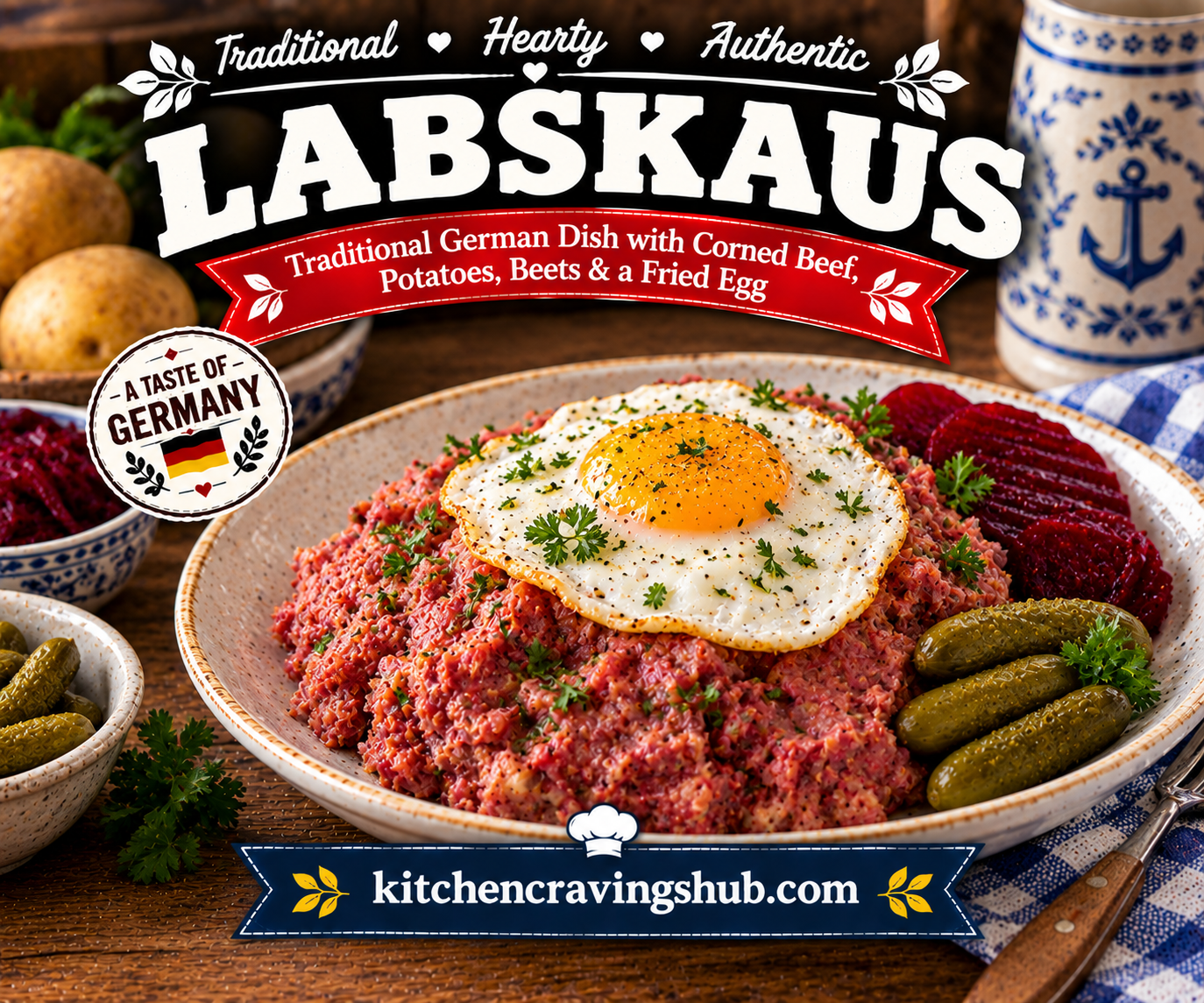
If you have ever wandered through a harbor town in northern Germany, particularly in Hamburg or Bremen, you have likely come across a curious looking dish called Labskaus. With its vibrant pink hue, hearty mashed texture, and toppings that include a fried egg, pickled herring, and gherkins, this dish might look unusual at first glance, but it carries centuries of maritime history and remains a beloved regional specialty to this day.
In this article, we are going to explore everything you need to know about Labskaus. What it actually is, where its seafaring history comes from, how to make it at home, and why this hearty, humble dish continues to hold such an important place in North German food culture. Let us set sail into it! 🚢
🍽️ What Exactly Is Labskaus?
Labskaus is a traditional North German dish made by mashing together corned beef or pickled meat, potatoes, and beetroot until it forms a soft, vibrant pink mixture. The dish is typically topped with a fried egg, accompanied by rollmops or pickled herring, and served alongside gherkins and pickled beetroot slices on the side.
While the texture might resemble a hash or a thick mash, the flavor is deeply savory, slightly tangy from the pickled elements, and wonderfully comforting once you get past its unusual appearance. It is a dish that truly rewards the adventurous eater. 🌊
You will often find Labskaus:
- ⚓ In harbor cities like Hamburg, Bremen, and Kiel
- 🍽️ At traditional German seafood restaurants and portside taverns
- 🚢 Referenced in maritime history as a staple meal for sailors
- 🏠 In North German households as a nostalgic comfort food
📜 The Maritime History Behind Labskaus
The origins of Labskaus are deeply tied to seafaring history. Long ocean voyages in earlier centuries meant sailors needed meals that could be prepared using preserved, long lasting ingredients, since fresh food was simply not available for weeks or even months at sea.
Salted or corned meat, along with potatoes and other preserved vegetables, became staple ingredients aboard ships, and clever ship cooks combined these ingredients into a hearty, easy to prepare mash that could feed hungry sailors efficiently. Some food historians believe the name Labskaus may have roots in Scandinavian or English maritime slang, closely related to similar dishes found in British and Scandinavian sailor traditions, such as lobscouse in England.
Over time, as sailors returned home and shared their seafaring meals with families in port cities, Labskaus transitioned from a shipboard necessity into a beloved regional specialty enjoyed on land, particularly throughout northern coastal Germany. 🕰️
🧡 Why People Still Love Labskaus
There are several reasons this hearty, historic dish has remained a cherished part of North German cuisine for so long.
- ⚓ It carries deep maritime history and cultural significance
- 🍖 The combination of savory meat and tangy pickled elements is deeply satisfying
- 🥔 It is a hearty, filling meal perfect for cold, coastal weather
- 🥚 The fried egg on top adds richness and a beautiful presentation
- 👵 It is a nostalgic dish tied closely to regional identity and family tradition
Whether you grew up near the North Sea coast or are simply curious to try a true piece of maritime culinary history, Labskaus offers a fascinating and delicious dive into Germany’s seafaring past.
🛒 Ingredients You Will Need
Labskaus uses simple, hearty ingredients that reflect its practical, preserved food origins.
🍽️ Core Ingredients Table
| Ingredient | Quantity | Notes |
|---|---|---|
| 🥩 Corned beef | 400 grams | Traditional base, can substitute pickled beef |
| 🥔 Potatoes | 800 grams | Peeled and boiled until soft |
| 🧅 Onion | 1 large | Finely chopped |
| 🍠 Beetroot | 150 grams | Cooked and diced, adds the signature pink color |
| 🥚 Eggs | 1 per serving | Fried sunny side up for topping |
| 🐟 Rollmops or pickled herring | 1 per serving | Traditional accompaniment |
| 🥒 Gherkins | A few per serving | Sliced, for serving on the side |
| 🍠 Pickled beetroot slices | A few per serving | Additional traditional garnish |
| 🧈 Butter | 2 tablespoons | For sauteing the onion |
| 🧂 Salt and pepper | To taste | For seasoning the mash |
👩🍳 How to Make Labskaus at Home
This recipe is surprisingly simple, especially considering its rich history and hearty final result. Here is a step by step guide to making it at home.
Step by Step Instructions
- 🥔 Boil the peeled potatoes in salted water until fork tender, then drain well
- 🧈 In a skillet, melt the butter and saute the chopped onion until soft and translucent
- 🥩 Dice or shred the corned beef into small pieces
- 🥔 In a large bowl or pot, combine the boiled potatoes, sauteed onion, and corned beef
- 🍠 Add the diced beetroot to the mixture, which will give the entire dish its signature pink color
- 🔨 Mash everything together until you reach a soft, slightly chunky consistency, adjusting texture to your personal preference
- 🧂 Season generously with salt and pepper to taste
- 🍳 In a separate pan, fry an egg per serving, sunny side up, keeping the yolk soft
- 🍽️ Plate the Labskaus mixture and top each serving with a fried egg
- 🐟 Serve alongside rollmops or pickled herring, gherkins, and pickled beetroot slices on the side
And there you have it, a hearty, historic North German meal ready to enjoy.
🎨 Popular Variations to Try
While the classic version remains the most beloved, there are a few regional twists worth exploring.
🍴 Variation Comparison Table
| Variation Name | Key Difference | Flavor Profile |
|---|---|---|
| 🐟 Fish Labskaus | Made with fish instead of corned beef | Lighter and slightly briny |
| 🥩 Beef Labskaus | Uses fresh beef instead of corned or pickled beef | Milder and less tangy |
| 🍠 Extra Beetroot Labskaus | Additional beetroot added for a deeper pink color | Sweeter and earthier |
| 🌿 Herbed Labskaus | Fresh parsley or chives mixed into the mash | Bright and herbaceous |
| 🥓 Bacon Labskaus | Crispy bacon bits added on top | Extra smoky and rich |
Feel free to experiment with different proteins or additions based on your personal taste preferences and what is available in your area.
🥤 What to Pair With Labskaus
Since this dish is hearty and rich, it pairs wonderfully with light, refreshing beverages that help balance out the flavors.
- 🍺 A cold German lager or pilsner
- 🥤 Sparkling water with a slice of lemon
- 🍷 A crisp white wine, especially one with good acidity
- ☕ A strong cup of coffee, particularly if enjoyed as a hearty brunch
- 🥃 A small glass of schnapps, traditionally enjoyed alongside hearty northern German meals
🌍 Where Labskaus Fits Into German Food Culture
Labskaus holds a proud, nostalgic place within North German coastal culture. It is often associated with:
- ⚓ Maritime history and the seafaring traditions of sailors
- 🏠 Regional pride in cities like Hamburg, Bremen, and Kiel
- 🍽️ Traditional portside taverns and seafood restaurants
- 👵 Family recipes passed down through generations of coastal households
For many people living along Germany’s northern coast, Labskaus is not just a meal, it is a symbol of regional identity and a delicious connection to the area’s rich maritime heritage.
💡 Tips for the Best Labskaus
To make sure your Labskaus turns out perfectly every time, keep these helpful tips in mind.
- 🥔 Do not overcook the potatoes, since overly soft potatoes can make the mash too watery
- 🍠 Add beetroot gradually to control the intensity of the pink color and flavor
- 🥚 Keep the fried egg yolk soft and runny, as it adds richness when mixed into the mash
- 🐟 Do not skip the pickled herring or gherkins, since their tangy flavor perfectly balances the richness of the dish
- 🧂 Taste and adjust seasoning generously, since potatoes and meat can require more salt than expected
❓ Frequently Asked Questions
Why is Labskaus pink? The pink color comes from beetroot, which is mixed directly into the mashed potato and meat mixture.
Does Labskaus taste fishy? The base mixture itself is primarily meat based, though it is traditionally served alongside pickled herring, which adds a distinct briny flavor on the side rather than throughout the dish itself.
Can I make a vegetarian version? Yes, some modern variations substitute the meat with mushrooms or plant based alternatives while keeping the potato and beetroot base intact.
Is Labskaus similar to corned beef hash? There are some similarities in concept, though Labskaus has its own distinct preparation, history, and traditional toppings that set it apart as a uniquely North German dish.
🍽️ Final Thoughts
Labskaus is far more than just an unusual looking dish, it is a delicious piece of living maritime history. Born out of necessity aboard long sea voyages, this hearty, humble meal has evolved into a cherished regional specialty that continues to bring people together in harbor towns across northern Germany.
Whether you are drawn in by its fascinating seafaring backstory or simply curious to try a truly unique regional dish, Labskaus offers a hearty, flavorful, and deeply historic dining experience. Once you take that first bite, complete with a soft fried egg and tangy pickled herring, you will understand exactly why this dish has remained a beloved coastal tradition for centuries. 🧡⚓🥔
Have you ever tried Labskaus before? I would love to hear about your thoughts, or any family traditions surrounding this iconic North German dish, in the comments below!