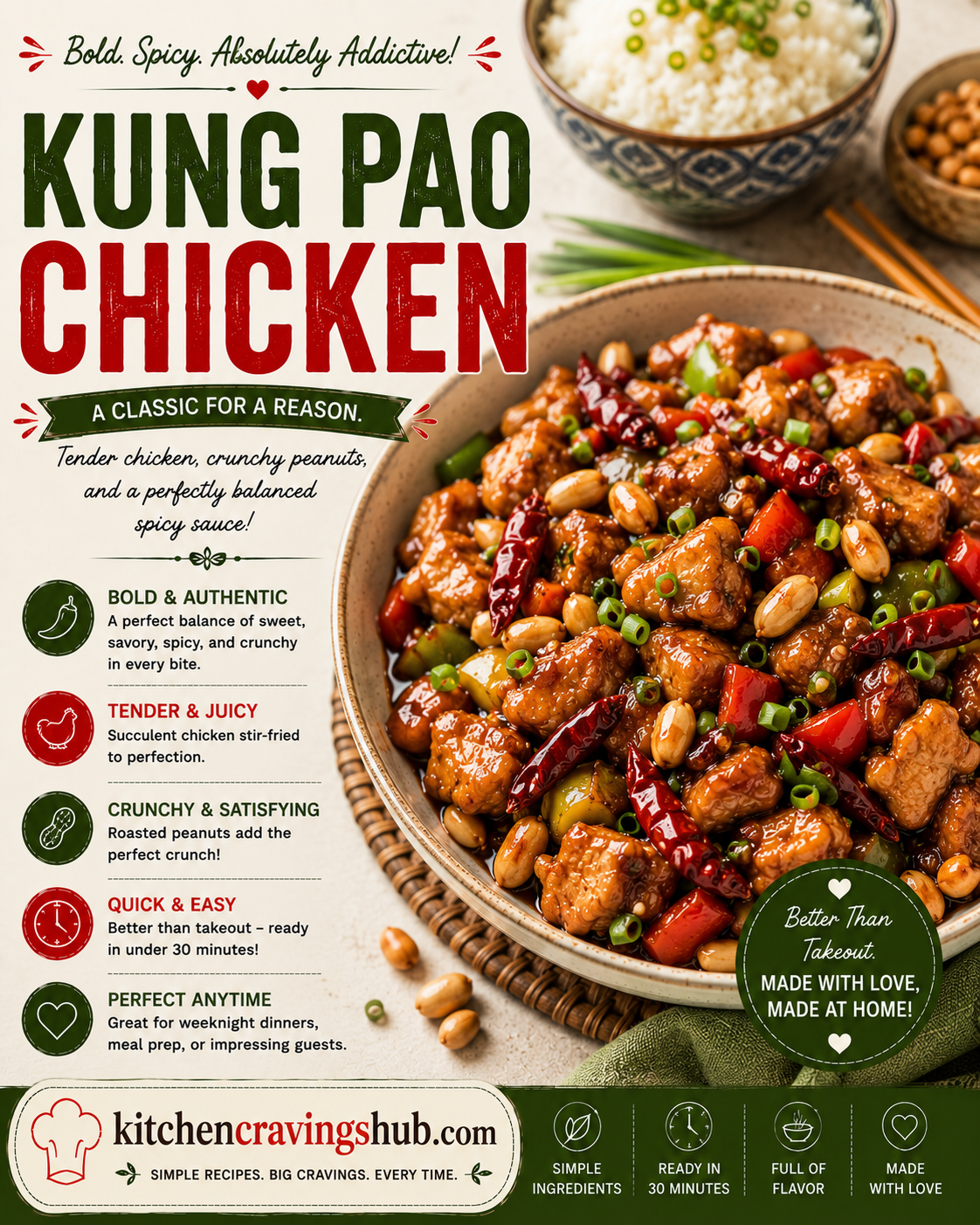
Few dishes bring together bold flavor and satisfying crunch quite like Kung Pao chicken. 🤤 Tender pieces of chicken, crunchy roasted peanuts, crisp vegetables, and fiery dried chilies all tossed together in a savory, slightly sweet, tangy sauce. It is a dish that feels indulgent yet comes together fast, making it a favorite for both weeknight dinners and special takeout style feasts at home.
In this guide, we will cover everything you need to know to make authentic tasting Kung Pao chicken in your own kitchen. We will talk about where the dish comes from, the ingredients that give it its signature flavor, step by step instructions, tips for getting that perfect stir fry texture, common mistakes to avoid, and a few creative variations to try once you have mastered the basics. Let’s dive in. 🎉
What Is Kung Pao Chicken? 🤔
Kung Pao chicken, also spelled Gong Bao or Kung Po chicken, is a classic Sichuan dish named after Ding Baozhen, a Qing dynasty official whose title was Gong Bao. Unlike the sweeter, deep fried dishes like orange chicken or General Tso’s chicken that dominate American Chinese menus, traditional Kung Pao chicken is a stir fried dish, not a battered and fried one. It highlights the bold, numbing heat characteristic of Sichuan cuisine, thanks to the use of dried red chilies and Sichuan peppercorns.
The dish balances savory, sweet, sour, and spicy flavors all at once, a hallmark of Sichuan cooking often described as “mala,” meaning numbing and spicy. Crunchy roasted peanuts add texture, while ingredients like garlic, ginger, and scallions bring aromatic depth to every bite.
Why Make Kung Pao Chicken at Home? 🏠
Making this dish yourself has some serious advantages over ordering it.
More authentic flavor. Homemade Kung Pao chicken lets you use real Sichuan peppercorns and dried chilies for that signature numbing heat that many restaurant versions tone down for American palates.
Healthier ingredients. Since it is stir fried rather than deep fried, it is naturally lighter, and you control the oil and sodium levels.
Budget friendly. A homemade batch costs far less than ordering takeout, especially since pantry staples like soy sauce, vinegar, and peanuts go a long way.
Fully customizable. Adjust the spice level, swap vegetables, or add extra peanuts exactly to your taste. 🥜
Quick and satisfying. Once your ingredients are prepped, the actual cooking takes less than ten minutes, making it perfect for busy weeknights. ⏱️
The Essential Ingredients 🧂
Kung Pao chicken relies on a handful of key ingredients that create its distinctive flavor profile.
For the Chicken and Marinade 🍗
- Boneless, skinless chicken thighs or breasts, cut into bite sized cubes
- Soy sauce
- Shaoxing wine or dry sherry
- Cornstarch
- A pinch of white pepper
For the Stir Fry 🌶️
- Dried red chilies (whole, for authentic flavor and visual appeal)
- Sichuan peppercorns (optional, but highly recommended for that signature numbing heat)
- Garlic, minced
- Fresh ginger, minced
- Roasted peanuts (unsalted, or lightly salted)
- Green onions, cut into short segments
- Bell pepper, diced (optional, common in many Americanized versions)
- Vegetable oil or peanut oil for stir frying
For the Sauce 🥄
- Soy sauce
- Dark soy sauce (optional, for color and depth)
- Chinkiang black vinegar or rice vinegar
- Sugar
- Chicken broth or water
- Cornstarch mixed with water, to thicken
Garnishes like extra green onions and a sprinkle of roasted peanuts finish the dish beautifully. 🌟
Equipment You Will Need 🛠️
- A large mixing bowl for marinating
- A wok or large skillet (a wok is ideal for authentic high heat stir frying)
- A spatula or wok spoon
- Small bowls for prepping sauce and ingredients ahead of time, since stir frying moves fast
The Classic Homemade Kung Pao Chicken Recipe 📝
This recipe makes about four servings and is best served immediately over steamed rice.
Ingredients:
- 1 ½ pounds boneless chicken thighs or breasts, cut into bite sized cubes
- 1 tablespoon soy sauce
- 1 tablespoon Shaoxing wine
- 1 tablespoon cornstarch
- Pinch of white pepper
For the stir fry:
- 8 to 10 dried red chilies
- 1 teaspoon Sichuan peppercorns (optional)
- 3 cloves garlic, minced
- 1 tablespoon fresh ginger, minced
- ½ cup roasted peanuts
- 4 green onions, cut into 1 inch pieces
- ½ bell pepper, diced (optional)
- 3 tablespoons vegetable oil
For the sauce:
- 2 tablespoons soy sauce
- 1 teaspoon dark soy sauce (optional)
- 2 tablespoons Chinkiang black vinegar or rice vinegar
- 1 tablespoon sugar
- ¼ cup chicken broth or water
- 1 teaspoon cornstarch mixed with 1 tablespoon water
Step by Step Instructions 👣
Step 1: Marinate the Chicken
In a bowl, combine the chicken pieces with soy sauce, Shaoxing wine, cornstarch, and white pepper. Mix well and let it sit for about 15 to 20 minutes while you prep the rest of your ingredients.
Step 2: Mix the Sauce
In a small bowl, whisk together the soy sauce, dark soy sauce, vinegar, sugar, and chicken broth. Set aside, along with your cornstarch slurry, so everything is ready to go once the stir frying begins.
Step 3: Prep Your Aromatics
Have your dried chilies, Sichuan peppercorns, garlic, ginger, green onions, peanuts, and bell pepper all measured and within reach. Stir frying happens quickly, so it helps enormously to have everything prepped in advance. 🧑🍳
Step 4: Sear the Chicken 🔥
Heat a wok or large skillet over high heat until it is very hot, then add about two tablespoons of oil. Add the marinated chicken in a single layer and let it sear undisturbed for about a minute before stirring. Cook for another two to three minutes, until the chicken is mostly cooked through and lightly browned. Remove the chicken from the wok and set aside.
Step 5: Toast the Chilies and Peppercorns
Add the remaining tablespoon of oil to the wok. Add the dried chilies and Sichuan peppercorns, stirring constantly for about 30 seconds until fragrant. Be careful, as the chilies can burn quickly and the fumes can be strong, so keep your exhaust fan on if you have one. 💨
Step 6: Add Aromatics and Vegetables
Stir in the garlic and ginger, cooking for about 20 seconds until fragrant. Add the bell pepper, if using, and stir fry for another minute.
Step 7: Combine Everything
Return the cooked chicken to the wok. Give your sauce mixture a quick stir, then pour it into the wok. Toss everything together and let it simmer for a minute or two.
Step 8: Thicken and Finish
Stir the cornstarch slurry once more, then add it to the wok, stirring until the sauce thickens and coats everything in a glossy layer. Add the roasted peanuts and green onions, tossing everything together for one final minute.
Step 9: Serve 🍽️
Serve immediately over steamed rice, garnished with extra green onions and peanuts if desired. 🎉
Pro Tips for the Best Kung Pao Chicken 🌟
Use high heat. Authentic stir frying relies on very high heat to sear the chicken quickly and build flavor without overcooking. A wok that is smoking hot before you add oil makes a huge difference.
Prep everything before you start cooking. Since stir frying moves so fast, having every ingredient chopped, measured, and within reach prevents you from burning anything while you scramble to prep mid cook.
Toast whole spices carefully. Dried chilies and Sichuan peppercorns can go from fragrant to burnt in seconds, so keep a close eye and stir constantly during this step.
Don’t skip the Sichuan peppercorns if you can find them. They provide that signature tingly, numbing sensation that sets authentic Kung Pao chicken apart from milder American versions.
Adjust the heat level to your taste. Remove the seeds from the dried chilies for a milder dish, or add extra chilies if you love a fiery kick.
Common Mistakes and How to Fix Them ⚠️
My chicken turned out tough. This usually happens from overcooking. Since the pieces are small, they cook quickly, so remove them from the heat as soon as they are just cooked through.
My dish tastes flat. This can happen if the sauce ingredients were not balanced properly. Taste as you go and adjust the vinegar, sugar, or soy sauce until the sweet, sour, and savory flavors feel balanced.
My peanuts turned soft and soggy. Add the peanuts at the very end of cooking, just before serving, to keep them crunchy.
My dish is too spicy. Reduce the number of dried chilies, remove the seeds, or skip the Sichuan peppercorns for a milder result.
My sauce is too thin. Add a touch more cornstarch slurry while the sauce is simmering until it reaches your desired thickness.
Fun Variations to Try 🍽️
- Kung Pao Shrimp: Swap the chicken for shrimp and reduce the cooking time slightly, since shrimp cooks much faster.
- Kung Pao Tofu: Use extra firm tofu, pressed and cubed, for a delicious vegetarian version of this classic dish.
- Extra Vegetable Kung Pao: Add snap peas, water chestnuts, or zucchini for extra crunch and color.
- Milder Kung Pao Chicken: Skip the Sichuan peppercorns and reduce the dried chilies for a more approachable, less numbing version.
- Cashew Kung Pao Chicken: Substitute cashews for peanuts for a slightly sweeter, buttery crunch.
What to Serve with Kung Pao Chicken 🍚
Steamed white rice is the classic pairing, perfect for soaking up the savory, tangy sauce. Fried rice also works beautifully if you want something a bit heartier. For a well rounded meal, add a side of steamed bok choy, garlic green beans, or a simple cucumber salad to balance out the bold, spicy flavors. 🥢
How to Store and Reheat Leftovers ❄️
Store leftover Kung Pao chicken in an airtight container in the refrigerator for up to three days. Reheat gently in a skillet or wok over medium heat until warmed through, adding a splash of water or broth if the sauce has thickened too much in the fridge. The microwave also works in a pinch, though the peanuts may lose some of their crunch.
This dish is not the best candidate for freezing, since the texture of the vegetables and peanuts can suffer once thawed, but the chicken itself can be frozen separately for up to two months if needed.
Frequently Asked Questions ❓
Is Kung Pao chicken very spicy? It can range from mild to quite spicy depending on how many dried chilies you use and whether you include the seeds. It is easy to adjust to your personal preference.
What are Sichuan peppercorns and are they necessary? Sichuan peppercorns create a unique tingly, numbing sensation on the tongue that is signature to authentic Sichuan cuisine. They are not strictly necessary, but they add an authentic touch if you can find them at an Asian grocery store.
What is the difference between Kung Pao chicken and General Tso’s chicken? Kung Pao chicken is stir fried and features peanuts, dried chilies, and a savory, tangy sauce, while General Tso’s chicken is deep fried and coated in a sweeter, thicker sauce.
Can I make this dish gluten free? Yes, simply substitute tamari for the soy sauce and double check that your Shaoxing wine substitute, if using one, is also gluten free.
Can I use chicken breast instead of thighs? Yes, though thighs tend to stay juicier during the quick, high heat cooking process. If using breast meat, watch it closely to avoid overcooking.
Final Thoughts 🥜❤️
Homemade Kung Pao chicken brings together everything that makes Sichuan cuisine so exciting: bold heat, savory depth, a touch of sweetness, and satisfying crunch, all in one skillet. It comes together quickly once your ingredients are prepped, making it a fantastic option for a flavorful weeknight dinner that still feels special.
So the next time you are craving something bold, spicy, and packed with texture, skip the takeout menu and reach for your wok instead. Once you taste Kung Pao chicken made fresh in your own kitchen, fragrant with toasted chilies and studded with crunchy peanuts, you will understand exactly why this dish has remained a beloved favorite for generations. Happy cooking! 🎉🌶️