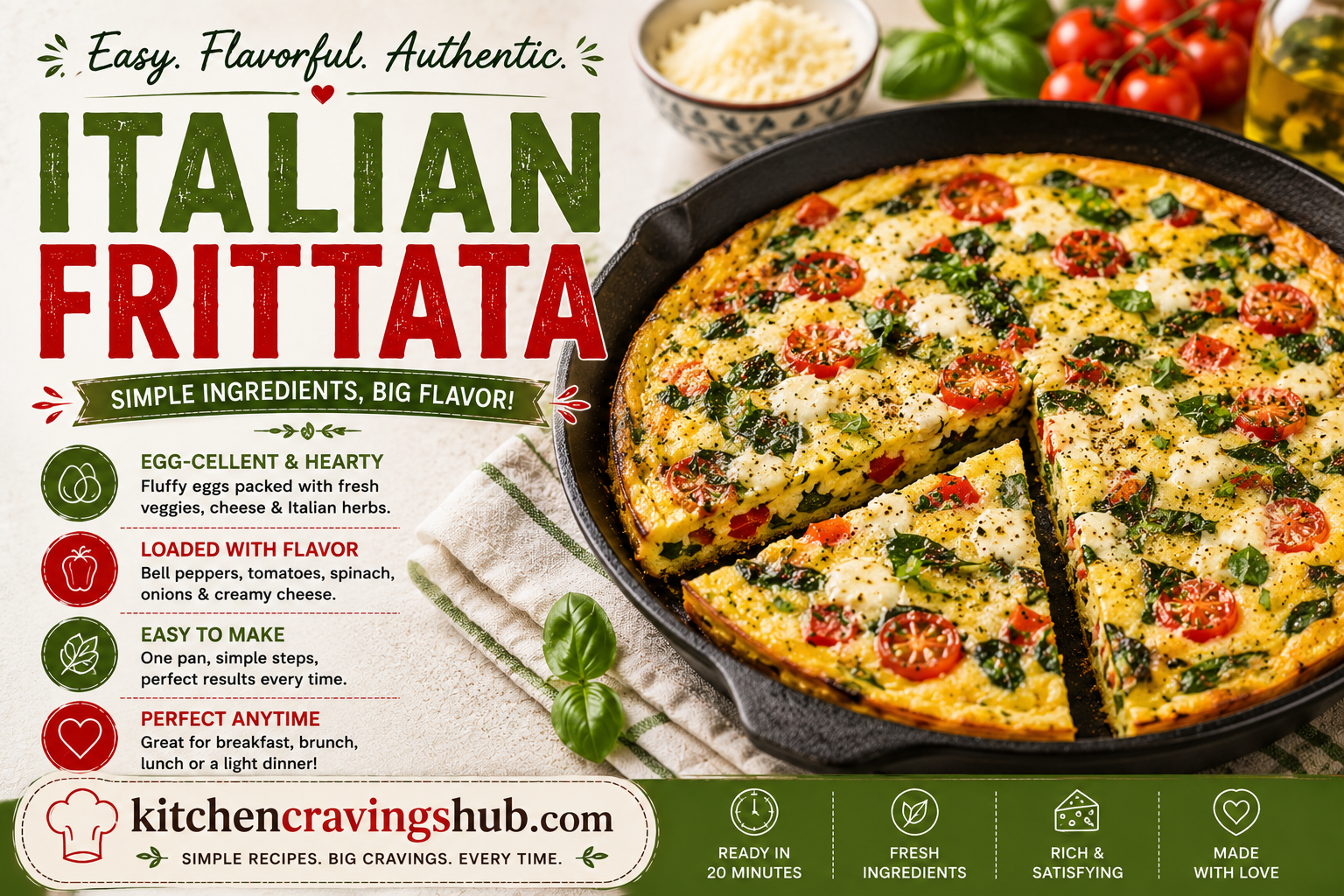
There’s a reason frittata has earned such a beloved spot in Italian home cooking, it’s endlessly versatile, comes together with whatever ingredients you have on hand, and tastes just as wonderful for breakfast as it does for a light dinner. 🧀 Fluffy eggs studded with savory vegetables, salty cheese, and fragrant herbs, all cooked together in one skillet and finished in the oven until golden and puffed, a frittata is proof that some of the best meals require very little fuss to create something truly satisfying.
Below you’ll find everything you need to make a truly delicious Italian frittata at home, including step by step instructions, my favorite tips for getting that perfect fluffy texture, fun variations to try, storage advice, and answers to the most common questions people ask about this comforting classic. Let’s get whisking. 🍳✨
🧀 What Is a Frittata?
A frittata is an Italian style open faced omelet, made by whisking eggs together with cheese and often a splash of milk or cream, then combining them with sautéed vegetables, meats, or herbs in an oven safe skillet. Unlike a French omelet, which is folded and typically cooked quickly over higher heat, a frittata is cooked low and slow on the stovetop before being finished in the oven, resulting in a thicker, more substantial dish that’s sliced into wedges, similar to a crustless quiche.
What makes frittata so beloved in Italian cooking is its incredible flexibility. It’s the perfect vehicle for using up leftover vegetables, bits of cheese, or cured meats sitting in your fridge, transforming humble ingredients into a satisfying, protein packed meal that works beautifully for breakfast, brunch, lunch, or a light dinner. 🍳🌿
💛 Why You’ll Love This Recipe
- Incredibly versatile. A wonderful way to use up whatever vegetables or cheese you have on hand.
- One pan cooking. Minimal cleanup, since everything cooks together in a single skillet.
- Great for any meal. Just as delicious at breakfast as it is for lunch or dinner.
- Naturally gluten free. A wonderful protein packed option for those avoiding gluten.
- Perfect for meal prep. Slices reheat beautifully, making this ideal for busy mornings.
🍳 Ingredients You’ll Need
For the frittata:
- 8 large eggs
- 1/4 cup whole milk or heavy cream
- 1/2 cup grated Parmesan cheese
- Salt and black pepper, to taste
- 2 tablespoons olive oil
- 1 small yellow onion, diced
- 1 cup cherry tomatoes, halved
- 1 cup fresh spinach, roughly chopped
- 1/2 cup roasted red peppers, sliced
- 1/2 cup mozzarella cheese, torn or shredded
- 2 tablespoons fresh basil, chopped, plus more for garnish
👩🍳 How to Make Italian Frittata
Step 1: Preheat your oven. Preheat your oven to 375 degrees Fahrenheit.
Step 2: Whisk the eggs. In a large bowl, whisk together the eggs, milk or cream, and grated Parmesan cheese until well combined and slightly frothy. Season with salt and black pepper.
Step 3: Sauté the onion. Heat the olive oil in a ten to twelve inch oven safe skillet over medium heat. Add the diced onion and cook for about four to five minutes, until softened and translucent.
Step 4: Add the tomatoes. Stir in the cherry tomatoes and cook for another two to three minutes, until they begin to soften and release some of their juices.
Step 5: Wilt the spinach. Add the chopped spinach to the skillet, stirring until just wilted, about one to two minutes.
Step 6: Add the roasted peppers. Stir in the sliced roasted red peppers, distributing everything evenly across the bottom of the skillet.
Step 7: Pour in the eggs. Reduce the heat to medium low and pour the whisked egg mixture evenly over the vegetables in the skillet, gently shaking the pan to distribute everything evenly.
Step 8: Cook on the stovetop. Let the frittata cook undisturbed on the stovetop for about four to five minutes, until the edges begin to set and pull slightly away from the sides of the pan.
Step 9: Add the cheese and basil. Sprinkle the mozzarella cheese and chopped fresh basil evenly over the top of the partially set frittata.
Step 10: Finish in the oven. Transfer the skillet to your preheated oven and bake for about twelve to fifteen minutes, or until the frittata is puffed, golden, and set in the center, with no visible liquid egg remaining.
Step 11: Rest before slicing. Remove the frittata from the oven and let it rest for about five minutes before slicing. This resting time helps it finish setting and makes for cleaner slices.
Step 12: Garnish and serve. Slice the frittata into wedges and garnish with extra fresh basil before serving. Enjoy warm or at room temperature. 🍳
🔥 Tips for the Perfect Frittata
- Use an oven safe skillet. A cast iron or other oven safe skillet is essential for this recipe, since it goes directly from the stovetop into the oven.
- Don’t overcook on the stovetop. You only want to partially set the edges before transferring to the oven, since the residual cooking will finish the job without overcooking the eggs.
- Whisk thoroughly. Taking the time to whisk the eggs until slightly frothy helps incorporate air, resulting in a lighter, fluffier final texture.
- Don’t overload with wet vegetables. Vegetables with high water content, like tomatoes or zucchini, benefit from a quick sauté first to release excess moisture, preventing a watery frittata.
- Let it rest before slicing. Cutting into a frittata too soon can cause it to fall apart slightly, so a brief resting period helps it hold together for neater slices.
🌈 Fun Variations to Try
Potato and Sausage Frittata 🥔 Add diced, pre cooked potatoes and crumbled Italian sausage to the skillet along with the onion for a heartier, more filling version.
Asparagus and Goat Cheese Frittata 🌱 Swap the tomatoes and peppers for sautéed asparagus, and use crumbled goat cheese in place of mozzarella for a springtime inspired variation.
Mushroom and Herb Frittata 🍄 Sauté sliced mushrooms along with the onion, and add a mix of fresh herbs like thyme and chives for an earthy, aromatic twist.
Prosciutto and Arugula Frittata 🥓 Fold in chopped prosciutto before baking, and top the finished frittata with a handful of fresh arugula and a drizzle of good olive oil.
Three Cheese Frittata 🧀 Combine mozzarella, Parmesan, and a bit of crumbled feta or ricotta for an extra rich, cheesy variation.
🧊 How to Store Italian Frittata
This dish stores and reheats wonderfully, making it a fantastic option for meal prep.
- Refrigerator: Store leftover frittata slices in an airtight container in the fridge for up to four days.
- Freezer: Individual slices can be wrapped tightly in plastic wrap and frozen for up to two months. Thaw in the fridge overnight before reheating.
- Reheating: Reheat slices in a 350 degree Fahrenheit oven for about ten minutes, or in the microwave in short bursts, until warmed through. Reheating in the oven helps maintain a better texture than the microwave alone.
- Serving cold: Frittata is also delicious served cold or at room temperature, making it a great option for picnics or packed lunches.
🍳 Perfect Occasions for Italian Frittata
This versatile, satisfying dish fits beautifully into all kinds of meals and gatherings:
- Weekend brunch spreads with coffee and fresh fruit ☕
- Quick and easy weeknight dinners 🏠
- Meal prepping for busy mornings ahead 📦
- Holiday breakfast or brunch celebrations 🎉
- A light lunch alongside a simple green salad 🥗
Its adaptability and satisfying, protein packed nature make it a reliable go to whenever you need a meal that works for practically any time of day.
❓ Frequently Asked Questions About Italian Frittata
What’s the difference between a frittata and an omelet? A frittata is cooked low and slow, with the egg mixture combined directly with the fillings rather than folded around them, and it’s typically finished in the oven, resulting in a thicker, more substantial dish compared to a quickly cooked, folded omelet.
Can I make a frittata without an oven safe skillet? If you don’t have an oven safe skillet, you can cook the vegetables and onions in a regular skillet, then transfer everything to a greased baking dish, pour the egg mixture over the top, and bake as directed.
Why is my frittata watery? This usually happens from using vegetables with high water content without pre cooking them first to release excess moisture. Sautéing watery vegetables like tomatoes or zucchini before adding the eggs helps prevent this issue.
Can I make frittata ahead of time? Yes, frittata is a wonderful make ahead dish. It can be baked in advance and stored in the fridge, then reheated or enjoyed cold or at room temperature whenever you’re ready to eat.
Can I use milk alternatives in this recipe? Yes, a dairy free milk alternative can be substituted for the milk or cream, and a plant based cheese can replace the Parmesan and mozzarella for a dairy free version, though the flavor and texture will be somewhat different.
How do I know when my frittata is done baking? The frittata is done when it’s puffed and golden, with the center fully set and no visible liquid egg remaining. A knife inserted into the center should come out clean.
🍳 Final Thoughts
Italian frittata is proof that a handful of simple, everyday ingredients can come together to create something wonderfully satisfying with very little effort. With fluffy eggs, savory vegetables, and melted cheese, all cooked together in one skillet, this versatile dish delivers comforting, protein packed flavor no matter what time of day you serve it. Whether you’re using up leftover vegetables from your fridge or planning a special weekend brunch, this recipe is a reliable, endlessly adaptable classic worth keeping in your regular rotation. 🧀✨
Give this recipe a try this week, and enjoy every fluffy, savory, satisfying bite. Happy cooking! 🍳🎉