
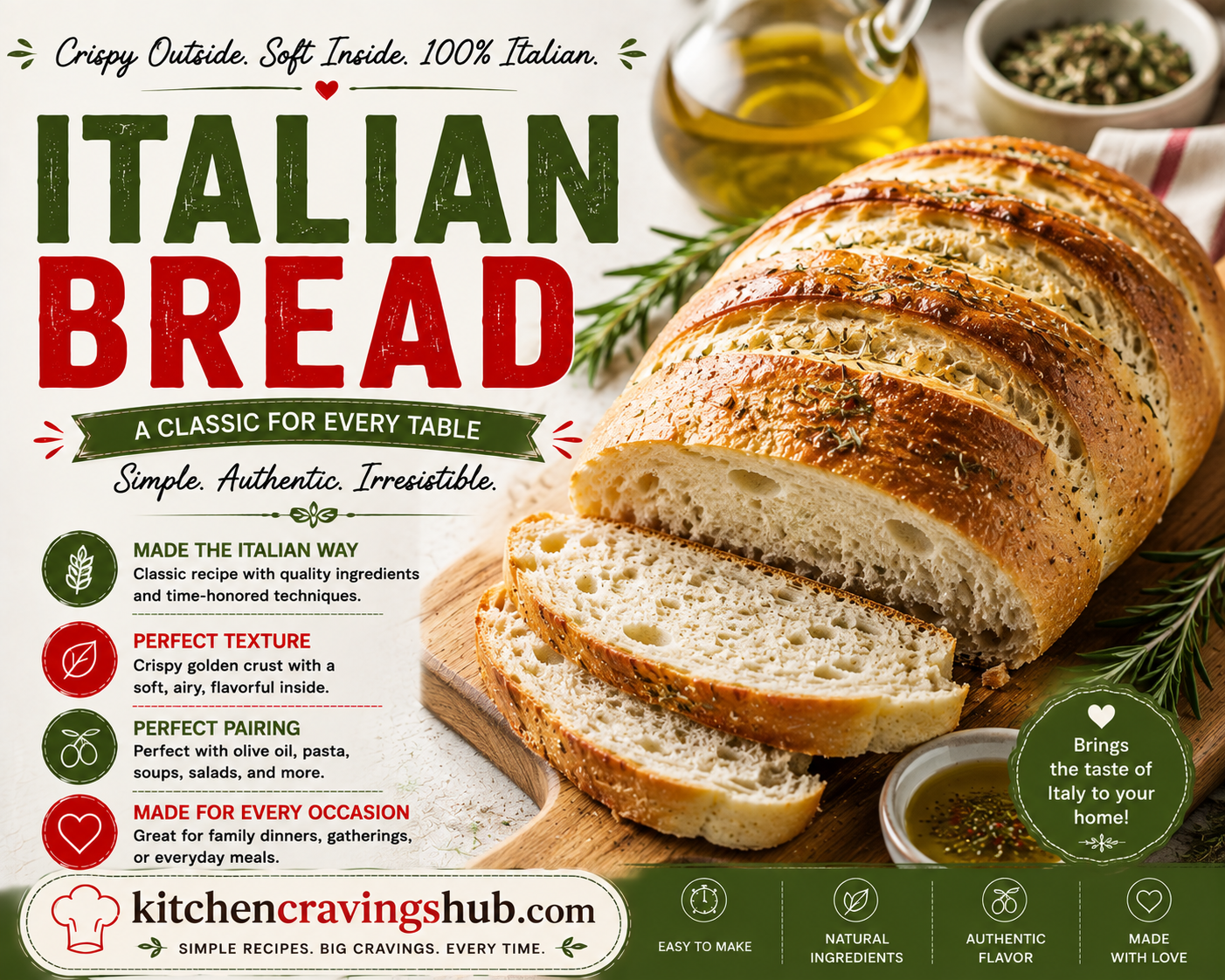
There’s nothing quite like the smell of a fresh loaf of Italian bread baking in the oven, that warm, yeasty aroma filling your entire kitchen as the crust slowly turns golden and crisp. 🌾 With its beautifully airy interior, sturdy yet crackly crust, and simple, honest ingredient list, homemade Italian bread is one of those baking projects that feels genuinely rewarding, both to make and to eat. Whether sliced thick for sandwiches, torn apart to sop up pasta sauce, or simply enjoyed warm with a bit of butter, this classic loaf never disappoints.
Below you’ll find everything you need to make a truly delicious Italian bread at home, including step by step instructions, my favorite tips for achieving that perfect crackly crust, fun variations to try, storage advice, and answers to the most common questions people ask about this beloved staple. Let’s get baking. 🍞✨
🌾 What Makes Italian Bread Special?
Italian bread is a simple, rustic style loaf made from just a handful of basic ingredients, flour, water, yeast, salt, and a touch of olive oil, resulting in a bread with a crisp, slightly chewy crust and a soft, airy interior. Unlike some other European breads that rely on a long, slow fermentation process, Italian bread is typically made using a more straightforward method, making it an approachable baking project even for those newer to working with yeast.
What sets a truly great homemade Italian bread apart is a few key techniques: proper kneading to develop gluten structure, adequate rising time to build flavor and texture, and a hot, steamy baking environment that helps create that signature crackly, golden crust. Once you master the basics, you’ll find yourself reaching for this reliable, versatile bread recipe again and again. 🍞🧈
💛 Why You’ll Love This Recipe
- Simple, honest ingredients. No complicated techniques or hard to find ingredients required.
- Incredible texture. A perfect balance of crisp crust and soft, airy interior.
- Versatile. Wonderful for sandwiches, dipping in olive oil, or serving alongside a big bowl of pasta.
- Freezes beautifully. A great make ahead option to always have fresh bread on hand.
- Deeply satisfying to bake. There’s something special about pulling a golden, homemade loaf from your own oven.
🍞 Ingredients You’ll Need
For the dough:
- 2 1/4 teaspoons active dry yeast (one standard packet)
- 1 1/2 cups warm water
- 1 teaspoon sugar
- 3 3/4 cups bread flour or all purpose flour, plus more for dusting
- 2 teaspoons salt
- 2 tablespoons olive oil
For finishing:
- 1 egg white, beaten with 1 tablespoon water (for an egg wash)
- A sprinkle of sesame seeds or cornmeal (optional)
👩🍳 How to Make Italian Bread
Step 1: Activate the yeast. In a large mixing bowl, combine the warm water, yeast, and sugar. Let it sit for about five to ten minutes, until foamy and bubbly on top, confirming your yeast is active.
Step 2: Mix the dough. Add the flour, salt, and olive oil to the yeast mixture. Mix until a shaggy dough begins to form.
Step 3: Knead the dough. Turn the dough out onto a lightly floured surface and knead for about ten minutes, until smooth and elastic. Alternatively, use a stand mixer fitted with a dough hook on medium speed for about seven to eight minutes.
Step 4: Let it rise. Place the dough in a lightly oiled bowl, turning to coat. Cover with plastic wrap or a clean kitchen towel and let it rise in a warm spot for about one to one and a half hours, or until doubled in size.
Step 5: Shape the loaf. Once risen, punch down the dough and turn it out onto a lightly floured surface. Shape it into a long, oval loaf, about fourteen to sixteen inches in length, tapering slightly at the ends.
Step 6: Second rise. Place the shaped loaf onto a baking sheet lined with parchment paper, or a cornmeal dusted baking sheet. Cover loosely and let it rise again for about thirty to forty five minutes, until noticeably puffed.
Step 7: Preheat your oven. While the dough rises, preheat your oven to 400 degrees Fahrenheit. If you have a baking stone, place it in the oven to preheat as well. For extra steam, place an empty baking pan on the bottom rack.
Step 8: Score the loaf. Using a sharp knife or a bread lame, make three or four diagonal slashes across the top of the loaf, about half an inch deep. This allows the bread to expand properly as it bakes.
Step 9: Add the egg wash. Brush the top of the loaf gently with the beaten egg white mixture, then sprinkle with sesame seeds if using.
Step 10: Create steam and bake. Just before placing the bread in the oven, carefully pour about a cup of hot water into the empty baking pan on the bottom rack to create steam, which helps develop that signature crackly crust. Bake the loaf for about twenty five to thirty minutes, until deeply golden brown and it sounds hollow when tapped on the bottom.
Step 11: Cool before slicing. Transfer the finished loaf to a wire rack and let it cool for at least twenty minutes before slicing. This resting period allows the interior crumb to fully set. 🍞
🔥 Tips for the Best Italian Bread
- Don’t rush the rising time. Allowing the dough enough time to properly rise develops both flavor and that light, airy texture, so be patient and let it double in size at each stage.
- Create steam in your oven. Introducing steam during the first part of baking is essential for achieving that signature crisp, crackly crust that Italian bread is known for.
- Score the loaf properly. Making a few diagonal slashes across the top allows the bread to expand evenly as it bakes, preventing it from cracking unpredictably.
- Let it cool before slicing. As tempting as it is to cut into warm bread right away, letting it cool helps the interior finish setting, resulting in cleaner slices and better texture.
- Use bread flour if possible. Bread flour has a higher protein content than all purpose flour, which helps develop a stronger gluten structure for that classic chewy, satisfying texture.
🌈 Fun Variations to Try
Herb Italian Bread 🌿 Add a tablespoon of dried Italian herbs, like oregano and basil, directly into the dough for a fragrant, herby variation.
Garlic Italian Bread 🧄 Knead a tablespoon of roasted garlic paste into the dough, or brush the finished loaf with garlic butter right after baking for extra flavor.
Whole Wheat Italian Bread 🌾 Substitute up to half of the flour with whole wheat flour for a heartier, slightly nuttier version of this classic loaf.
Italian Bread Rolls 🥖 Divide the dough into smaller portions and shape into individual rolls instead of one large loaf, adjusting the baking time down to about eighteen to twenty minutes.
Seeded Italian Bread 🌻 Brush the loaf with egg wash and top with a mixture of sesame seeds, poppy seeds, and a touch of coarse salt for extra flavor and crunch.
🧊 How to Store Italian Bread
Homemade bread is best enjoyed fresh, but it stores reasonably well with the right approach.
- Room temperature: Store the cooled loaf wrapped in a clean kitchen towel or paper bag at room temperature for up to two days. Avoid storing in a plastic bag, since this can trap moisture and soften the crust.
- Freezer: For longer storage, wrap the cooled loaf tightly in plastic wrap and foil and freeze for up to three months. Thaw at room temperature, then reheat in a warm oven for a few minutes to recrisp the crust.
- Sliced bread storage: If you prefer, slice the loaf before freezing, allowing you to pull out individual slices as needed, toasting them directly from frozen.
- Reviving stale bread: If your bread has gone slightly stale, a quick trip through a warm oven, lightly misted with water first, can help revive the crust and soften the interior.
🍞 Perfect Occasions for Italian Bread
This versatile, classic loaf fits beautifully into all kinds of meals and gatherings:
- Family pasta night, perfect for soaking up extra sauce 🍝
- Sandwich making, from classic subs to Italian beef sandwiches 🥪
- Holiday dinners and gatherings as a beautiful bread basket addition 🎄
- A fun weekend baking project to enjoy with the whole family 👨👩👧👦
- Simply served warm with olive oil for dipping 🫒
Its wonderfully versatile nature makes it a reliable staple worth having in your regular baking rotation.
❓ Frequently Asked Questions About Italian Bread
What’s the difference between Italian bread and French bread? While similar in some ways, Italian bread typically includes a touch of olive oil in the dough, giving it a slightly softer texture and richer flavor compared to French bread, which is usually made with just flour, water, yeast, and salt.
Why didn’t my bread develop a crackly crust? This usually happens from skipping the steam step during baking. Adding hot water to a preheated pan in the oven creates the steam necessary for that signature crisp, crackly texture.
Can I make this bread without a stand mixer? Yes, this bread can absolutely be made by hand. Kneading by hand for about ten minutes achieves the same results as using a stand mixer, it just requires a bit more elbow grease.
Why is my bread dense instead of airy? This is usually caused by insufficient rising time, old or inactive yeast, or too much added flour during kneading. Make sure your yeast is fresh and active, and allow the dough plenty of time to properly double in size at each rising stage.
Can I freeze the bread dough instead of baking it right away? Yes, after the first rise, you can shape the dough, then wrap and freeze it before the second rise. Thaw in the refrigerator overnight, then bring to room temperature and let it complete its second rise before baking as directed.
How do I know when the bread is fully baked? The bread should be deeply golden brown, and when tapped on the bottom, it should sound hollow. An instant read thermometer inserted into the center should read about 190 to 200 degrees Fahrenheit.
🍞 Final Thoughts
Italian bread is proof that some of the most satisfying baking projects come from the simplest ingredient lists. With just flour, water, yeast, salt, and a touch of olive oil, you can create a beautiful, rustic loaf with a crisp, crackly crust and soft, airy interior, perfect for sandwiches, dipping, or serving alongside your favorite Italian meal. Whether you’re a beginner baker or simply looking to add a reliable homemade bread recipe to your collection, this classic loaf is well worth the time and effort. 🌾✨
Give this recipe a try this weekend, and enjoy every warm, crusty, homemade bite. Happy baking! 🍞🎉