
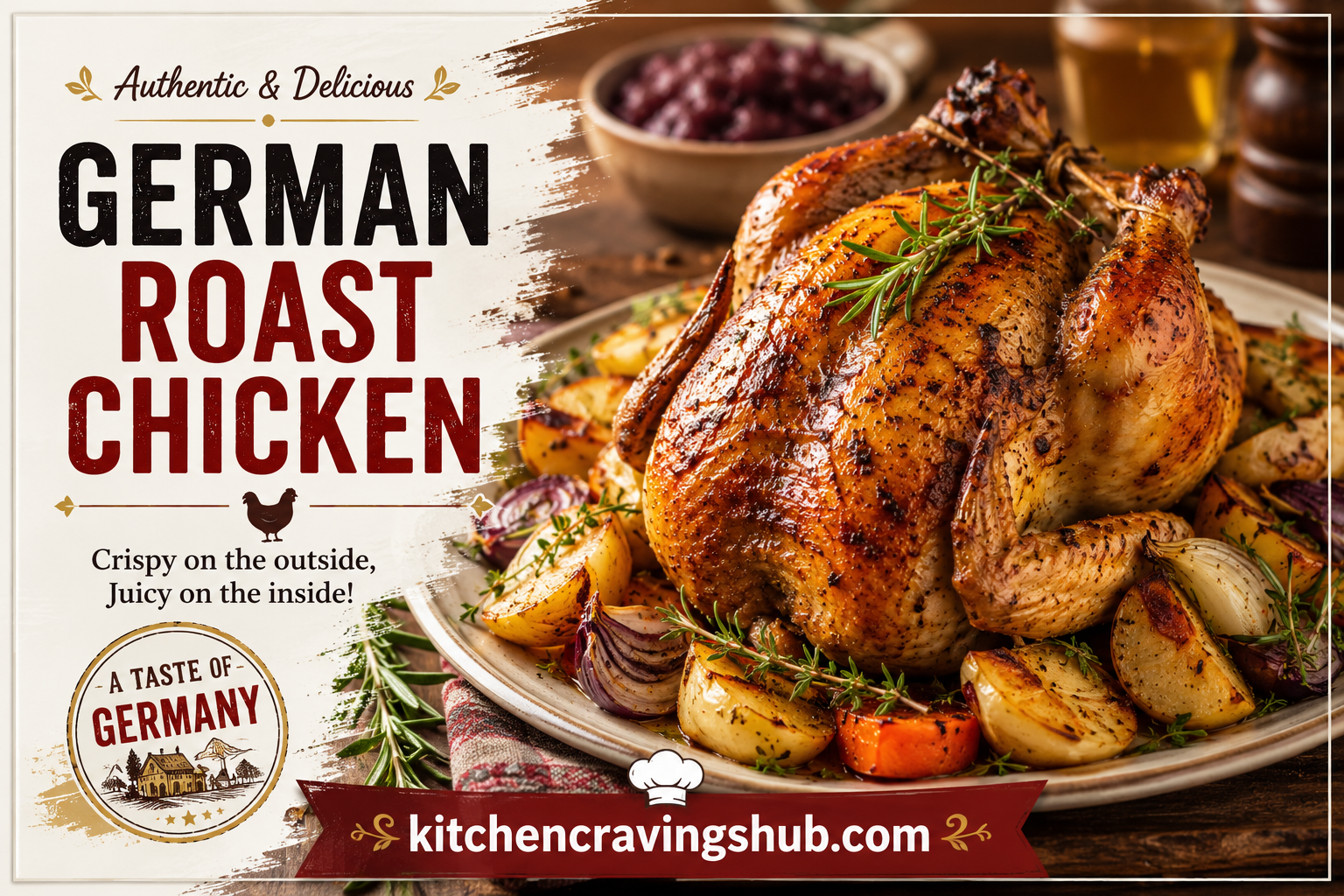
There is something wonderful about the smell of a whole chicken roasting in the oven, skin turning golden and crackling while the kitchen fills with the warm scent of herbs and garlic. German roast chicken, known as Brathähnchen, is a beloved staple across Germany, the kind of dish that shows up at beer gardens, family Sunday dinners, and festive gatherings alike. Simple, hearty, and endlessly satisfying. 😋
In this guide, we are going to cover everything you need to know about German roast chicken. We will talk about where this dish comes from, why it has become such a beloved favorite, the ingredients you need, a full step by step recipe, tips for getting that perfect crispy skin and juicy meat, common mistakes to avoid, healthier variations, and answers to the most frequently asked questions. Let us get roasting. 🧑🍳
What Is German Roast Chicken? 🤔
German roast chicken, known as Brathähnchen or Hähnchen, is a whole roasted chicken seasoned simply with salt, pepper, paprika, and often a bit of butter, then roasted until the skin turns deeply golden and crispy while the meat inside stays tender and juicy. It is one of the most iconic and beloved dishes in German cuisine, commonly found at beer gardens, street food stalls, and family dinner tables throughout the country.
This dish holds a particularly special place in Bavarian culture, where roast chicken is a staple at Oktoberfest and beer gardens throughout the region, often served simply with a wedge of lemon and enjoyed alongside a cold beer. Unlike some more elaborately spiced roast chicken preparations found in other cuisines, German roast chicken tends to keep the seasoning straightforward, letting the quality of the chicken itself and that perfectly crispy skin take center stage.
The appeal of this dish lies largely in its simplicity and the satisfying contrast between crispy, well seasoned skin and moist, tender meat underneath, a combination that has made it a beloved comfort food across generations. 🌟
Why People Love German Roast Chicken ❤️
There are several reasons this dish has earned such a devoted following.
First, the simplicity is part of the charm. With just a handful of seasonings, this dish proves that you do not need a complicated marinade or a long list of ingredients to create something truly delicious.
Second, the contrast in texture is wonderful. That deeply golden, crispy skin paired with juicy, tender meat underneath creates a satisfying bite that few other preparations can match.
Third, it is a fantastic centerpiece for gatherings and celebrations. A whole roasted chicken has a way of feeling festive and special, making it a popular choice for Sunday family dinners or larger get togethers.
Finally, it is wonderfully versatile when it comes to sides. German roast chicken pairs beautifully with a wide variety of classic accompaniments, from potato salad to sauerkraut, making it easy to build a full, satisfying meal around it. 🏠
Ingredients You Will Need 🛒
Here is everything required to make a fantastic German roast chicken at home.
For the Chicken
A whole chicken, ideally around four to five pounds, patted completely dry. Salt, for seasoning generously both inside and out. Black pepper, for seasoning. Sweet paprika, which gives the skin a beautiful color and subtle warmth, a very traditional German seasoning choice for roast chicken. Softened butter, for rubbing over the skin, which helps achieve that deep golden color and rich flavor. Garlic cloves, whole or smashed, for aromatic depth. Fresh herbs, such as thyme, rosemary, or marjoram, for fragrance. A lemon, halved, for stuffing inside the cavity, which adds brightness and helps keep the meat moist during roasting.
For the Pan
Onion, quartered, to place underneath the chicken, which adds flavor to the pan drippings. Chicken broth or water, for the bottom of the roasting pan, to keep the drippings from burning and to help create a flavorful base for gravy if desired. 🌿
Step by Step Recipe: How to Make German Roast Chicken 👩🍳
This recipe generally serves about four people and takes around one hour and thirty minutes from start to finish, including resting time.
Step 1: Prepare the Chicken
Remove the chicken from its packaging and pat it completely dry, inside and out, with paper towels. This step is essential for achieving crispy skin, since excess moisture will cause the chicken to steam rather than properly roast. Let the chicken sit at room temperature for about thirty minutes before cooking, which helps it roast more evenly.
Step 2: Season the Chicken
Generously season the cavity of the chicken with salt and pepper, then stuff it with the halved lemon, smashed garlic cloves, and fresh herbs. Rub the softened butter all over the outside of the chicken, getting into every nook and cranny, then season the exterior generously with salt, pepper, and paprika.
Step 3: Prepare the Roasting Pan
Preheat your oven to around 425 degrees Fahrenheit. Place the quartered onion in the bottom of a roasting pan, then pour in a small amount of chicken broth or water, which helps prevent the drippings from burning and creates a flavorful base.
Step 4: Truss the Chicken, Optional
If desired, tie the legs together with kitchen twine and tuck the wing tips underneath the body. This step helps the chicken cook more evenly and results in a neater presentation, though it is not strictly necessary.
Step 5: Roast the Chicken
Place the chicken breast side up on top of the onions in the roasting pan. Roast at 425 degrees Fahrenheit for about twenty minutes, which helps jumpstart that crispy skin, then reduce the oven temperature to 375 degrees Fahrenheit and continue roasting for another fifty minutes to an hour, until the internal temperature reaches 165 degrees Fahrenheit when measured in the thickest part of the thigh.
Step 6: Baste Occasionally
Every twenty minutes or so during roasting, baste the chicken with the pan drippings, which helps keep the skin moist and encourages even browning. Be careful when opening the oven, since this can cause temperature fluctuations if done too frequently.
Step 7: Rest the Chicken
Once the chicken reaches the correct internal temperature, remove it from the oven and let it rest for about fifteen minutes before carving. This resting period allows the juices to redistribute throughout the meat, resulting in juicier slices.
Step 8: Carve and Serve
Carve the chicken into pieces and serve hot, spooning some of the flavorful pan drippings over the top if desired. 🍗
Pro Tips for the Best German Roast Chicken 💡
Pat the chicken completely dry before seasoning. This step is essential for achieving that signature crispy, golden skin, since any excess moisture will cause steaming rather than proper roasting.
Let the chicken come to room temperature before roasting. This helps it cook more evenly, preventing the exterior from overcooking before the interior reaches a safe temperature.
Use a meat thermometer to check doneness. Relying on time alone can lead to undercooked or overcooked chicken, so checking the internal temperature in the thickest part of the thigh is the most reliable method.
Baste periodically but do not overdo it. Opening the oven too frequently can cause temperature fluctuations that affect how evenly the chicken cooks and how crispy the skin becomes.
Let the chicken rest before carving. Cutting into it too soon releases all those flavorful juices, resulting in drier meat than necessary.
Do not skip stuffing the cavity with aromatics. The lemon, garlic, and herbs inside the chicken infuse the meat with flavor from the inside out as it roasts.
Common Mistakes to Avoid ⚠️
Not drying the chicken thoroughly before seasoning. This is one of the most common reasons homemade roast chicken ends up with soggy rather than crispy skin.
Roasting straight from the refrigerator. Cold chicken placed directly into a hot oven can cook unevenly, so letting it sit at room temperature briefly beforehand helps ensure more even cooking.
Opening the oven too frequently to check on the chicken. This causes temperature fluctuations that can extend cooking time and affect how evenly the chicken roasts.
Skipping the resting period after roasting. Carving into the chicken too soon releases valuable juices, resulting in drier meat than if it had been allowed to rest properly.
Not using a meat thermometer. Relying solely on visual cues or general cooking time guidelines can result in undercooked or overcooked chicken, so a thermometer is the most reliable way to check doneness.
Healthier Ways to Make German Roast Chicken 🥗
If you want a lighter version of this dish, here are a few simple adjustments to try.
Remove the skin before eating, though keep in mind the skin is largely responsible for keeping the meat moist during roasting, so it is best left on during cooking even if removed before serving.
Use a smaller amount of butter, substituting some or all of it with olive oil, which still helps achieve nicely browned skin with slightly less saturated fat.
Skim excess fat from the pan drippings if making gravy or serving the drippings alongside the chicken.
Serve smaller portions of chicken alongside a larger serving of roasted or steamed vegetables to help balance out the meal.
Opt for chicken breast portions if you prefer white meat only, adjusting the roasting time accordingly since breast meat can dry out more easily than dark meat. 🌾
What to Serve With German Roast Chicken 🍽️
German roast chicken pairs beautifully with classic German side dishes like warm potato salad, buttery spaetzle, or simple roasted potatoes. Sauerkraut or braised red cabbage also make wonderful accompaniments, adding a tangy contrast to the rich, savory chicken.
For a lighter meal, serve alongside a simple green salad or steamed vegetables. If you are hosting a bigger gathering, this dish pairs nicely with a variety of German inspired sides and a cold beer to create an authentic, festive spread. 🍺
Storing and Reheating Leftovers 📦
Store leftover roast chicken in an airtight container in the refrigerator for up to four days. The meat also freezes well for up to three months if you want to save some for later.
To reheat, warm the chicken in an oven at around 350 degrees Fahrenheit, covered loosely with foil to prevent drying out, until heated through, about fifteen to twenty minutes depending on the amount. The microwave also works if you are short on time, though it may result in slightly less crispy skin compared to oven reheating.
Frequently Asked Questions ❓
What is Brathähnchen? Brathähnchen is the German name for roast chicken, a beloved dish commonly found at beer gardens, festivals like Oktoberfest, and family dinner tables throughout Germany, typically seasoned simply with salt, pepper, and paprika, then roasted until crispy and golden.
Why is my chicken skin not getting crispy? This is usually caused by excess moisture on the chicken before roasting, roasting at too low a temperature, or overcrowding the pan. Patting the chicken thoroughly dry and starting at a higher oven temperature helps achieve that signature crispy skin.
How do I know when the chicken is fully cooked? The most reliable method is using a meat thermometer inserted into the thickest part of the thigh, without touching bone, which should read 165 degrees Fahrenheit when the chicken is fully cooked and safe to eat.
Can I make this dish with chicken pieces instead of a whole chicken? Yes, bone in chicken pieces like thighs and drumsticks can be seasoned and roasted using a similar method, just adjust the cooking time since individual pieces will cook faster than a whole chicken.
Can I make gravy from the pan drippings? Absolutely. The flavorful drippings left in the pan after roasting make a wonderful base for gravy, simply strain out the solids, skim excess fat, and thicken with a bit of flour or cornstarch over the stovetop.
Can I make this dish gluten free? Yes, this dish is naturally gluten free as written, since it relies on chicken, butter, and basic seasonings without any wheat based ingredients, making it a great option for those following a gluten free diet.
Final Thoughts 🌈
German roast chicken proves that sometimes the simplest preparations are the most satisfying. With just a handful of seasonings and a bit of attention to technique, patting the chicken dry, roasting at the right temperature, and letting it rest properly, you can create a dish with that perfect combination of crispy, golden skin and juicy, tender meat that has made this dish a beloved staple across Germany.
Once you get comfortable with the basic roasting technique, this recipe becomes a wonderful centerpiece for Sunday dinners, casual gatherings, or any time you are craving a comforting, homemade meal. Pair it with your favorite German sides, or keep it simple and let the chicken shine on its own.
So pat that chicken dry, season it generously, and get ready to enjoy the crispy, juicy comfort of homemade German roast chicken. Happy cooking! 🍳🥳