
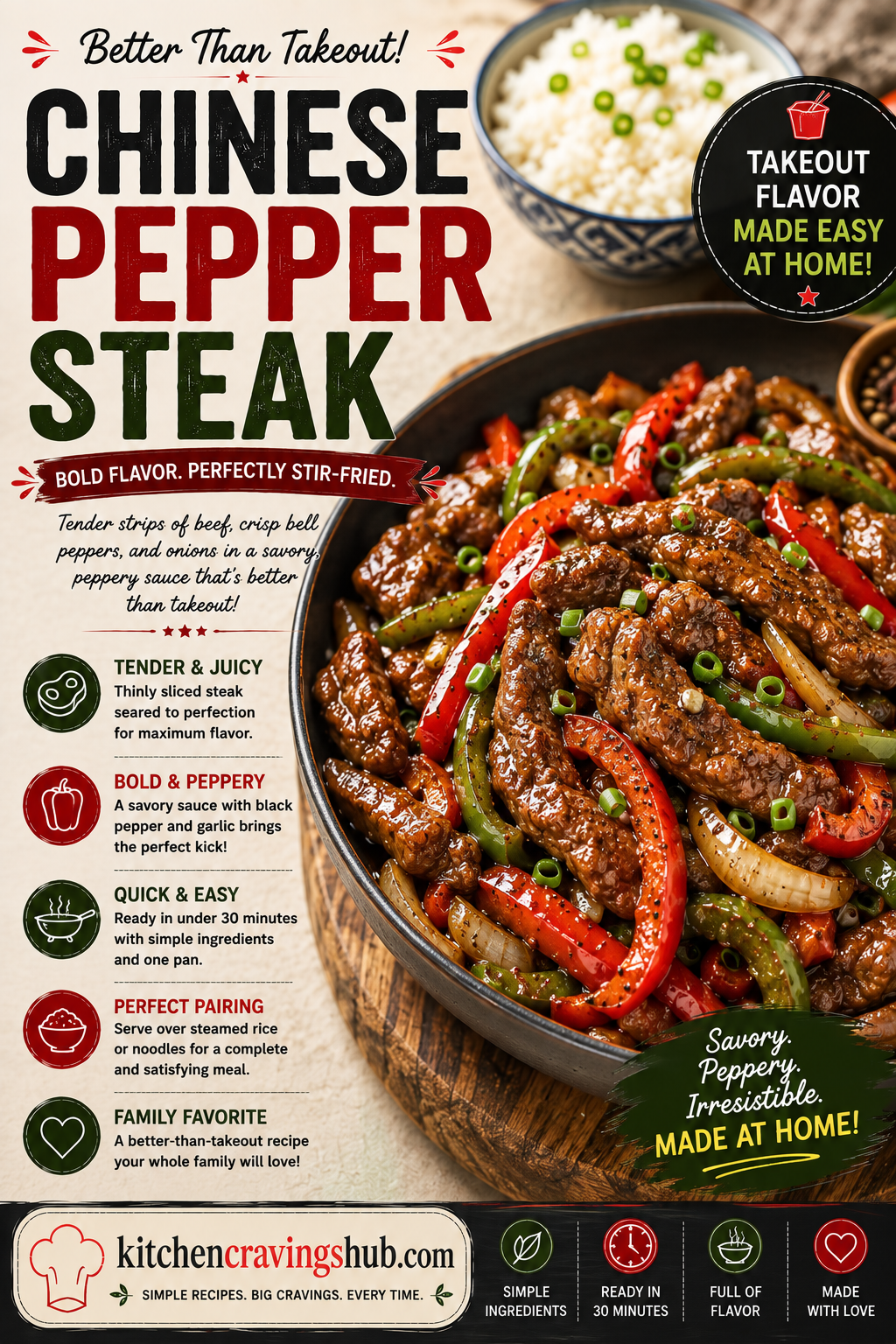
There is something magical about the sizzle of a hot wok, thin slices of beef turning glossy brown, and colorful bell peppers tossed in right at the last moment to keep their crunch. That is the beauty of Chinese pepper steak, a dish that feels fancy enough for a special dinner but is actually simple enough to make on a busy weeknight. 😍
In this guide, we are going to cover everything you need to know about Chinese pepper steak. We will look at its history, why people love it so much, the exact ingredients you need, a full step by step recipe, expert tips for tender beef every time, common mistakes to avoid, healthier variations, and answers to frequently asked questions. By the time you finish reading, you will be able to make this dish with confidence and skip the takeout menu entirely. 🧑🍳
What Is Chinese Pepper Steak? 🤔
Chinese pepper steak, sometimes called pepper steak with onions or beef and pepper stir fry, is a dish made from thinly sliced beef stir fried at high heat with bell peppers, onions, and a savory garlic infused sauce. The sauce typically includes soy sauce, a touch of sugar, and a splash of rice wine or vinegar, all thickened slightly with cornstarch so it clings beautifully to the beef and vegetables.
This dish has roots in Cantonese cooking, where quick stir frying at very high heat is a defining technique. The goal is to sear the beef fast so it stays tender and juicy while the vegetables remain crisp and vibrant. Like many Chinese American restaurant favorites, pepper steak evolved over the decades to suit Western palates, often becoming slightly sweeter and saucier than its traditional counterpart, but the core idea of tender beef paired with crunchy peppers has remained the same.
Pepper steak is often confused with beef and broccoli or Mongolian beef, but it stands apart because of its signature combination of bell peppers, onions, and sometimes tomatoes, all bathed in that glossy brown sauce. 🌟
Why People Love Chinese Pepper Steak ❤️
There are so many reasons this dish has earned a permanent spot on takeout menus and home dinner tables alike.
First, it comes together fast. Stir frying is one of the quickest cooking methods around, which makes pepper steak perfect for busy weeknights when you want something delicious without spending an hour in the kitchen.
Second, it is packed with texture and color. The bright red and green peppers against the deep brown beef and glossy sauce make for a dish that looks as good as it tastes.
Third, it strikes a wonderful balance between savory, slightly sweet, and umami rich flavors. The garlic and ginger add warmth, the soy sauce brings saltiness, and the peppers add a subtle natural sweetness that ties everything together.
Finally, it is a fantastic way to stretch a modest amount of beef into a filling meal. Thin slicing and quick cooking mean you do not need a huge cut of meat to feed a hungry family, which makes this dish both delicious and budget friendly. 💰
Ingredients You Will Need 🛒
Here is everything required to make a great batch of Chinese pepper steak at home.
For the Beef
Flank steak, sirloin, or skirt steak, sliced thinly against the grain. Flank steak is a popular choice because it stays tender when sliced correctly and cooked quickly. Soy sauce, for marinating and adding deep savory flavor. Cornstarch, used in the marinade to help tenderize the beef and give it a slightly velvety texture once cooked. Rice wine or dry sherry, which adds depth to the marinade. A pinch of baking soda, optional, but often used by restaurants to further tenderize tougher cuts of beef.
For the Sauce
Soy sauce, the backbone of the flavor. Oyster sauce, for a rich umami boost. Beef broth or water, to thin the sauce slightly. Brown sugar, for a touch of sweetness that balances the salty and savory notes. Cornstarch mixed with water, to thicken the sauce into that glossy consistency. Garlic and ginger, minced or grated, for aromatic depth.
For the Vegetables
Bell peppers, a colorful mix of red, green, and yellow. Onion, sliced into wedges or strips. Optional additions like sliced tomatoes, mushrooms, or snap peas for extra texture and nutrition. Green onions, for garnish.
For Cooking
Vegetable oil, canola oil, or peanut oil, since these handle high heat well. Sesame oil, added at the end for a fragrant finishing touch. 🌿
Step by Step Recipe: How to Make Chinese Pepper Steak 👩🍳
This recipe generally serves about four people and takes around thirty five minutes from start to finish, including marinating time.
Step 1: Slice and Marinate the Beef
Slice your beef thinly against the grain, aiming for pieces about a quarter inch thick. Slicing against the grain is essential because it shortens the muscle fibers, which keeps the beef tender rather than chewy. Place the beef in a bowl and add soy sauce, a spoonful of cornstarch, a splash of rice wine, and a pinch of baking soda if using. Mix well and let it marinate for at least fifteen minutes, though thirty minutes to an hour will give even better results.
Step 2: Prepare the Sauce
In a small bowl, whisk together soy sauce, oyster sauce, beef broth, brown sugar, and a cornstarch and water slurry. Set this aside so it is ready to pour in later. Having your sauce prepped ahead of time is important because stir frying moves quickly and you will not have time to measure ingredients once the wok is hot.
Step 3: Sear the Beef
Heat a wok or large skillet over high heat until it is very hot, then add oil. Add the marinated beef in a single layer, working in batches if necessary to avoid overcrowding the pan. Let the beef sear undisturbed for about a minute before stirring, which helps develop a nice brown crust. Cook for another minute or two until just cooked through, then remove the beef from the pan and set it aside. It is fine if the beef looks slightly underdone at this stage since it will finish cooking when combined with the sauce later.
Step 4: Stir Fry the Vegetables
In the same hot pan, add a touch more oil if needed. Toss in the onions and stir fry for about a minute, then add the bell peppers. Cook everything over high heat for two to three minutes, stirring frequently, until the vegetables are crisp tender but still vibrant in color. Add minced garlic and ginger during the last thirty seconds so they become fragrant without burning.
Step 5: Combine Everything
Return the beef to the pan with the vegetables. Give your prepared sauce a quick stir since the cornstarch may have settled, then pour it into the pan. Toss everything together and let the sauce simmer for about a minute until it thickens and coats every piece of beef and every pepper slice in a beautiful glossy layer.
Step 6: Finish and Serve
Drizzle a small amount of sesame oil over the top and give everything one final toss. Garnish with sliced green onions. Serve immediately over steamed white rice, fried rice, or noodles while everything is still hot and the vegetables are crisp. 🍚
Pro Tips for the Best Chinese Pepper Steak 💡
Always slice beef against the grain. This single step makes the biggest difference in tenderness.
Do not skip the marinating step. Even fifteen minutes helps, and the cornstarch in the marinade creates that signature velvety texture found in Chinese restaurant beef dishes.
Cook in batches if your pan is small. Overcrowding causes the beef to steam instead of sear, which results in a gray, chewy texture instead of a flavorful brown crust.
Keep your vegetables crisp. Bell peppers and onions should retain some bite, so avoid overcooking them. They will continue to soften slightly once combined with the hot sauce.
Prep everything before you start cooking. Stir frying happens fast, so have your beef marinated, sauce mixed, and vegetables chopped before the wok ever touches the stove.
Use high heat throughout. A wok or skillet that is not hot enough will not give you that signature seared flavor often called wok hei in Chinese cooking.
Common Mistakes to Avoid ⚠️
Slicing the beef with the grain instead of against it. This results in tough, chewy meat no matter how well you cook it.
Overcrowding the pan. This drops the temperature and causes the beef to steam rather than sear, leading to a duller flavor and softer texture.
Skipping the marinade. Even a short marinating time makes a noticeable difference in both flavor and tenderness.
Overcooking the vegetables. Mushy peppers and onions lose the fresh crunch that makes this dish so enjoyable.
Adding the sauce too early. Pour the sauce in only after the beef and vegetables are nearly done cooking, otherwise the vegetables can turn soggy from sitting in liquid for too long.
Healthier Ways to Make Chinese Pepper Steak 🥗
If you want a lighter version of this dish without sacrificing flavor, try these simple adjustments.
Use a leaner cut of beef such as sirloin instead of fattier cuts, or substitute with chicken breast or firm tofu for a different protein option.
Reduce the sugar in the sauce slightly, letting the natural sweetness of the bell peppers shine through instead.
Cut back on the oil used for stir frying by using a nonstick pan, which requires less oil to prevent sticking.
Load up on extra vegetables like broccoli, snap peas, or mushrooms to increase the fiber and nutrient content of the meal.
Serve over brown rice, cauliflower rice, or a bed of steamed greens instead of white rice for a more balanced plate. 🌾
What to Serve With Chinese Pepper Steak 🍽️
Chinese pepper steak pairs wonderfully with steamed jasmine rice, which soaks up the savory sauce perfectly. Fried rice is another popular option if you want something heartier. Lo mein or chow mein noodles also work beautifully as a base for this dish.
For a lighter meal, pair it with a simple side salad, steamed bok choy, or a light vegetable soup. If you are hosting a bigger dinner, egg rolls or dumplings make a fantastic starter to round out a homemade Chinese takeout style spread. 🥢
Storing and Reheating Leftovers 📦
Store any leftover pepper steak in an airtight container in the refrigerator for up to three days. The flavors often deepen overnight, making leftovers just as delicious the next day.
To reheat, use a skillet over medium high heat with a small splash of water or broth to loosen the sauce, stirring frequently until heated through. This method helps preserve the texture of the beef better than a microwave. If you are short on time, microwaving in short bursts while stirring in between also works, though the beef may be slightly less tender than freshly cooked.
Frequently Asked Questions ❓
What cut of beef is best for pepper steak? Flank steak, sirloin, and skirt steak are the most popular choices because they are flavorful and become tender when sliced thinly against the grain and cooked quickly over high heat.
Why is restaurant beef so much more tender than homemade beef? Restaurants often use a technique called velveting, which involves marinating the beef in a mixture containing cornstarch and sometimes a small amount of baking soda or egg white before a quick blanch or fry. This same technique is used in the marinade step of this recipe.
Can I make Chinese pepper steak without a wok? Yes. A large, wide skillet works well too. The key is making sure the pan gets very hot before adding the beef so it sears properly instead of steaming.
Is Chinese pepper steak spicy? Traditional pepper steak is not spicy on its own, since the peppers used are bell peppers rather than hot peppers. If you enjoy some heat, you can add sliced chili peppers or a spoonful of chili garlic sauce.
Can I make this dish gluten free? Yes, simply substitute regular soy sauce and oyster sauce with gluten free alternatives, which are widely available at most grocery stores.
Can I prepare parts of this recipe ahead of time? Absolutely. You can slice and marinate the beef, chop the vegetables, and mix the sauce a few hours ahead of time, then store everything separately in the refrigerator until you are ready to stir fry.
Final Thoughts 🌈
Chinese pepper steak is proof that a handful of simple, everyday ingredients can come together to create something truly satisfying. The tender seared beef, the crisp colorful peppers, and that rich glossy sauce combine into a dish that feels special without requiring hours of effort or a long shopping list.
Once you get comfortable with the basic technique of marinating, searing, and stir frying at high heat, you will find that this recipe becomes a reliable go to whenever you want a quick, flavorful dinner. Feel free to experiment with different vegetables, adjust the sauce to your taste, or swap in a different protein depending on what you have on hand.
So heat up that pan, get your ingredients prepped, and enjoy the process of watching everything come together in just a few fast, sizzling minutes. Happy cooking! 🍳🥳