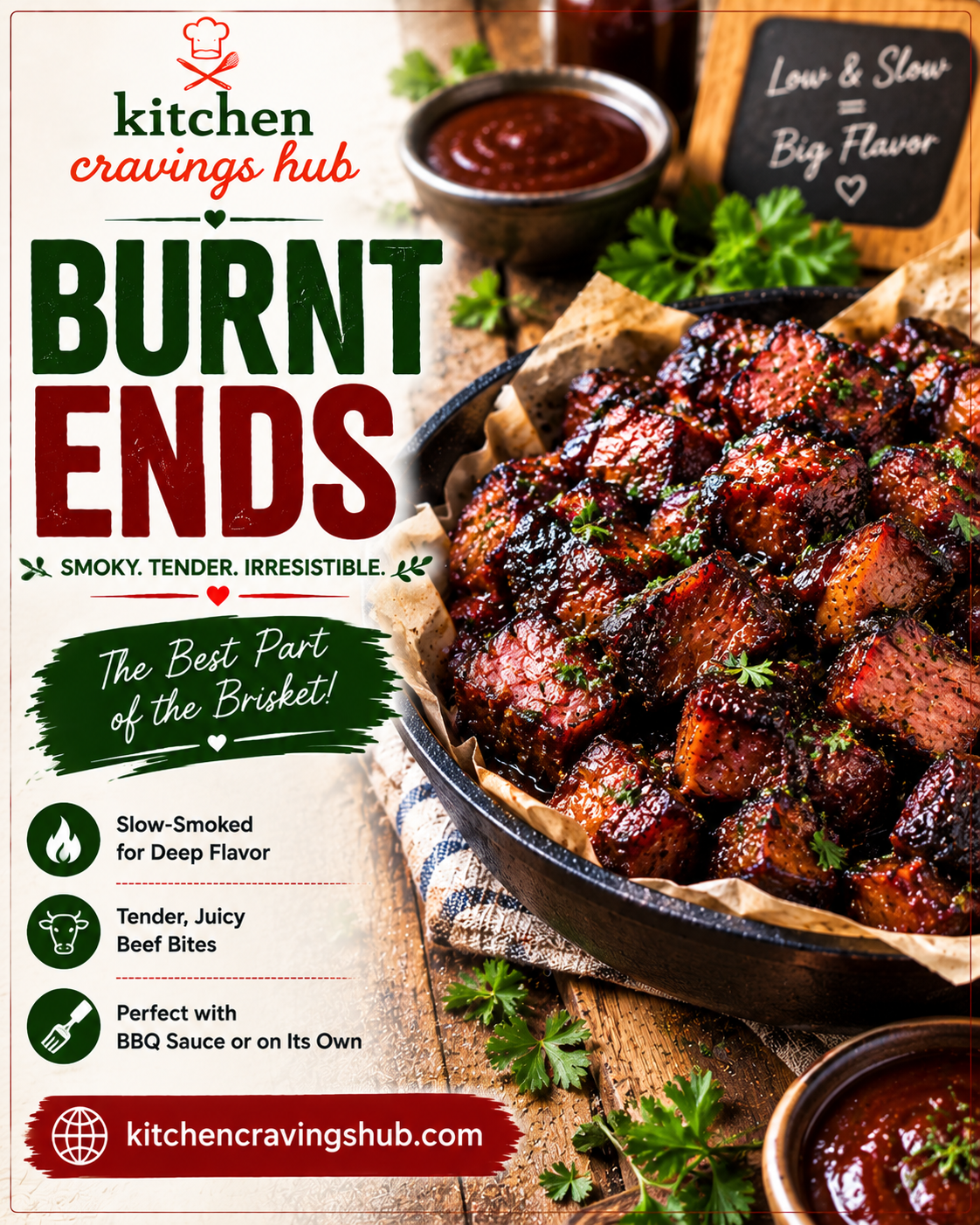
If you have ever visited a legendary barbecue joint in Kansas City, chances are you have encountered a dish that locals passionately swear by, Burnt Ends. With their deeply caramelized, smoky exterior and impossibly tender, juicy interior, these bite sized pieces of slow smoked beef brisket have earned a devoted following among barbecue enthusiasts nationwide. Often referred to as “meat candy” by die hard fans, Burnt Ends represent the absolute pinnacle of low and slow barbecue mastery.
In this article, we are going to explore everything you need to know about Burnt Ends. What they actually are, their fascinating origin story rooted in Kansas City barbecue culture, how to make them at home, and why this smoky, caramelized delicacy continues to capture the hearts of barbecue lovers everywhere. Let us fire up the smoker! 🍖
🍽️ What Exactly Are Burnt Ends?
Burnt Ends are cubed pieces cut from the point end of a smoked beef brisket, then returned to the smoker and coated in barbecue sauce for an additional round of slow cooking. This extra smoking time allows the exterior to develop an intensely caramelized, almost candy like crust, while the fat rendered throughout the point cut keeps the interior remarkably tender and juicy.
Traditionally, Burnt Ends were made from the naturally fattier, more flavorful point section of the brisket, which benefits enormously from the additional cooking time needed to fully render its fat and connective tissue. The result is a bite sized barbecue delicacy that perfectly balances smoky, sweet, savory, and slightly charred flavors in every single piece.
You will often find Burnt Ends:
- 🍖 At legendary barbecue restaurants throughout Kansas City
- 🎉 At barbecue competitions and cook off events
- 🏠 In home kitchens among dedicated backyard pitmasters
- 🥪 Served as a main dish, appetizer, or piled onto a sandwich
📜 The Fascinating History Behind Burnt Ends
Burnt Ends trace their origins directly back to Kansas City barbecue culture, particularly to the legendary Arthur Bryant’s Barbecue, where the dish is widely believed to have first gained popularity during the mid 20th century. In the early days of Kansas City barbecue, the smoky, well done end pieces trimmed from a brisket were often considered scraps, sometimes given away for free to customers waiting for their orders, or used simply to keep pitmasters going during long smoking sessions.
Over time, customers began requesting these flavorful, caramelized trimmings more and more, recognizing them as a deeply delicious byproduct of the brisket smoking process rather than mere scraps. As demand grew, pitmasters began intentionally preparing and serving Burnt Ends as their own standalone menu item, eventually elevating this humble barbecue byproduct into one of the most celebrated and sought after specialties in all of Kansas City barbecue culture.
Today, Burnt Ends are considered an essential must try dish for any serious barbecue enthusiast visiting Kansas City, and their popularity has since spread to barbecue restaurants and backyard smokers across the entire country. 🕰️
🧡 Why People Love Burnt Ends
There are countless reasons this smoky, caramelized delicacy has earned such a devoted following among barbecue lovers.
- 🔥 The deeply caramelized, smoky crust delivers intense, concentrated flavor
- 🍖 The tender, juicy interior offers the perfect textural contrast
- 🍯 The combination of smoke, sauce, and char creates an almost candy like sweetness
- 🎉 They are a celebrated centerpiece of Kansas City barbecue culture
- 🍽️ They work beautifully as a main dish, appetizer, or sandwich filling
Whether you are a lifelong barbecue enthusiast or trying Burnt Ends for the very first time, this smoky, caramelized delicacy delivers an unforgettable barbecue experience unlike any other.
🛒 Ingredients You Will Need
Making authentic Burnt Ends requires patience, quality beef brisket, and a well balanced dry rub and barbecue sauce.
🍽️ Core Ingredients Table
| Ingredient | Quantity | Notes |
|---|---|---|
| 🥩 Beef brisket point cut | 2 to 3 kilograms | The fattier point cut is essential for authentic Burnt Ends |
| 🌶️ Paprika | 3 tablespoons | For the dry rub base |
| 🍬 Brown sugar | 2 tablespoons | Adds sweetness and helps caramelization |
| 🧂 Salt and pepper | 2 tablespoons each | Essential seasoning for the rub |
| 🧄 Garlic powder | 1 tablespoon | For savory depth |
| 🧅 Onion powder | 1 tablespoon | Adds subtle sweetness |
| 🌶️ Cayenne pepper | 1 teaspoon | Optional, for a hint of heat |
| 🪵 Wood chips, such as oak or hickory | As needed | For smoking |
| 🍯 Barbecue sauce | 250 milliliters | For coating during the final smoking stage |
👩🍳 How to Make Burnt Ends at Home
This recipe requires patience and a smoker, but the incredible flavor payoff makes it well worth the time investment. Here is a step by step guide.
Step by Step Instructions
- 🌶️ Combine the paprika, brown sugar, salt, pepper, garlic powder, onion powder, and cayenne pepper to create your dry rub
- 🥩 Generously coat the brisket point cut with the dry rub, pressing it firmly into the meat on all sides
- ❄️ Let the seasoned brisket rest in the refrigerator for at least a few hours, or ideally overnight
- 🔥 Preheat your smoker to a low, steady temperature, around 110 degrees Celsius, or 225 degrees Fahrenheit
- 🪵 Add your chosen wood chips according to your smoker’s instructions
- 🥩 Place the seasoned brisket point in the smoker and smoke low and slow for approximately 6 to 8 hours, or until the internal temperature reaches around 93 degrees Celsius, or 200 degrees Fahrenheit
- 🍽️ Remove the brisket from the smoker and let it rest for about 15 to 20 minutes
- 🔪 Cut the rested brisket into bite sized cubes, roughly 2 to 3 centimeters each
- 🍯 Toss the cubed brisket generously in barbecue sauce until evenly coated
- 🔥 Return the sauced cubes to the smoker for an additional 45 minutes to 1 hour, allowing the sauce to caramelize and the edges to develop that signature deeply smoky crust
- 🍽️ Remove from the smoker and let rest briefly before serving
And there you have it, incredibly tender, smoky, and caramelized Burnt Ends ready to enjoy.
🎨 Popular Variations to Try
While traditional beef brisket Burnt Ends remain the most iconic version, several creative variations have emerged over the years.
🍴 Variation Comparison Table
| Variation Name | Key Difference | Flavor Profile |
|---|---|---|
| 🐷 Pork Belly Burnt Ends | Pork belly used instead of beef brisket | Rich, fatty, and indulgent |
| 🦃 Turkey Burnt Ends | Smoked turkey breast used as a lighter alternative | Milder and less fatty |
| 🌶️ Spicy Burnt Ends | Extra cayenne or hot sauce added to the rub and sauce | Bold and fiery |
| 🍯 Honey Glazed Burnt Ends | Honey added to the barbecue sauce coating | Extra sweet and sticky |
| 🥪 Burnt End Sandwich | Burnt ends piled onto a soft bun with extra sauce | Hearty and shareable |
Feel free to experiment with different proteins and sauce combinations to create your own signature take on this beloved barbecue classic.
🥤 What to Pair With Burnt Ends
Since this dish is rich, smoky, and deeply flavorful, it pairs beautifully with classic barbecue sides and refreshing beverages.
- 🍺 A cold beer, a classic barbecue pairing
- 🥤 Sweet tea or lemonade for a refreshing contrast
- 🌽 Classic barbecue sides like coleslaw, baked beans, or cornbread
- 🥗 A tangy vinegar based slaw to help cut through the richness
- 🍷 A bold red wine for a more elevated pairing
🌍 Where Burnt Ends Fits Into American Food Culture
Burnt Ends hold a legendary, celebrated place within Kansas City barbecue culture and American barbecue traditions more broadly. It is often associated with:
- 🍖 Legendary Kansas City barbecue institutions and their storied histories
- 🏆 Competitive barbecue cook offs across the country
- 🎉 Backyard barbecue gatherings among dedicated home pitmasters
- 🇺🇸 A celebrated symbol of American regional barbecue craftsmanship
For barbecue enthusiasts everywhere, Burnt Ends represent far more than just a delicious dish, they symbolize the patience, skill, and passion that defines truly great barbecue.
💡 Tips for the Best Burnt Ends
To make sure your Burnt Ends turn out perfectly every time, keep these helpful tips in mind.
- 🥩 Always use the fattier point cut of the brisket, as it holds up best to the extended cooking process
- 🌡️ Use a meat thermometer throughout the smoking process to ensure proper doneness
- ⏳ Be patient throughout the entire process, as rushing the smoking time will result in tougher, less flavorful meat
- 🍯 Do not oversauce during the final smoking stage, as this can prevent proper caramelization
- 🔪 Cut the brisket into evenly sized cubes for consistent cooking during the final smoking stage
❓ Frequently Asked Questions
What part of the brisket is used for Burnt Ends? Traditionally, Burnt Ends are made from the fattier point cut of the brisket, though some modern variations also use the flat cut.
Are Burnt Ends the same as brisket? While made from brisket, Burnt Ends undergo an additional round of smoking and saucing, resulting in a distinctly different texture and flavor compared to sliced brisket.
Can I make Burnt Ends without a smoker? While a smoker delivers the most authentic flavor, a low and slow oven method combined with liquid smoke can approximate the flavor, though the results will differ from true smoked Burnt Ends.
Why are they called Burnt Ends if they are not actually burnt? The name refers to the deeply caramelized, dark crust that forms during the extended smoking process, which resembles a charred appearance despite not actually being burnt.
🍽️ Final Thoughts
Burnt Ends are a true testament to the patience, skill, and craftsmanship that defines exceptional barbecue. What began as humble brisket trimmings in Kansas City has since evolved into one of the most celebrated and sought after barbecue delicacies in the entire country, beloved for its perfectly caramelized crust and irresistibly tender, smoky interior.
Whether you are planning a trip to experience authentic Kansas City barbecue or attempting to recreate this smoky delicacy in your own backyard, Burnt Ends offer a truly unforgettable barbecue experience. Once you take that first bite of perfectly caramelized, smoky, tender beef, you will understand exactly why barbecue enthusiasts affectionately refer to this dish as meat candy. 🧡🔥🍖
Have you ever tried authentic Kansas City Burnt Ends before? I would love to hear about your favorite barbecue spot or homemade smoking tips in the comments below!