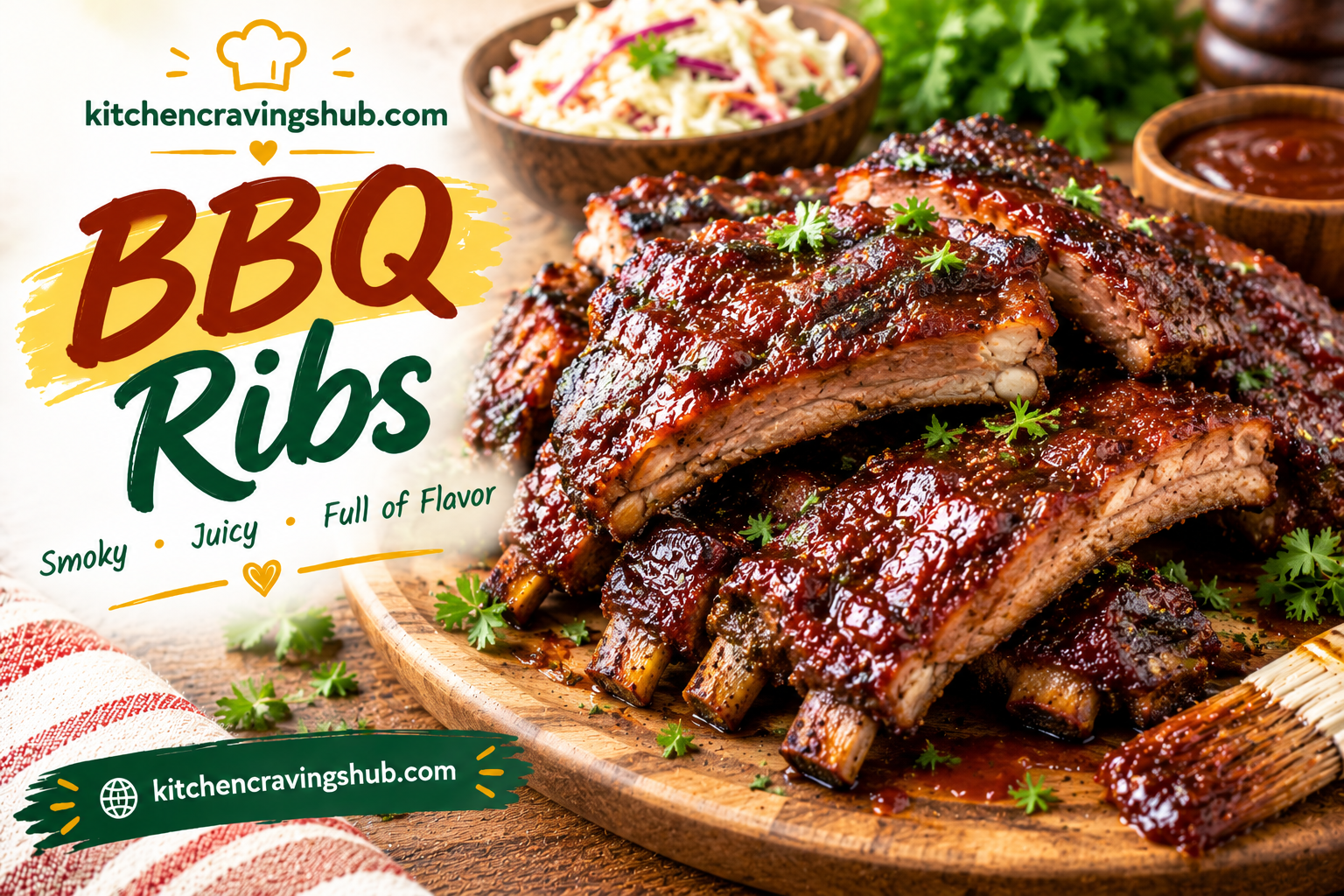
Few foods carry as much weight as a rack of BBQ ribs. They’re the centerpiece of backyard cookouts, the pride of competition pitmasters, and the subject of arguments that have divided families for generations. Dry rub or sauce? Kansas City or Memphis? Oven or smoker? Everyone has an opinion, and everyone is convinced theirs is the right one.
Here’s the reassuring truth: you don’t need a $2,000 smoker or a decade of practice to make ribs that genuinely impress people. You need the right cut, a good rub, low heat, and patience. That’s basically it. This guide walks through everything from choosing your ribs to the three main cooking methods, plus rub recipes, sauce styles, timing charts, and the mistakes that trip up most beginners. 🧂🍯
Let’s fire it up.
Types of Ribs: Know What You’re Buying 🥩
Walking up to the meat counter can be confusing, so here’s a breakdown of what you’ll actually find.
| Type 🍖 | Where It Comes From | Meatiness | Cook Time ⏱️ | Best For |
|---|---|---|---|---|
| Baby Back Ribs | Upper ribcage, near spine | Lean, tender | 4 to 5 hours | Beginners, tender results |
| Spare Ribs | Lower belly area | Fattier, richer | 5 to 6 hours | Deep flavor lovers |
| St. Louis Cut | Trimmed spare ribs | Balanced, uniform | 5 to 6 hours | Even cooking, neat presentation |
| Country Style Ribs | Shoulder area | Very meaty | 2 to 3 hours | Fork and knife eating |
| Beef Back Ribs | Beef ribcage | Moderate | 4 to 5 hours | Big beefy flavor |
| Beef Short Ribs | Beef plate | Very rich | 6 to 8 hours | Special occasions |
If this is your first attempt, start with baby backs. They’re forgiving, cook faster, and are naturally tender. St. Louis cut is the sweet spot once you’ve got a rack or two under your belt.
Prep Work That Actually Matters 🔪
Good ribs start before any heat gets involved.
Remove the Membrane
On the bone side of every rack there’s a thin, silvery membrane. If you leave it on, it turns tough and rubbery and blocks the rub from penetrating. Slide a butter knife under one corner, grab it with a paper towel for grip, and pull it off in one sheet. This takes 30 seconds and makes a huge difference.
Trim the Excess
Cut away any large flaps of loose meat or thick chunks of hard fat. You want a fairly even rack so everything cooks at the same rate.
Pat Dry and Bind
Dry the surface with paper towels, then apply a thin binder like yellow mustard or olive oil. You won’t taste it after cooking. Its only job is helping the rub stick.
Building the Perfect Dry Rub 🧂
A rub is just seasoning, but the balance matters. Here’s a reliable all purpose blend.
Classic BBQ Rub:
- Half a cup of brown sugar 🍬
- Two tablespoons of paprika
- One tablespoon of kosher salt
- One tablespoon of black pepper
- One tablespoon of garlic powder
- Two teaspoons of onion powder
- One teaspoon of chili powder
- One teaspoon of cumin
- Half a teaspoon of cayenne (adjust to your heat preference) 🌶️
Mix everything together and apply generously to both sides of the rack. Let it sit for at least 30 minutes, or refrigerate overnight for deeper flavor.
The brown sugar is what creates that slightly sticky, caramelized bark on the outside. If you’re cooking at higher temperatures, reduce the sugar slightly so it doesn’t scorch.
Method 1: Oven Baked Ribs 🏠
No smoker, no grill, no problem. Oven ribs are genuinely excellent and are how most people should start.
How to do it:
- Preheat the oven to 275°F (135°C).
- Season the ribs and wrap the rack tightly in heavy duty foil.
- Place on a baking sheet and bake for two and a half to three hours for baby backs, or three to three and a half hours for spare ribs.
- Unwrap, brush with BBQ sauce, and broil for three to five minutes until the sauce bubbles and caramelizes.
- Rest for 10 minutes before slicing.
The foil traps steam, which keeps the ribs moist and helps break down connective tissue. The final broil is what gives you that sticky, glazed finish.
Method 2: Grilled Ribs 🔥
Grilling gives you smoke flavor without needing a dedicated smoker, as long as you set up indirect heat.
How to do it:
- Set up your grill for two zone cooking, with coals or burners on one side only.
- Target a steady temperature around 275°F.
- Place the ribs bone side down on the cool side, away from direct flame.
- Add a handful of soaked wood chips to the hot side for smoke.
- Cook for about three hours, then wrap in foil for another hour.
- Unwrap, sauce, and finish over direct heat for a few minutes to set the glaze.
Keep the lid closed as much as possible. Every time you peek, you lose heat and add time.
Method 3: Smoked Ribs (The 3 2 1 Method) 💨
This is the classic approach for spare ribs and the method most competition cooks learn first.
How it works:
- 3 hours unwrapped in the smoker at 225°F, absorbing smoke and forming bark
- 2 hours wrapped in foil with a splash of apple juice, steaming until tender
- 1 hour unwrapped and sauced, firming up the glaze
For baby back ribs, adjust to a 2 2 1 timeline since they’re smaller and cook faster. Otherwise they’ll go past tender straight into mushy.
Best woods for ribs:
- Hickory 🌳 for bold, classic BBQ smoke
- Apple or cherry 🍒 for mild, slightly sweet smoke
- Pecan for a nutty middle ground
- Oak for steady, neutral smoke that lets the rub shine
Method Comparison Table 📊
| Method 🍳 | Total Time | Difficulty | Smoke Flavor | Equipment Needed |
|---|---|---|---|---|
| Oven 🏠 | 3 to 4 hours | Easy | None | Oven and foil |
| Grill 🔥 | 4 hours | Medium | Moderate | Grill with lid |
| Smoker 💨 | 6 hours | Medium | Strong | Smoker and wood |
| Slow Cooker 🍲 | 6 to 8 hours | Easiest | None | Slow cooker |
| Instant Pot ⚡ | 45 min plus broil | Easy | None | Pressure cooker |
BBQ Sauce Styles Around the Country 🇺🇸
Sauce is where regional identity really shows up.
Kansas City 🍯 is thick, sweet, and tomato based with molasses. This is what most people picture when they think BBQ sauce.
Memphis is thinner and tangier, often applied lightly, and Memphis ribs are just as commonly served dry with rub only.
Carolina 🍎 leans on vinegar, sometimes with mustard in the South Carolina style. Sharp and cutting, great against fatty pork.
Texas 🤠 keeps sauce minimal and thin, letting the smoke and beef do the talking.
Alabama White is mayonnaise and vinegar based, unusual and surprisingly good, though more common on chicken.
Whichever you choose, apply sauce only in the final 20 to 30 minutes. Sugar burns, and sauce applied too early turns black and bitter.
How to Tell When Ribs Are Done 🌡️
Forget the “fall off the bone” standard. Competition judges actually consider that overcooked. Properly done ribs should hold together when picked up but pull cleanly from the bone with a gentle bite.
Here are reliable tests:
The bend test. Pick up the rack with tongs at one end. It should bend and the surface should crack slightly. If it flops completely, it’s overdone.
The toothpick test. A toothpick or probe should slide into the meat between bones with almost no resistance, like going into warm butter.
Temperature. Aim for an internal temp of 195°F to 203°F. Collagen breaks down into gelatin in this range, which is what creates tenderness.
Bone pullback. The meat should have shrunk back roughly a quarter inch from the ends of the bones.
Side Dishes That Belong Next to Ribs 🍽️
| Side 🥗 | Why It Works |
|---|---|
| Coleslaw 🥬 | Cool, creamy contrast to rich pork |
| Mac and cheese 🧀 | Pure comfort, crowd favorite |
| Baked beans 🫘 | Smoky and sweet, classic pairing |
| Cornbread 🌽 | Soaks up every bit of sauce |
| Potato salad 🥔 | Cooling and familiar |
| Grilled corn 🌽 | Sweet, charred, easy to cook alongside |
| Pickles 🥒 | Acidity cuts right through the fat |
| Watermelon 🍉 | Refreshing palate reset |
Common Mistakes to Avoid ⚠️
Leaving the membrane on. It never breaks down and ruins the texture of every bite on the bone side.
Cooking too hot. Ribs need low and slow heat to break down connective tissue. High heat just tightens the meat and dries it out.
Saucing too early. The sugar in BBQ sauce burns well before the ribs are done. Wait until the final stretch.
Boiling ribs first. This is a shortcut some people swear by, but it washes flavor straight down the drain. Skip it.
Constantly opening the lid. Every peek drops the cooking temperature and extends your total time.
Skipping the rest. Give the ribs at least 10 minutes after cooking so the juices settle back into the meat.
Cutting them wrong. Slice between the bones with the bone side facing up, where you can clearly see where each cut should go.
Storage and Reheating 📦
Leftover ribs are one of life’s genuine pleasures, as long as you reheat them properly.
- Refrigerate in an airtight container for up to four days.
- Freeze wrapped tightly in foil then in a freezer bag for up to three months.
- To reheat, wrap in foil with a splash of apple juice and warm at 250°F for about 30 minutes.
- Avoid the microwave, which dries the meat and makes it chewy.
- Leftover rib meat pulled off the bone is excellent in sandwiches, tacos, or on nachos.
Frequently Asked Questions ❓
How long do BBQ ribs take to cook? It depends on method and cut. Baby backs typically take four to five hours at 225°F to 275°F, while spare ribs need five to six. Oven methods run a bit faster at around three to four hours.
Should ribs fall off the bone? Not quite. Truly fall off the bone ribs are slightly overcooked. The ideal texture pulls cleanly away with a gentle bite while still holding to the bone when picked up.
Do I have to wrap ribs in foil? No, but wrapping speeds up cooking and produces more tender, moist results. Cooking unwrapped the whole time gives you a firmer bark but takes longer.
Can I make good ribs without a smoker? Absolutely. Oven baked ribs finished under the broiler are excellent. Adding a small amount of smoked paprika or liquid smoke to the rub can approximate that smoky note.
Dry rub or sauce, which is better? Neither is objectively better. Memphis style dry ribs highlight the rub and the meat, while sauced ribs give you that sticky, glossy finish. Try both and decide for yourself.
How much meat should I plan per person? About half a rack of baby backs per person, or roughly one pound of ribs per adult. Hungry crowds may push that higher.
Final Thoughts 🌅
BBQ ribs reward patience more than skill. If you remove the membrane, season generously, keep the heat low, hold off on the sauce until the end, and let the ribs rest before slicing, you’re already doing most of what separates great ribs from mediocre ones.
Start with a rack of baby backs in the oven if you’re new to this. Once you’ve nailed that, try the grill, then work your way up to a full smoke session. Every rack teaches you something, and honestly, even the imperfect ones taste pretty great. 🙌🍖
Here’s to sticky fingers, smoky backyards, and plates piled high with bones. 🔥✨