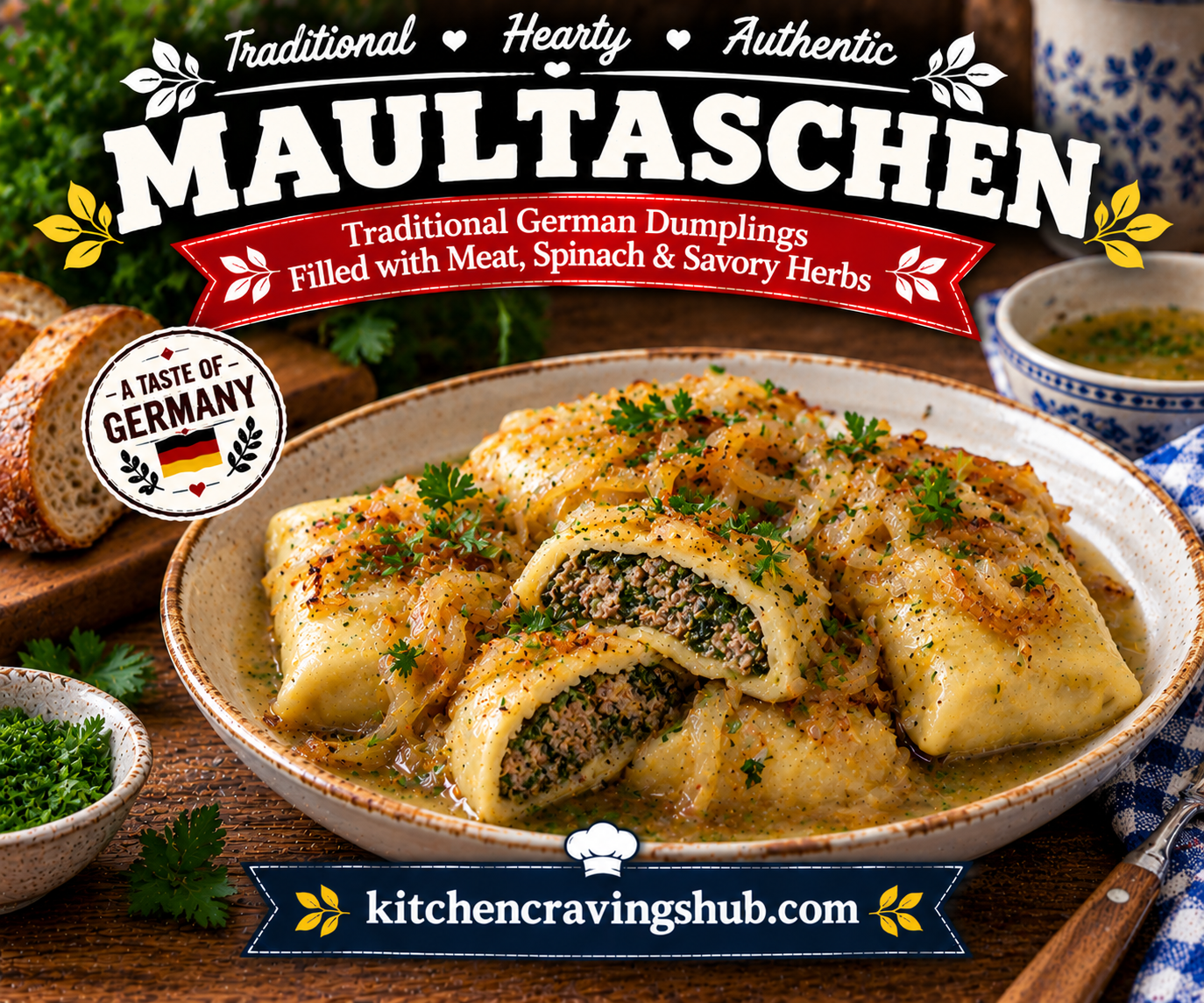
If there is one dish that perfectly represents the heart and soul of Swabian cuisine, it is Maultaschen. Often referred to as Germany’s answer to ravioli or dumplings, these generously stuffed pasta pockets are filled with a savory mixture of meat, spinach, and herbs, then served in broth, pan fried, or tossed in butter and onions. Beyond their delicious flavor, Maultaschen also carry a wonderfully clever backstory involving monks, meatless fasting days, and a playful bit of culinary trickery.
In this article, we are going to explore everything you need to know about Maultaschen. What they actually are, the fascinating legend behind their creation, how to make them at home, and why this beloved regional dish continues to be a favorite across Germany. Let us dig in! 🍽️
🍽️ What Exactly Are Maultaschen?
Maultaschen are large, square or rectangular dumplings made from a thin pasta dough, filled with a hearty mixture of ground meat, spinach, onions, breadcrumbs, and fresh herbs, all bound together with egg. Once assembled, the dumplings are typically boiled or gently simmered in beef broth, and can be served in a variety of ways depending on personal preference and regional tradition.
The name itself translates roughly to “mouth pockets” or “little mouth bags,” a fitting description for these generously sized, pillowy dumplings. While they share some visual similarities with Italian ravioli, Maultaschen are typically much larger and are deeply rooted in their own distinct Swabian culinary tradition.
You will often find Maultaschen:
- 🍽️ On menus at traditional Swabian restaurants and gasthauses
- 🏠 In home kitchens as a comforting family meal
- 🥣 Served in a warm, savory broth as a soup course
- 🍳 Pan fried with onions as a hearty main dish
📜 The Legend Behind Maultaschen
One of the most charming aspects of Maultaschen is the story behind their creation, often referred to affectionately as “Herrgottsbscheißerle,” which loosely translates to “little God cheaters” or “cunning against God.”
According to popular legend, the dish originated with Cistercian monks in the Swabian region during the 17th century. During Lent, a period when eating meat was traditionally forbidden according to religious observance, the monks reportedly did not want to waste leftover meat scraps they had on hand. Their clever solution was to finely chop the meat and hide it inside a pasta dough, mixed generously with spinach and herbs, effectively disguising the meat from view.
The idea, according to the legend, was that even if the monks could not hide their meat consumption from God, at least they could not be easily caught by anyone simply looking at the dish. Whether entirely true or partly embellished over centuries of retelling, this playful legend has become deeply woven into the cultural identity of the dish, adding a wonderful sense of humor and history to every bite. 🕰️
🧡 Why People Love Maultaschen
There are countless reasons this hearty, comforting dish has remained a beloved favorite for centuries.
- 🥟 The combination of savory meat, spinach, and herbs creates a deeply satisfying filling
- 🥣 It works beautifully as a soup, a fried main course, or a baked casserole style dish
- 👵 It is a treasured recipe passed down through generations of Swabian families
- 😄 The playful legend behind its creation adds charm and character to the dish
- 🍽️ It is filling, versatile, and endlessly customizable
Whether you grew up eating Maultaschen as part of your family’s culinary traditions or are discovering this beloved dish for the very first time, its rich history and comforting flavor make it well worth trying.
🛒 Ingredients You Will Need
Making Maultaschen from scratch involves two main components, the pasta dough and the hearty filling.
🍽️ Core Ingredients Table
| Ingredient | Quantity | Notes |
|---|---|---|
| 🌾 All purpose flour | 400 grams | For the pasta dough |
| 🥚 Eggs | 4 large | Divided between the dough and filling |
| 💧 Water | A few tablespoons | Added as needed to bring the dough together |
| 🥩 Ground meat, beef or pork mix | 300 grams | Traditional filling base |
| 🥬 Spinach | 200 grams | Fresh or thawed frozen, well drained |
| 🧅 Onion | 1 large | Finely chopped |
| 🍞 Breadcrumbs | 50 grams | Helps bind the filling |
| 🌿 Fresh parsley | A small handful | Finely chopped |
| 🧂 Salt, pepper, and nutmeg | To taste | For seasoning the filling |
| 🍲 Beef broth | 1 liter | For simmering and serving |
👩🍳 How to Make Maultaschen at Home
While this recipe involves a few more steps than some simpler dishes, the process is very manageable, especially if you enjoy hands on cooking projects. Here is a step by step guide.
Step by Step Instructions
- 🌾 In a large bowl, combine the flour, 2 eggs, and a pinch of salt, adding water gradually until a smooth, elastic dough forms
- ⏳ Wrap the dough in plastic wrap and let it rest for at least 30 minutes
- 🧈 While the dough rests, saute the chopped onion in a bit of butter until soft and translucent
- 🥬 If using fresh spinach, wilt it briefly in a hot pan, then chop finely and squeeze out excess moisture
- 🥩 In a large bowl, combine the ground meat, sauteed onion, spinach, breadcrumbs, remaining eggs, and parsley
- 🧂 Season the filling generously with salt, pepper, and a touch of nutmeg, mixing until well combined
- 🌾 Roll the rested dough out thinly on a floured surface, then cut into large squares, roughly 10 by 10 centimeters
- 🥟 Place a generous spoonful of filling in the center of each square
- 💧 Lightly moisten the edges of each square with water, then fold over to form a rectangle, pressing the edges firmly to seal
- 🍲 Bring the beef broth to a gentle simmer, then carefully add the Maultaschen
- ⏳ Simmer for 10 to 15 minutes, or until the dumplings float and the dough is fully cooked through
- 🍽️ Serve directly in the broth, or remove and pan fry with onions for a heartier presentation
And there you have it, a batch of homemade Maultaschen ready to enjoy.
🎨 Popular Variations to Try
While the classic meat and spinach filling remains the most beloved version, there are plenty of fun variations worth exploring.
🍴 Variation Comparison Table
| Variation Name | Key Difference | Flavor Profile |
|---|---|---|
| 🥣 Broth Style Maultaschen | Served directly in warm beef broth | Comforting and soup like |
| 🍳 Fried Maultaschen | Pan fried with onions after boiling | Crispy and savory |
| 🧀 Cheese Maultaschen | Cheese added to the filling mixture | Rich and creamy |
| 🌱 Vegetarian Maultaschen | Meat replaced with mushrooms or lentils | Earthy and plant forward |
| 🥓 Bacon Maultaschen | Crispy bacon bits mixed into the filling | Smoky and indulgent |
Feel free to experiment with different fillings and preparation styles based on your personal preferences and what ingredients you have on hand.
🥤 What to Pair With Maultaschen
Since this dish is hearty and savory, it pairs wonderfully with a variety of drinks depending on how it is served.
- 🍷 A light bodied red wine, such as Trollinger, a classic Swabian pairing
- 🍺 A crisp German pilsner or wheat beer
- 🥤 Sparkling water with a slice of lemon
- ☕ A strong cup of coffee if enjoyed as a heartier lunch
- 🥃 A small glass of schnapps, traditionally enjoyed after a rich meal
🌍 Where Maultaschen Fits Into German Food Culture
Maultaschen holds an especially cherished place within Swabian regional identity. It is often associated with:
- 🏠 Family recipes passed down through generations
- 🍽️ Traditional Swabian gasthauses and regional restaurants
- ⛪ Its charming religious folklore tied to Lenten fasting traditions
- 🎉 Celebratory family meals, particularly on Maundy Thursday, when the dish is traditionally enjoyed
For many Swabian families, preparing Maultaschen is a cherished tradition that connects them to generations of home cooks before them, blending history, humor, and hearty comfort food into a single beloved dish.
💡 Tips for the Best Maultaschen
To make sure your Maultaschen turn out perfectly every time, keep these helpful tips in mind.
- 🌾 Roll the dough as thinly as possible while still being able to handle it without tearing
- 💧 Make sure to seal the edges firmly to prevent the filling from leaking out during cooking
- 🥬 Squeeze excess moisture from spinach thoroughly to avoid a watery filling
- 🍲 Simmer gently rather than boiling vigorously to prevent the delicate dough from tearing apart
- ❄️ Maultaschen freeze beautifully, making them a great make ahead meal for busy days
❓ Frequently Asked Questions
Are Maultaschen the same as ravioli? While they share some visual similarities, Maultaschen are typically much larger and have their own distinct history, filling style, and cultural significance within Swabian cuisine.
Can I make a vegetarian version? Yes, many modern variations replace the meat with mushrooms, lentils, or additional vegetables while keeping the traditional dough and preparation method.
How should Maultaschen be served? They can be served directly in warm broth, pan fried with onions, or even baked in a casserole style dish depending on personal preference.
Can I freeze homemade Maultaschen? Yes, they freeze very well. Simply freeze them uncooked on a tray before transferring to a freezer bag, then boil directly from frozen when ready to enjoy.
🍽️ Final Thoughts
Maultaschen are far more than just a delicious regional dish, they are a wonderful reflection of Swabian history, humor, and culinary creativity. From their clever monastic origins to their comforting, savory filling, these hearty dumplings have earned their place as one of Germany’s most beloved traditional dishes.
Whether you are drawn in by the charming legend behind their creation or simply craving a hearty, comforting meal, Maultaschen are well worth the effort to make at home. Once you take that first warm, savory bite, you will understand exactly why this dish has remained a treasured Swabian staple for centuries. 🧡🥟🍲
Have you ever tried Maultaschen before? I would love to hear about your favorite way to serve them, or any family traditions surrounding this beloved German dish, in the comments below!