
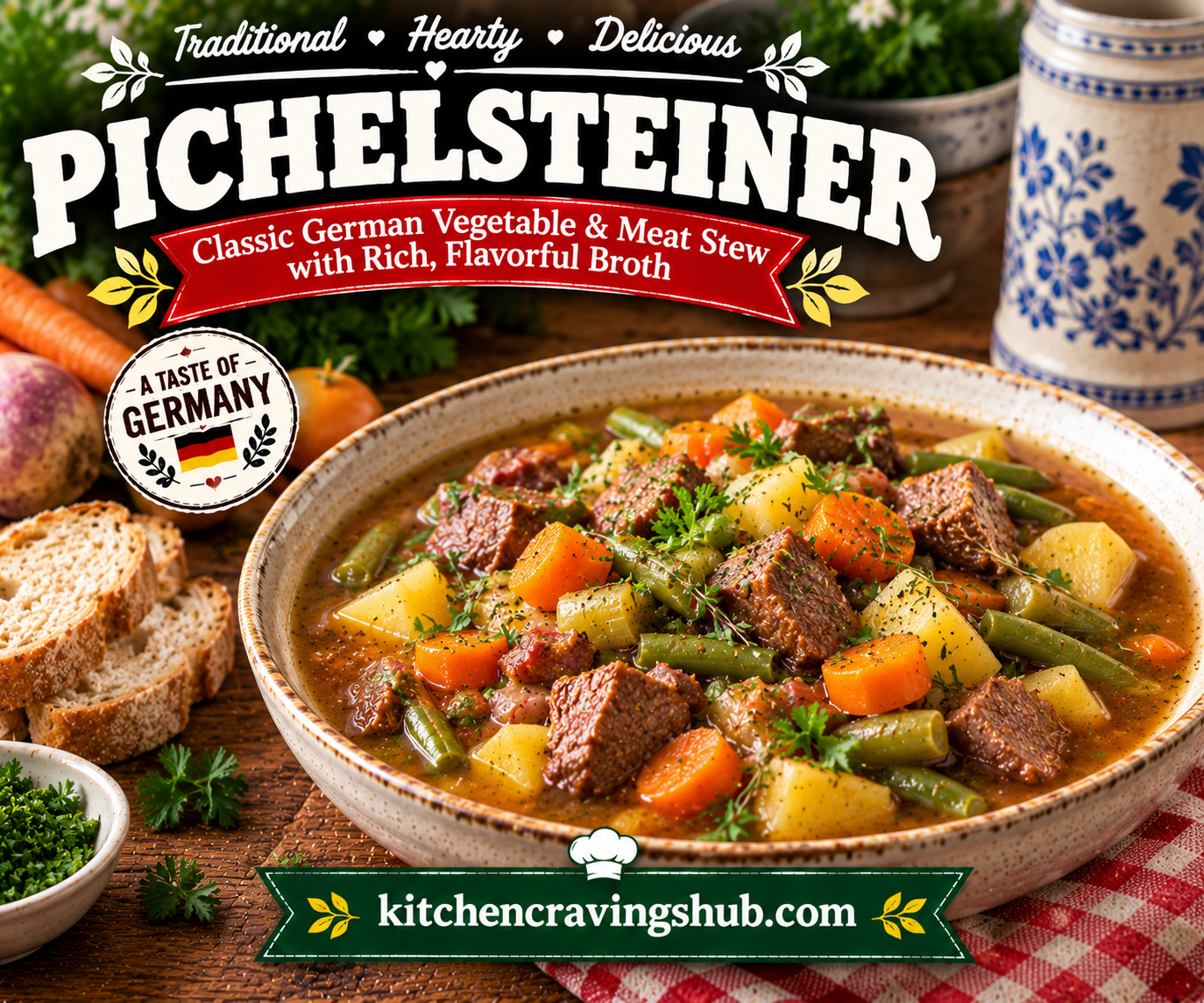
There is something wonderfully satisfying about a pot of Pichelsteiner simmering away, filling the kitchen with the warm aroma of tender meat and root vegetables slowly melding together. This beloved Bavarian stew, featuring a mix of meats and a hearty medley of vegetables, is the ultimate one pot comfort meal, the kind of dish that feels like it was designed specifically to warm you up on a cold day. 😋
In this guide, we are going to cover everything you need to know about Pichelsteiner. We will talk about its charming history, why it has become such a beloved Bavarian classic, the ingredients you need, a full step by step recipe, tips for getting that perfect balance of tender meat and vegetables, common mistakes to avoid, healthier variations, and answers to the most frequently asked questions. Let us get cooking. 🧑🍳
What Is Pichelsteiner? 🤔
Pichelsteiner is a traditional Bavarian stew featuring a combination of meats, typically beef, pork, and lamb, layered with a hearty mix of root vegetables like potatoes, carrots, and cabbage, all slow cooked together in a rich broth until everything becomes wonderfully tender. This dish is celebrated for its rustic, layered cooking method, where ingredients are traditionally arranged in the pot in layers rather than simply tossed together, allowing the flavors to meld beautifully as everything cooks low and slow.
The dish has a charming origin story tied to the Bavarian town of Regen, where it is said to have been created in the mid nineteenth century for a charity event honoring King Maximilian II of Bavaria. According to local legend, a cook combined various cuts of meat and available vegetables into a single hearty pot to feed a large gathering, and the resulting stew was so well received that it went on to become a beloved regional specialty, eventually spreading throughout Bavaria and beyond.
Pichelsteiner represents a wonderful example of resourceful, communal cooking, transforming a variety of meats and vegetables into a single, deeply satisfying pot of stew, making it a popular choice for feeding a crowd or simply enjoying a hearty, comforting family meal. 🌟
Why People Love Pichelsteiner ❤️
There are several reasons this dish has earned such a devoted following.
First, it is incredibly hearty and satisfying, combining multiple types of meat with a generous variety of vegetables to create a truly filling, complete meal in a single pot.
Second, the flavor is rich and layered, with the combination of different meats contributing their own distinct depth to the overall broth, resulting in a more complex flavor than a stew made with just one type of meat alone.
Third, it carries genuine charm and history, with its origin story tied to a specific Bavarian town and a royal celebration, giving this dish a sense of cultural significance beyond just its comforting flavor.
Finally, it is a fantastic dish for feeding a crowd, since the combination of hearty vegetables and multiple meats naturally stretches to serve a large group, making it a popular choice for gatherings and celebrations. 🏠
Ingredients You Will Need 🛒
Here is everything required to make a fantastic batch of Pichelsteiner at home.
For the Meat
Beef chuck, cut into large chunks. Pork shoulder, cut into large chunks. Lamb shoulder, cut into large chunks, optional, though traditional versions often include a mix of three different meats. Salt and black pepper, for seasoning the meat before cooking.
For the Vegetables
Potatoes, peeled and cut into large chunks. Carrots, peeled and cut into large chunks. Cabbage, roughly chopped. Onions, sliced. Leeks, sliced, optional, for added depth. Celery root or celery, chopped, optional.
For the Broth
Beef broth, to form the base of the stew. Bay leaves, for subtle background flavor. Fresh parsley, chopped, for garnish and a bit of fresh flavor stirred in near the end. Fresh thyme, for aromatic depth.
For Cooking
Butter or oil, for browning the meat before layering. 🌿
Step by Step Recipe: How to Make Pichelsteiner 👩🍳
This recipe generally serves about eight people and takes around two and a half hours from start to finish, most of which is hands off simmering time.
Step 1: Season and Brown the Meat
Season the beef, pork, and lamb chunks generously with salt and pepper. Heat a large pot or Dutch oven over medium high heat with a bit of butter or oil, then brown the meat in batches, cooking each batch for about five to six minutes until nicely browned on all sides. This step, while not strictly traditional in every version of this layered dish, adds significant depth of flavor to the final stew. Remove the meat and set aside.
Step 2: Prepare the Pot for Layering
In the same pot, leave a small amount of the flavorful browned bits and fat at the bottom. Begin layering the ingredients, starting with a layer of sliced onions at the bottom of the pot.
Step 3: Layer the Meat and Vegetables
Add a layer of the browned meat on top of the onions, followed by a layer of potatoes, then carrots, then cabbage. Continue layering in this fashion, repeating as needed, until all the meat and vegetables have been added to the pot. This traditional layering method allows the flavors to meld together beautifully as everything cooks.
Step 4: Add the Herbs
Tuck the bay leaves and fresh thyme sprigs into the layers as you go, distributing them throughout the pot for even flavor.
Step 5: Add the Broth
Pour in enough beef broth to come about halfway up the layered ingredients. Unlike some stews, Pichelsteiner is not meant to be fully submerged in liquid, since the vegetables and meat will release additional moisture as they cook.
Step 6: Simmer Low and Slow
Bring the pot to a gentle simmer over medium heat, then reduce the heat to low, cover, and let everything cook undisturbed for about two hours, resisting the urge to stir too much during this time, since the layered method relies on gentle, even cooking rather than vigorous mixing.
Step 7: Check for Doneness
After about two hours, check that the meat is fork tender and the vegetables are fully cooked through. If needed, continue simmering for an additional twenty to thirty minutes.
Step 8: Gently Stir and Adjust Seasoning
Once everything is tender, gently stir the stew to combine the layers, being careful not to break up the vegetables too much. Remove the bay leaves and thyme sprigs, then taste and adjust the seasoning with additional salt and pepper as needed.
Step 9: Garnish and Serve
Stir in freshly chopped parsley just before serving, then ladle the hearty stew into bowls, making sure everyone gets a good mix of meat and vegetables. Serve hot. 🍲
Pro Tips for the Best Pichelsteiner 💡
Use a variety of meats if possible. The traditional combination of beef, pork, and lamb creates a more complex, layered flavor compared to using just one type of meat alone.
Take the time to brown the meat before layering. While some traditional recipes skip this step entirely, browning the meat first adds significant depth of flavor to the final stew.
Layer the ingredients thoughtfully. This traditional method allows the flavors to meld gradually as everything cooks, rather than mixing everything together from the start.
Do not add too much broth. Since the vegetables and meat release their own moisture as they cook, adding too much liquid at the start can result in a thinner, less concentrated final stew.
Be patient with the cooking time. Allowing the stew to simmer gently and undisturbed for the full recommended time is essential for achieving that signature tender texture throughout.
Stir gently once everything is done cooking. Since the layered vegetables can be delicate after slow cooking, a gentle hand when combining everything helps preserve better texture.
Common Mistakes to Avoid ⚠️
Skipping the meat browning step. While not strictly required in every traditional version, this step adds significant flavor depth that is worth the extra few minutes of effort.
Adding too much broth at the start. Since this dish relies on the natural moisture released by the vegetables and meat during cooking, over diluting it with too much added liquid can result in a thinner, less flavorful stew.
Stirring too frequently during cooking. The traditional layered method benefits from gentle, undisturbed cooking, so resist the urge to stir too much while it simmers.
Rushing the cooking time. The combination of meats and root vegetables needs adequate time to become fully tender, so patience during the simmering process is key to achieving the best final texture.
Not seasoning adequately between layers. Since this dish relies on simple, layered ingredients, ensuring adequate seasoning throughout, rather than just at the very end, helps achieve a more well balanced final flavor.
Healthier Ways to Make Pichelsteiner 🥗
If you want a lighter version of this dish, here are a few simple adjustments to try.
Trim excess fat from the meat before browning and layering, to reduce the overall fat content of the finished stew.
Use just one or two types of meat instead of three, opting for leaner cuts if desired, though the flavor complexity will be somewhat different from the traditional three meat version.
Increase the proportion of vegetables relative to the meat, boosting the fiber and nutrient content while keeping the stew hearty and filling.
Use a low sodium beef broth to help control the overall salt content of the finished dish.
Serve smaller portions alongside a simple side salad to help balance out the richness of the stew. 🌾
What to Serve With Pichelsteiner 🍽️
Pichelsteiner is hearty enough to serve as a complete meal on its own, but it pairs wonderfully with crusty bread or dark German rye bread, perfect for soaking up any extra flavorful broth. A simple green salad also makes a nice, lighter accompaniment if you want to round out the meal further.
For a more traditional spread, this stew pairs nicely alongside other simple German sides, or simply enjoyed on its own as a satisfying, complete dinner, especially during the cooler months of the year. 🥖
Storing and Reheating Leftovers 📦
Store leftover Pichelsteiner in an airtight container in the refrigerator for up to four days. The flavors often deepen after a day or two in the fridge, making leftovers just as delicious, if not more so. It also freezes very well for up to three months, making it a great option for batch cooking.
To reheat, warm the stew in a pot over medium heat, stirring occasionally, until heated through, adding a small splash of broth if it has thickened too much in the refrigerator. The microwave also works well for individual portions, just heat in short bursts, stirring in between.
Frequently Asked Questions ❓
What is the story behind the name Pichelsteiner? This dish is said to have originated in the Bavarian town of Regen in the mid nineteenth century, created for a charity event honoring King Maximilian II of Bavaria. The stew was so well received that it became a beloved regional specialty, eventually taking on the name associated with its place of origin.
Do I have to use all three types of meat? While traditional recipes often call for a combination of beef, pork, and lamb, you can certainly adjust the meat selection based on personal preference or availability, using just one or two types if you prefer, though the flavor will be somewhat less complex than the traditional three meat combination.
What is the difference between Pichelsteiner and other German stews? Pichelsteiner is particularly known for its traditional layered cooking method and its combination of multiple types of meat, setting it apart from other German stews that might focus on a single protein or use a different cooking technique.
Can I make this dish in a slow cooker or Instant Pot? Yes, both methods work well. For a slow cooker, brown the meat on the stovetop first, then layer everything in the slow cooker and cook on low for about six to eight hours. For an Instant Pot, use the pressure cooking function to significantly reduce the overall cooking time while still achieving tender meat and vegetables.
Can I make this dish ahead of time? Yes, this dish actually tends to taste even better the next day, once the flavors have had more time to meld together, making it a great option for meal prep or entertaining a larger group.
Can I make this dish gluten free? Yes, this dish is naturally gluten free as written, since it relies on meat, vegetables, and basic seasonings without any wheat based ingredients, though always double check that your specific broth brand is certified gluten free.
Final Thoughts 🌈
Pichelsteiner represents a wonderful piece of Bavarian culinary history, born from a charitable community event and transformed into a beloved regional specialty enjoyed for generations. That combination of tender, layered meats and hearty root vegetables, slowly simmered together into a deeply satisfying stew, creates a dish that feels both rustic and genuinely comforting.
Once you get comfortable with the traditional layering technique and understand how patience during the simmering process pays off with incredibly tender results, this recipe becomes a wonderful option for feeding a crowd or simply enjoying a hearty, warming family meal during the colder months.
So brown that meat, layer your vegetables, and get ready to enjoy the rich, hearty comfort of homemade Pichelsteiner. Happy cooking! 🍳🥳