
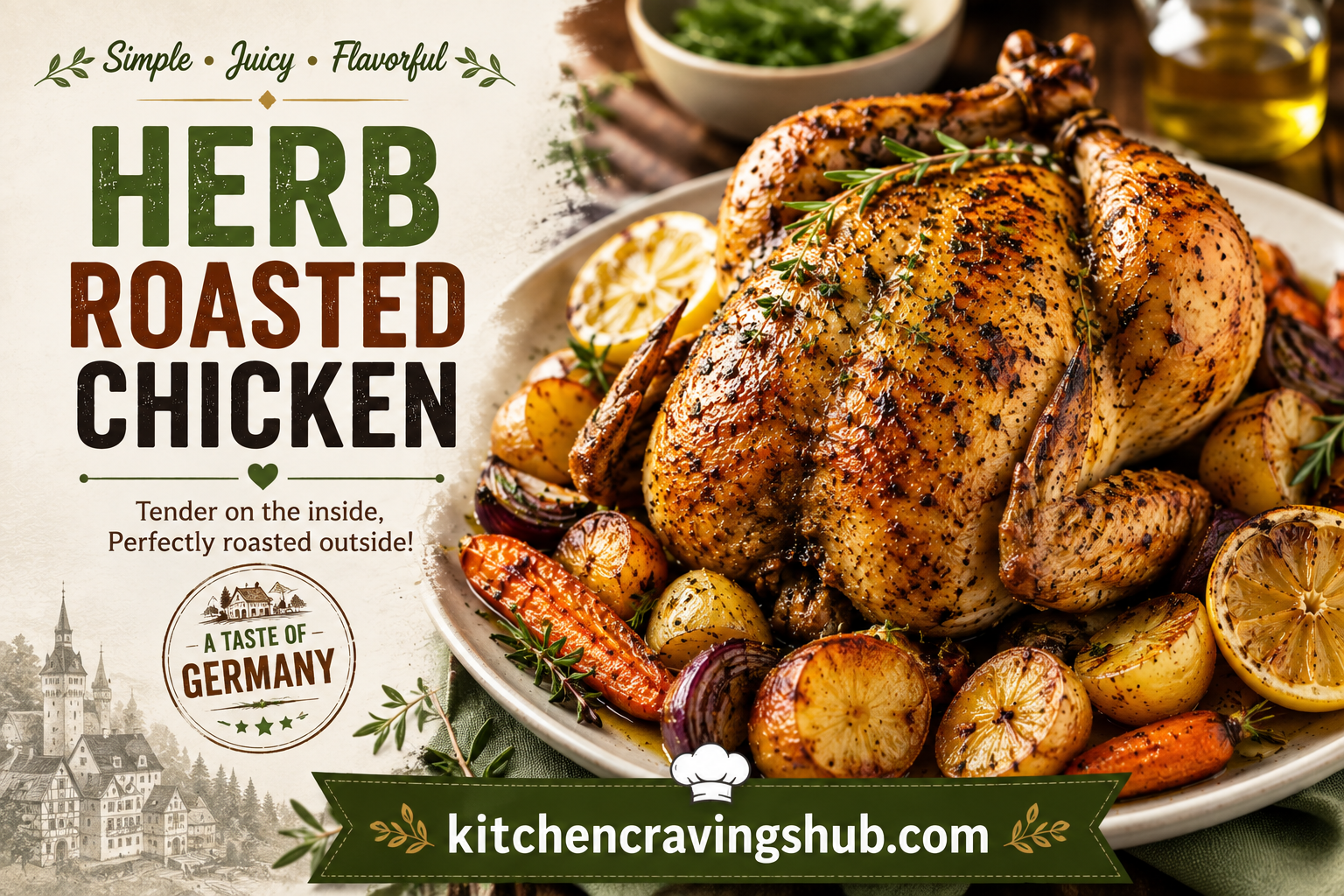
There is a reason herb roasted chicken shows up on so many dinner tables, whether it is a quiet Sunday at home or a special gathering with family and friends. A whole chicken, rubbed with a fragrant blend of fresh herbs, garlic, and butter, roasted until the skin turns crackling golden and the meat inside stays juicy and tender. It is simple, elegant, and endlessly comforting all at once. 😋
In this guide, we are going to cover everything you need to know about herb roasted chicken. We will talk about why this dish has become such a beloved classic, the ingredients you need, a full step by step recipe, tips for getting that perfect golden skin and juicy meat, common mistakes to avoid, healthier variations, and answers to the most frequently asked questions. Let us get roasting. 🧑🍳
What Is Herb Roasted Chicken? 🤔
Herb roasted chicken is a whole chicken seasoned generously with a mixture of fresh or dried herbs, garlic, butter, and citrus, then roasted in the oven until the skin becomes deeply golden and crispy while the meat stays moist and flavorful throughout. Common herbs used include rosemary, thyme, sage, and parsley, often combined with softened butter to create an aromatic paste that gets rubbed both under and over the skin before roasting.
This style of roast chicken has roots across many culinary traditions, from French style roast chicken, often infused with herbes de Provence, to classic American and British Sunday roasts featuring similar herb and butter combinations. While the specific herb blend and technique can vary from household to household, the core concept, a whole chicken enhanced with fragrant herbs and roasted to golden perfection, remains a beloved approach found throughout Western home cooking.
Herb roasted chicken has become a go to dish for both everyday family dinners and more special occasions, prized for how a relatively simple technique can produce a dish that looks and tastes genuinely impressive. 🌟
Why People Love Herb Roasted Chicken ❤️
There are several reasons this dish has earned such a devoted following.
First, the aroma alone is enough to win people over. As the chicken roasts, the combination of fresh herbs, garlic, and butter fills the kitchen with an incredibly inviting scent that builds anticipation for the meal ahead.
Second, the flavor is wonderfully fragrant and balanced. Fresh herbs bring a bright, earthy quality that complements the richness of the chicken without overpowering its natural flavor.
Third, it is a fantastic centerpiece for gatherings. A beautifully roasted whole chicken has a way of feeling special and celebratory, making it a popular choice for Sunday dinners, holidays, or hosting guests.
Finally, it is surprisingly approachable for how impressive the final result looks. With a handful of herbs, some butter, and basic roasting technique, even home cooks who are newer to cooking whole poultry can achieve genuinely delicious results. 🏠
Ingredients You Will Need 🛒
Here is everything required to make a fantastic herb roasted chicken at home.
For the Chicken
A whole chicken, ideally around four to five pounds, patted completely dry. Salt, for seasoning generously both inside and out. Black pepper, for seasoning.
For the Herb Butter
Softened unsalted butter, which forms the rich, flavorful base for the herb mixture. Fresh rosemary, finely chopped. Fresh thyme, finely chopped. Fresh sage, finely chopped, optional, for additional earthy depth. Fresh parsley, finely chopped. Garlic, minced, for aromatic punch. Lemon zest, for brightness.
For the Cavity and Pan
A lemon, halved, for stuffing inside the cavity. Additional garlic cloves, smashed, for the cavity. Fresh herb sprigs, such as extra rosemary and thyme, for the cavity. Onion, quartered, for the bottom of the roasting pan. Carrots and celery, roughly chopped, optional, to place underneath the chicken for added flavor and to create a rustic bed of vegetables. 🌿
Step by Step Recipe: How to Make Herb Roasted Chicken 👩🍳
This recipe generally serves about four people and takes around one hour and thirty minutes from start to finish, including resting time.
Step 1: Prepare the Chicken
Remove the chicken from its packaging and pat it completely dry, inside and out, with paper towels. This step is essential for achieving crispy skin, since excess moisture will cause the chicken to steam rather than properly roast. Let the chicken sit at room temperature for about thirty minutes before cooking.
Step 2: Make the Herb Butter
In a small bowl, combine the softened butter with the chopped rosemary, thyme, sage if using, parsley, minced garlic, and lemon zest. Mix well until the herbs are evenly distributed throughout the butter, creating a fragrant, spreadable paste.
Step 3: Season Under the Skin
Gently loosen the skin over the breast and thighs of the chicken, being careful not to tear it. Spread a generous amount of the herb butter directly underneath the skin, massaging it evenly over the meat. This step allows the butter and herbs to infuse the meat directly as it roasts, rather than just flavoring the skin.
Step 4: Season the Exterior
Rub any remaining herb butter over the outside of the chicken, then season generously with salt and pepper. Stuff the cavity with the halved lemon, smashed garlic cloves, and fresh herb sprigs.
Step 5: Prepare the Roasting Pan
Preheat your oven to around 425 degrees Fahrenheit. Arrange the quartered onion, and carrots and celery if using, in the bottom of a roasting pan, creating a rustic bed for the chicken to rest on, which also adds flavor to the pan drippings.
Step 6: Truss the Chicken, Optional
If desired, tie the legs together with kitchen twine and tuck the wing tips underneath the body. This helps the chicken cook more evenly and results in a neater presentation.
Step 7: Roast the Chicken
Place the chicken breast side up on top of the vegetables in the roasting pan. Roast at 425 degrees Fahrenheit for about twenty minutes, then reduce the oven temperature to 375 degrees Fahrenheit and continue roasting for another fifty minutes to an hour, until the internal temperature reaches 165 degrees Fahrenheit when measured in the thickest part of the thigh.
Step 8: Baste Occasionally
Every twenty minutes or so during roasting, baste the chicken with the pan drippings, which helps keep the skin moist and encourages even, deep golden browning.
Step 9: Rest the Chicken
Once the chicken reaches the correct internal temperature, remove it from the oven and let it rest for about fifteen minutes before carving. This resting period allows the juices to redistribute throughout the meat.
Step 10: Carve and Serve
Carve the chicken into pieces and serve hot, spooning some of the flavorful pan drippings and roasted vegetables alongside. 🍗
Pro Tips for the Best Herb Roasted Chicken 💡
Pat the chicken completely dry before seasoning. This step is essential for achieving that signature crispy, golden skin, since any excess moisture will cause steaming rather than proper roasting.
Season underneath the skin, not just on top. This technique allows the herb butter to directly flavor the meat as it roasts, resulting in a more deeply seasoned final dish compared to only seasoning the exterior.
Use fresh herbs whenever possible. While dried herbs can work in a pinch, fresh herbs provide a brighter, more vibrant flavor that really makes this dish shine.
Let the chicken come to room temperature before roasting. This helps it cook more evenly, preventing the exterior from overcooking before the interior reaches a safe temperature.
Use a meat thermometer to check doneness. Relying on time alone can lead to undercooked or overcooked chicken, so checking the internal temperature in the thickest part of the thigh is the most reliable method.
Let the chicken rest before carving. Cutting into it too soon releases all those flavorful juices, resulting in drier meat than necessary.
Common Mistakes to Avoid ⚠️
Not drying the chicken thoroughly before seasoning. This is one of the most common reasons homemade roast chicken ends up with soggy rather than crispy skin.
Only seasoning the outside of the chicken. Skipping the step of getting herb butter underneath the skin means missing out on deeper, more thorough flavor throughout the meat.
Roasting straight from the refrigerator. Cold chicken placed directly into a hot oven can cook unevenly, so letting it sit at room temperature briefly beforehand helps ensure more even cooking.
Skipping the resting period after roasting. Carving into the chicken too soon releases valuable juices, resulting in drier meat than if it had been allowed to rest properly.
Not using a meat thermometer. Relying solely on visual cues or general cooking time guidelines can result in undercooked or overcooked chicken, so a thermometer is the most reliable way to check doneness.
Healthier Ways to Make Herb Roasted Chicken 🥗
If you want a lighter version of this dish, here are a few simple adjustments to try.
Use a smaller amount of butter, substituting some of it with olive oil, which still helps achieve nicely browned skin with slightly less saturated fat.
Remove the skin before eating, though keep in mind the skin is largely responsible for keeping the meat moist during roasting, so it is best left on during cooking even if removed before serving.
Load the roasting pan with extra vegetables like carrots, potatoes, and Brussels sprouts, which roast alongside the chicken and soak up all that flavorful drippings, turning this into a complete one pan meal.
Skim excess fat from the pan drippings if making gravy or serving the drippings alongside the chicken.
Opt for chicken breast portions if you prefer white meat only, adjusting the roasting time accordingly since breast meat can dry out more easily than dark meat. 🌾
What to Serve With Herb Roasted Chicken 🍽️
Herb roasted chicken pairs beautifully with roasted potatoes, which can even be cooked in the same pan alongside the chicken to soak up all those flavorful drippings. A simple green salad or steamed vegetables also make a wonderful, lighter accompaniment.
For a more indulgent spread, serve alongside mashed potatoes and gravy made from the pan drippings, along with a vegetable side like roasted carrots or green beans, creating a complete, comforting Sunday dinner. 🥗
Storing and Reheating Leftovers 📦
Store leftover herb roasted chicken in an airtight container in the refrigerator for up to four days. The meat also freezes well for up to three months if you want to save some for later use in soups, sandwiches, or salads.
To reheat, warm the chicken in an oven at around 350 degrees Fahrenheit, covered loosely with foil to prevent drying out, until heated through, about fifteen to twenty minutes depending on the amount. The microwave also works if you are short on time, though it may result in slightly less crispy skin compared to oven reheating.
Frequently Asked Questions ❓
What herbs work best for roasted chicken? Rosemary, thyme, and sage are classic choices that pair beautifully with chicken, offering an earthy, aromatic flavor. Parsley adds a fresh, bright note, while lemon zest brightens up the entire herb mixture.
Can I use dried herbs instead of fresh? Yes, dried herbs can be used as a substitute, though you will want to use less since dried herbs are more concentrated than fresh, typically about one third of the amount called for in fresh herbs.
Why is my chicken skin not getting crispy? This is usually caused by excess moisture on the chicken before roasting, roasting at too low a temperature, or overcrowding the pan with too many vegetables that release steam. Patting the chicken thoroughly dry and starting at a higher oven temperature helps achieve that signature crispy skin.
How do I know when the chicken is fully cooked? The most reliable method is using a meat thermometer inserted into the thickest part of the thigh, without touching bone, which should read 165 degrees Fahrenheit when the chicken is fully cooked and safe to eat.
Can I roast vegetables alongside the chicken? Absolutely. Potatoes, carrots, onions, and other root vegetables roast beautifully in the same pan as the chicken, soaking up the flavorful drippings and creating a complete, one pan meal.
Can I make this dish gluten free? Yes, this dish is naturally gluten free as written, since it relies on chicken, butter, herbs, and basic seasonings without any wheat based ingredients, making it a great option for those following a gluten free diet.
Final Thoughts 🌈
Herb roasted chicken is a beautiful example of how a handful of fresh, fragrant ingredients can transform a simple whole chicken into a truly memorable meal. That combination of herb infused meat, deeply golden crispy skin, and the wonderful aroma that fills your kitchen while it roasts makes this dish a reliable favorite for both everyday dinners and special occasions alike.
Once you get comfortable with seasoning underneath the skin and mastering that two temperature roasting method, this recipe becomes a wonderful centerpiece you can return to again and again, adjusting the herb blend to your preference or the season. It is proof that impressive, comforting food does not have to be complicated.
So chop those herbs, prepare your butter, and get ready to enjoy the fragrant, golden comfort of homemade herb roasted chicken. Happy cooking! 🍳🥳