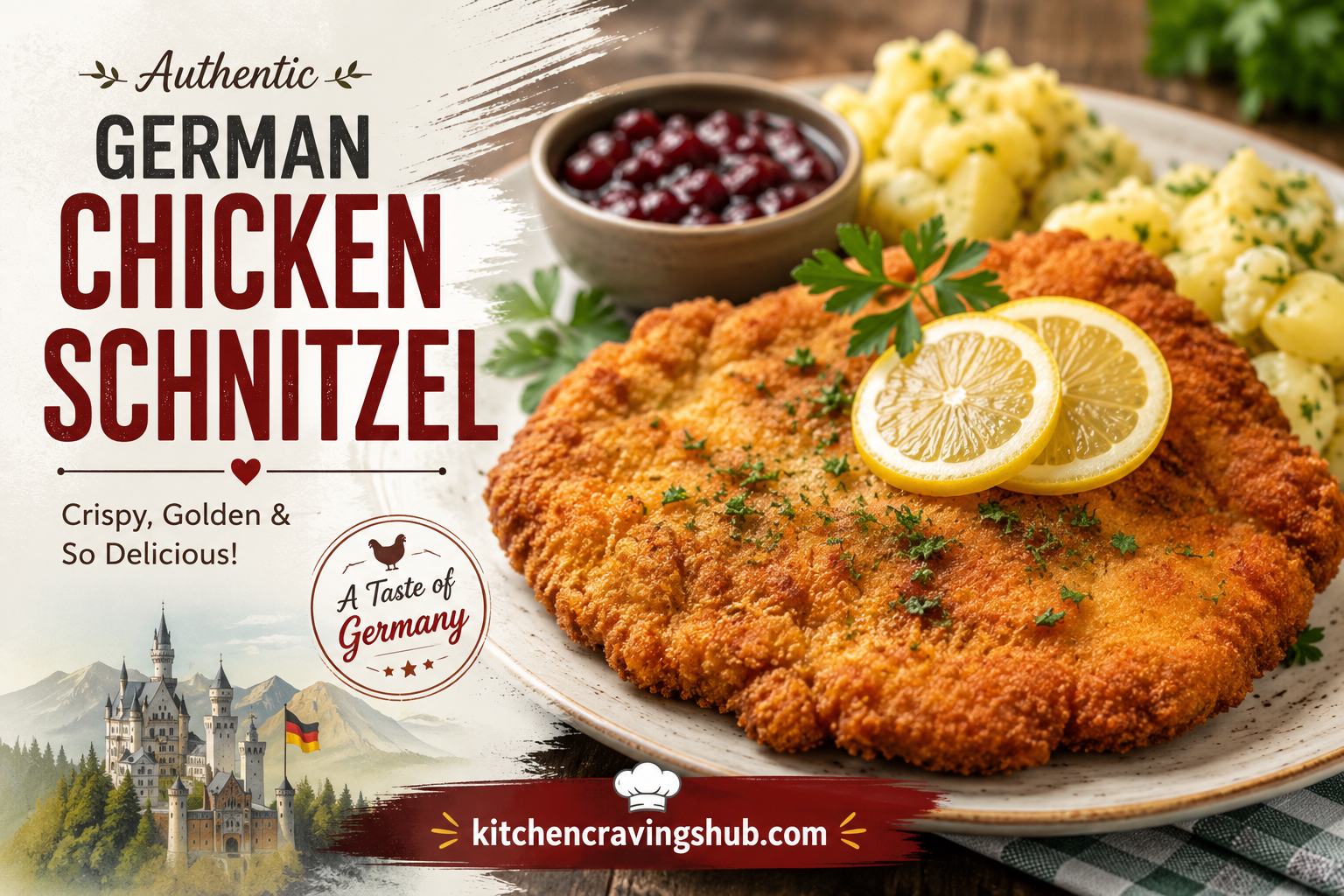
There is a reason schnitzel has earned its place as one of the most beloved dishes in German cuisine. A thin, tender piece of chicken, coated in a crisp, golden breadcrumb crust, fried until perfectly crunchy on the outside while staying juicy on the inside. Served with a simple squeeze of lemon, it is comfort food at its finest, simple, satisfying, and endlessly craveable. 😋
In this guide, we are going to cover everything you need to know about German chicken schnitzel. We will talk about where this dish comes from, why it has become such a beloved staple, the ingredients you need, a full step by step recipe, tips for getting that perfect crispy crust every time, common mistakes to avoid, healthier variations, and answers to the most frequently asked questions. Let us get cooking. 🧑🍳
What Is German Chicken Schnitzel? 🤔
Schnitzel refers to a thin, breaded, and fried cutlet, a preparation found throughout German and Austrian cuisine. While the most famous version, Wiener Schnitzel, is traditionally made with veal in Austria, chicken schnitzel has become an incredibly popular and widely enjoyed variation throughout Germany and beyond, offering the same satisfying crispy texture using a more accessible and budget friendly protein.
The technique behind schnitzel involves pounding the meat thin, coating it in a classic breading process of flour, egg, and breadcrumbs, then frying it until golden and crisp. This method has roots stretching back centuries in European cooking, with breaded cutlet preparations appearing across various cuisines, though the German and Austrian tradition of schnitzel has become particularly iconic, closely associated with hearty, comforting home cooking and beloved restaurant menus alike.
Chicken schnitzel has become a staple not just in Germany but in many parts of the world, prized for its simplicity, satisfying crunch, and versatility, since it pairs beautifully with a wide range of side dishes and sauces. 🌟
Why People Love German Chicken Schnitzel ❤️
There are several reasons this dish has earned such a devoted following.
First, the texture is simply irresistible. That crisp, golden breadcrumb crust gives way to tender, juicy chicken underneath, creating a satisfying contrast in every single bite.
Second, it is wonderfully versatile. Schnitzel pairs beautifully with countless side dishes, from classic German potato salad to simple green salads, spaetzle, or even fries, making it easy to customize the meal to your taste.
Third, it comes together relatively quickly once the chicken is prepared. With just a straightforward breading process and a short frying time, this dish is achievable even on a busy weeknight.
Finally, it is universally appealing comfort food. The simple, satisfying combination of crispy breading and tender chicken tends to please even picky eaters, making it a reliable crowd pleaser for family dinners or casual gatherings. 🏠
Ingredients You Will Need 🛒
Here is everything required to make a fantastic batch of German chicken schnitzel at home.
For the Chicken
Boneless, skinless chicken breasts, pounded thin to an even thickness. Salt and black pepper, for seasoning the chicken before breading.
For the Breading
All purpose flour, for the first coating layer. Eggs, beaten, to help the breadcrumbs adhere. Breadcrumbs, ideally fine, dry breadcrumbs for that classic crispy schnitzel texture. Panko can also be used for an extra crunchy variation, though it strays slightly from the traditional texture. Salt and pepper, for seasoning the breading as well.
For Frying
Vegetable oil or clarified butter, for frying the schnitzel until golden and crisp. Traditional recipes often use a generous amount of butter or a butter and oil combination for extra flavor.
For Serving
Fresh lemon wedges, for squeezing over the finished schnitzel, which brightens up the rich, fried flavor beautifully. Fresh parsley, chopped, optional, for garnish. 🌿
Step by Step Recipe: How to Make German Chicken Schnitzel 👩🍳
This recipe generally serves about four people and takes around forty minutes from start to finish.
Step 1: Prepare the Chicken
Place each chicken breast between two sheets of plastic wrap or parchment paper. Using a meat mallet or the bottom of a heavy pan, pound the chicken to an even thickness of about a quarter inch. This step is essential for achieving that classic thin schnitzel texture and ensures the chicken cooks quickly and evenly. Season both sides with salt and pepper.
Step 2: Set Up Your Breading Station
Prepare three shallow dishes. In the first, place the flour. In the second, place the beaten eggs. In the third, place the breadcrumbs. Having these set up in a row makes the breading process smooth and efficient.
Step 3: Bread the Chicken
Working one piece at a time, dredge the chicken in the flour, shaking off any excess. Next, dip it into the beaten egg, allowing any excess to drip off. Finally, press the chicken into the breadcrumbs, coating both sides evenly and pressing gently to help the crumbs adhere well.
Step 4: Rest the Breaded Chicken
Place the breaded chicken pieces on a plate or wire rack and let them rest for about ten minutes before frying. This brief resting period helps the breading set and adhere more securely during cooking, resulting in a crust that is less likely to fall off in the pan.
Step 5: Heat the Oil
Heat a generous amount of oil, or a combination of oil and butter, in a large skillet over medium high heat. The oil should be hot enough that a breadcrumb dropped in sizzles immediately, but not so hot that it smokes.
Step 6: Fry the Schnitzel
Carefully add the breaded chicken to the hot oil, working in batches if necessary to avoid overcrowding the pan. Fry for about three to four minutes per side, until deeply golden brown and cooked through. Since the chicken has been pounded thin, it cooks relatively quickly, so keep a close eye on it.
Step 7: Drain and Rest
Remove the schnitzel from the pan and place it on a wire rack or paper towel lined plate to drain excess oil. Let it rest for just a minute or two before serving.
Step 8: Serve
Serve the schnitzel hot, with fresh lemon wedges alongside for squeezing over the top just before eating. Garnish with chopped parsley if desired. 🍋
Pro Tips for the Best German Chicken Schnitzel 💡
Pound the chicken to an even thickness. This is essential not just for that classic thin schnitzel texture, but also for ensuring the chicken cooks evenly and quickly without drying out.
Let the breaded chicken rest before frying. This short resting period helps the breading adhere more securely, reducing the likelihood of it falling off during the frying process.
Use a combination of oil and butter for frying if you want that classic, rich flavor associated with traditional schnitzel, though oil alone works well too and has a higher smoke point.
Do not overcrowd the pan while frying. Cooking too many pieces at once can drop the oil temperature and result in a soggy, less crispy crust rather than that signature golden crunch.
Serve schnitzel immediately after frying. This dish is best enjoyed fresh and hot, while the crust is still at its crispiest.
Always serve with fresh lemon. That bright, acidic squeeze of lemon juice cuts through the richness of the fried breading beautifully and is a classic, essential pairing.
Common Mistakes to Avoid ⚠️
Not pounding the chicken thin enough. This results in uneven cooking, where the breading may burn before the thicker parts of the chicken are fully cooked through.
Skipping the resting step after breading. This can cause the breadcrumb coating to fall off more easily during frying, resulting in a patchy, less crispy crust.
Overcrowding the pan while frying. This drops the oil temperature and results in a soggy crust rather than the crispy, golden texture schnitzel is known for.
Using oil that is not hot enough. This can cause the schnitzel to absorb excess oil and become greasy rather than crisp.
Forgetting the lemon. While it might seem like a minor detail, that bright squeeze of lemon juice is a classic and essential finishing touch that balances the richness of the fried dish.
Healthier Ways to Make German Chicken Schnitzel 🥗
If you want a lighter version of this dish, here are a few simple adjustments to try.
Bake or air fry the breaded chicken instead of pan frying it in oil. Spray the breaded cutlets lightly with oil and bake at around four hundred degrees Fahrenheit, or use an air fryer, until golden and crispy, significantly reducing the amount of oil used.
Use whole wheat breadcrumbs for added fiber, though keep in mind this may result in a slightly denser texture compared to traditional white breadcrumbs.
Trim the chicken breasts of any excess fat before pounding and breading.
Serve alongside a larger portion of steamed or roasted vegetables to help balance out the meal.
Use a light hand with the oil during frying by using a well seasoned or nonstick pan, which requires less oil to prevent sticking. 🌾
What to Serve With German Chicken Schnitzel 🍽️
German chicken schnitzel pairs wonderfully with classic German side dishes like warm potato salad, spaetzle, or simple boiled or roasted potatoes. A side of sautéed mushrooms or a light cucumber salad also complements the richness of the fried chicken beautifully.
For a lighter accompaniment, serve alongside a simple green salad with a light vinaigrette. If you are hosting a bigger meal, this dish pairs nicely with a variety of German inspired sides to create a full, hearty spread. 🥗
Storing and Reheating Leftovers 📦
Store leftover schnitzel in an airtight container in the refrigerator for up to three days. Since the crispy texture is such a defining feature of this dish, leftovers will not taste quite the same as when freshly made, though the flavor will still be enjoyable.
To reheat, use an oven or air fryer to help restore some of the original crispiness. Spread the schnitzel out on a baking tray and reheat at around 350 degrees Fahrenheit for about eight to ten minutes. Avoid microwaving if possible, since this method will make the coating soft and somewhat soggy rather than crispy.
Frequently Asked Questions ❓
What is the difference between chicken schnitzel and Wiener Schnitzel? Wiener Schnitzel is traditionally made with veal and is specifically protected under Austrian culinary tradition to refer only to veal preparations, while chicken schnitzel is a popular and widely enjoyed variation using chicken instead, offering the same crispy breaded technique with a more accessible protein.
Can I use chicken thighs instead of chicken breast? Yes, boneless, skinless chicken thighs can be used, though you will want to pound them to an even thickness just as you would with chicken breast, and note that thighs have a slightly different texture and flavor compared to traditional schnitzel made with breast meat.
Why did my breading fall off during frying? This is often caused by not letting the breaded chicken rest before frying, or from oil that is not hot enough, which can cause the breading to absorb excess oil and become soggy rather than adhering properly.
Can I make schnitzel without frying it in oil? Yes, baking or air frying the breaded chicken is a great alternative that still delivers a crispy texture with significantly less oil, though the result will be slightly less rich than traditional pan frying.
What sauces pair well with schnitzel? While a simple squeeze of lemon is the most classic pairing, schnitzel also pairs well with mushroom gravy, a creamy dill sauce, or even a simple side of applesauce, which is a popular pairing in some German households.
Can I make this dish gluten free? Yes, substitute the all purpose flour and breadcrumbs with gluten free alternatives, both of which are widely available at most grocery stores, to create a gluten free version of this classic dish.
Final Thoughts 🌈
German chicken schnitzel proves that a few simple techniques, pounding the chicken thin, breading it properly, and frying it to golden perfection, can create a dish that feels both comforting and genuinely special. That satisfying crunch, paired with tender, juicy chicken and a bright squeeze of lemon, makes for a meal that never seems to disappoint.
Once you get comfortable with the breading process and frying technique, this recipe becomes a reliable go to whenever you want something crispy, comforting, and universally appealing. Pair it with your favorite German sides, or keep it simple with just a lemon wedge and a good appetite.
So pound that chicken, set up your breading station, and get ready to enjoy the crispy, golden comfort of homemade German chicken schnitzel. Happy cooking! 🍳🥳