
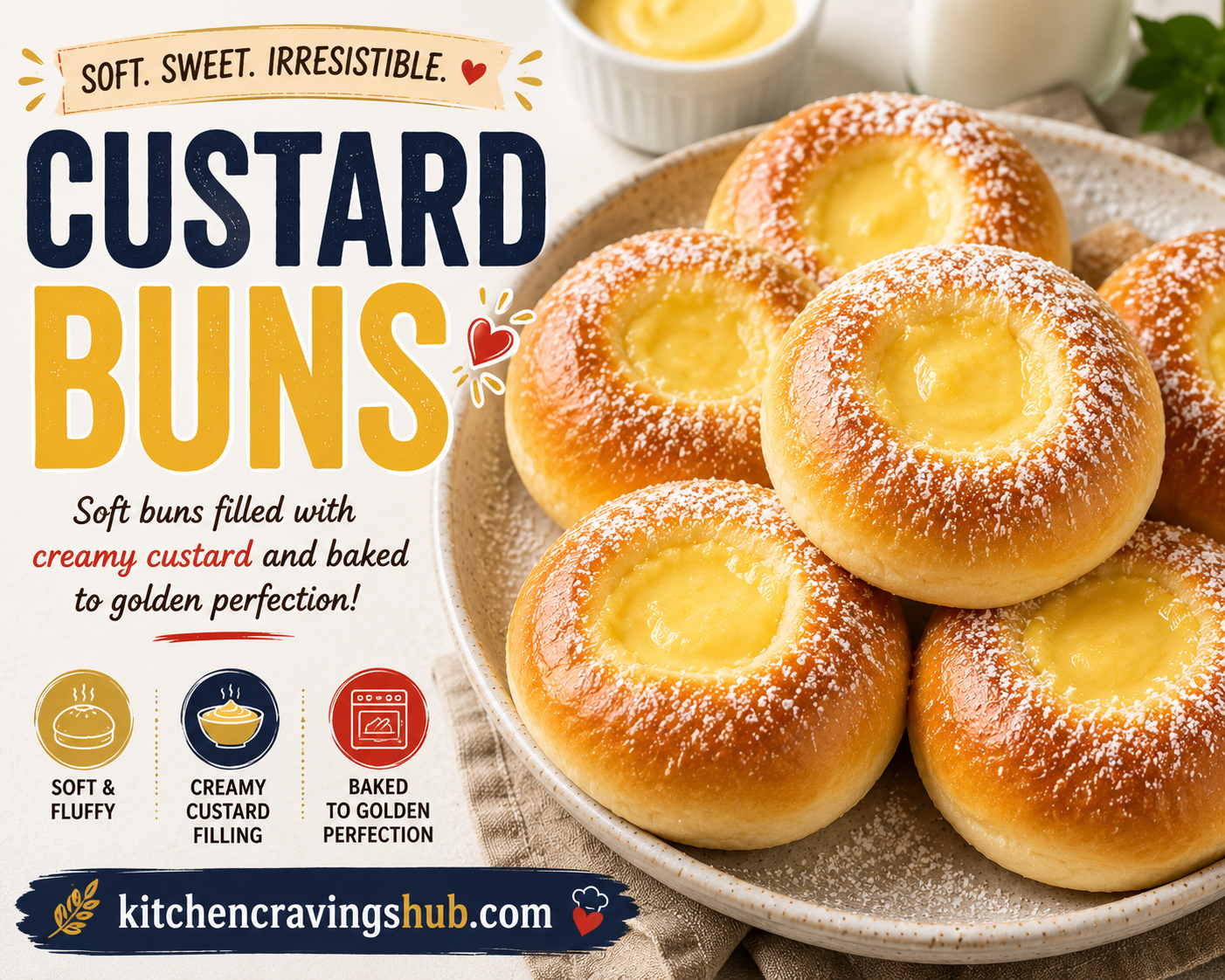
There is a special kind of joy in biting into a soft, pillowy steamed bun and discovering a warm, silky, slightly molten custard filling inside. Custard buns, known as nai wong bao in Cantonese, are a beloved dim sum treat that manages to be comforting and indulgent all at once. Fluffy, slightly sweet dough on the outside, rich, buttery custard on the inside, it is a combination that is hard to resist. 😋
In this guide, we are going to cover everything you need to know about custard buns. We will talk about where this treat comes from, why it has become such a beloved dim sum favorite, the ingredients you need, a full step by step recipe for both the dough and the custard filling, tips for getting that perfect fluffy texture and silky filling, common mistakes to avoid, variations you might enjoy, and answers to the most frequently asked questions. Let us get steaming. 🧑🍳
What Are Custard Buns? 🤔
Custard buns, known as nai wong bao in Cantonese, are a type of steamed bun filled with a rich, sweet custard made from ingredients like eggs, butter, milk powder, and sugar. Unlike savory bao filled with meat or vegetables, custard buns fall into the category of sweet dim sum, often served toward the end of a dim sum meal alongside other desserts, though they are equally delicious enjoyed any time of day as a snack or treat.
This particular style of bao became especially popular in Hong Kong style dim sum restaurants, where the custard filling is often prepared to be soft and slightly runny, creating a delightful molten center when the bun is first opened. Some versions include salted egg yolk mixed into the custard, adding a subtle savory contrast to the overall sweetness, a variation that has become particularly beloved for its unique flavor balance.
Custard buns represent a wonderful example of how Chinese steamed bun traditions have expanded beyond savory fillings to embrace sweet, dessert style variations, resulting in a treat that feels both familiar in its fluffy steamed bun form and delightfully different once you take that first warm, custardy bite. 🌟
Why People Love Custard Buns ❤️
There are so many reasons this treat has earned such a devoted following.
First, the contrast between the soft, fluffy bun and the rich, silky custard filling creates an incredibly satisfying textural experience that few other desserts can replicate.
Second, they offer that wonderful moment of discovery when you first bite in and the custard filling reveals itself, especially when made with that signature slightly molten, oozing texture that many bakeries strive for.
Third, custard buns are comforting yet feel a little bit special, making them a popular choice for dim sum outings, celebrations, or simply treating yourself to something sweet and homemade.
Finally, making them at home means you get to enjoy that warm, fresh from the steamer experience, along with the ability to customize the sweetness and richness of the custard exactly to your liking. 🏠
Ingredients You Will Need 🛒
Here is everything required to make a fantastic batch of custard buns at home.
For the Dough
All purpose flour, for the base of the dough. Some recipes use bao flour or cake flour for an even softer, whiter result, though all purpose flour works perfectly well. Instant yeast, to help the dough rise and become light and fluffy. Sugar, which feeds the yeast and adds a subtle sweetness to the dough. Baking powder, added later to help the buns puff up nicely during steaming. Warm milk or warm water, to activate the yeast and bring the dough together. A small amount of oil, for a tender, soft texture.
For the Custard Filling
Unsalted butter, softened, for richness. Granulated sugar, for sweetness. Eggs, for structure and richness. Milk powder, which gives the custard its signature rich flavor and helps thicken it. Cornstarch, to help set the custard so it holds together while still remaining soft. A small pinch of salt, to balance the sweetness. Salted egg yolks, optional, mashed and folded in for that classic salty sweet variation. 🌿
Step by Step Recipe: How to Make Custard Buns 👩🍳
This recipe generally makes about twelve buns and takes around two hours from start to finish, including dough rising time and time to chill the custard filling.
Step 1: Make the Custard Filling
In a heatproof bowl, cream together the softened butter and sugar until smooth. Beat in the eggs one at a time, mixing well after each addition. Stir in the milk powder, cornstarch, and a pinch of salt until fully combined and smooth.
Step 2: Cook the Custard
Place the bowl over a pot of simmering water, creating a double boiler setup, and stir the mixture constantly for about ten to fifteen minutes, until it thickens into a soft, spreadable paste. Be patient during this step, since rushing it with higher heat can cause the eggs to scramble rather than create a smooth custard.
Step 3: Chill the Custard
Once thickened, remove the custard from the heat and let it cool slightly, then fold in mashed salted egg yolks if using. Transfer the custard to the refrigerator and chill for at least one hour, until firm enough to handle and shape into small balls.
Step 4: Activate the Yeast
While the custard chills, prepare the dough. In a small bowl, combine warm milk, sugar, and instant yeast. Let it sit for about five to ten minutes, until it becomes foamy, indicating the yeast is active.
Step 5: Make the Dough
In a large bowl, combine the flour with the activated yeast mixture and a small amount of oil. Mix until a shaggy dough forms, then knead for about eight to ten minutes, either by hand or with a stand mixer, until the dough becomes smooth and elastic.
Step 6: Let the Dough Rise
Place the dough in a lightly oiled bowl, cover it with a damp cloth or plastic wrap, and let it rise in a warm place for about one hour, or until it has doubled in size.
Step 7: Shape the Custard Filling
Once the custard has chilled and firmed up, divide it into twelve small portions, rolling each into a ball. Keep the custard balls in the refrigerator until you are ready to assemble the buns, since a firm filling is much easier to work with than a soft one.
Step 8: Punch Down and Divide the Dough
Once the dough has doubled in size, punch it down gently to release excess air. Knead in the baking powder at this stage, then divide the dough into twelve equal pieces, rolling each into a smooth ball.
Step 9: Shape the Buns
Flatten each dough ball into a small round, slightly thicker in the center and thinner around the edges. Place a chilled custard ball in the center, then gather the edges of the dough up and around the filling, pinching and twisting at the top to seal each bun completely.
Step 10: Let the Buns Rest
Place each shaped bun on a small square of parchment paper and arrange them in your steamer basket, leaving space between each one to allow for expansion. Let them rest for about fifteen to twenty minutes before steaming, which allows for a final rise and results in fluffier finished buns.
Step 11: Steam the Buns
Bring water to a boil in your steamer pot, then reduce to a gentle simmer. Place the steamer basket over the simmering water, cover, and steam the buns for about twelve to fifteen minutes, until they are puffed up and cooked through.
Step 12: Serve
Carefully remove the buns from the steamer and let them cool for just a couple of minutes before serving, since the custard filling will be very hot right out of the steamer. Custard buns are best enjoyed warm. 🍮
Pro Tips for the Best Custard Buns 💡
Chill the custard filling thoroughly before shaping it into balls. A firm filling is much easier to work with and helps prevent the custard from leaking out while shaping the buns.
Be patient while cooking the custard over the double boiler. Rushing this step with higher heat can cause the eggs to scramble rather than create that smooth, silky texture the filling is known for.
Make sure your yeast is properly activated before proceeding with the dough. If the mixture does not become foamy after several minutes, your yeast may be inactive, and it is worth starting fresh to ensure proper rising.
Do not overfill the buns. While a generous custard filling sounds appealing, overfilling makes sealing the dough difficult and increases the risk of the filling leaking out during steaming.
Give the shaped buns time to rest before steaming. This final proofing step is essential for achieving that light, fluffy texture, so do not skip it even if you are eager to start steaming.
Let the buns cool slightly before eating. The custard filling gets extremely hot during steaming, so give them a couple of minutes to cool down before taking that first bite.
Common Mistakes to Avoid ⚠️
Rushing the custard cooking process. Cooking the custard too quickly over high heat can cause the eggs to scramble, resulting in a lumpy rather than smooth, silky filling.
Using custard that has not chilled enough. A soft, warm custard is very difficult to shape and can make sealing the buns nearly impossible without leaking.
Using inactive yeast. If your yeast mixture does not foam after several minutes, the dough will not rise properly, resulting in dense, heavy buns.
Skipping the resting period before steaming. This final rise is essential for achieving that signature fluffy texture, so do not rush straight to steaming after shaping.
Overfilling the buns. Too much custard filling makes sealing difficult and increases the likelihood of the filling leaking out during the steaming process.
Variations You Might Enjoy 🍽️
While the classic sweet custard filling is beloved on its own, there are a few popular variations worth exploring. Adding mashed salted egg yolk to the custard creates that classic salty sweet flavor combination found in many Hong Kong style bakeries, offering a wonderful contrast to the overall sweetness. Some bakers also add a small amount of coconut milk or pandan extract to the custard for a fragrant, slightly tropical twist. For those who enjoy a bit of extra indulgence, folding a small amount of melted chocolate into the custard creates a fun, modern take on this traditional treat. 🥧
Storing and Reheating Leftovers 📦
Store leftover custard buns in an airtight container in the refrigerator for up to three days, or freeze them for up to two months for longer storage.
To reheat refrigerated buns, steam them again for about five to seven minutes until warmed through, which helps restore their original fluffy texture and warms the custard filling back up. For frozen buns, steam directly from frozen, extending the steaming time to about twelve to fifteen minutes. Avoid microwaving if possible, since this can make the dough tough rather than soft and fluffy.
Frequently Asked Questions ❓
Why did my custard filling turn out grainy or lumpy? This usually happens from cooking the custard too quickly over high heat, causing the eggs to scramble slightly. Cooking it slowly over a double boiler and stirring constantly helps achieve a smooth, silky texture.
Can I make the custard filling ahead of time? Yes, the custard can be made a day or two in advance and stored in the refrigerator until you are ready to shape it into balls and assemble the buns.
What is the difference between custard buns and lava custard buns? Custard buns typically have a firmer, more set filling, while lava custard buns are specifically designed to have a molten, oozing center that flows out when the bun is opened, usually achieved by slightly undercooking or specially formulating the custard to remain softer.
Can I use a different filling in this same dough recipe? Absolutely. This same bao dough works wonderfully with other sweet fillings, like red bean paste or lotus seed paste, making it a versatile base for many different dim sum style treats.
Do I need a special steamer to make custard buns? A traditional bamboo steamer works beautifully, but a metal steamer basket set over a pot of simmering water works just as well if that is what you have available.
Why did my buns turn out dense instead of fluffy? This is usually caused by inactive yeast, insufficient rising time, or skipping the final rest period before steaming. Make sure your yeast is properly activated and give the dough adequate time to rise at each stage.
Final Thoughts 🌈
Custard buns represent a wonderful marriage of textures and flavors, soft, fluffy steamed dough giving way to a rich, silky, slightly sweet custard filling. While making them from scratch does take some time and a bit of patience, especially when it comes to cooking that custard just right, the reward of biting into a warm, homemade custard bun is well worth the effort.
Once you get comfortable with the process of chilling the custard, activating the yeast, and shaping each bun with care, this recipe becomes a wonderful treat you can make again and again, whether for a special occasion or simply because you are craving something sweet, fluffy, and homemade.
So cook up that custard, prepare your dough, and get ready to enjoy the warm, comforting indulgence of homemade custard buns. Happy steaming! 🍳🥳