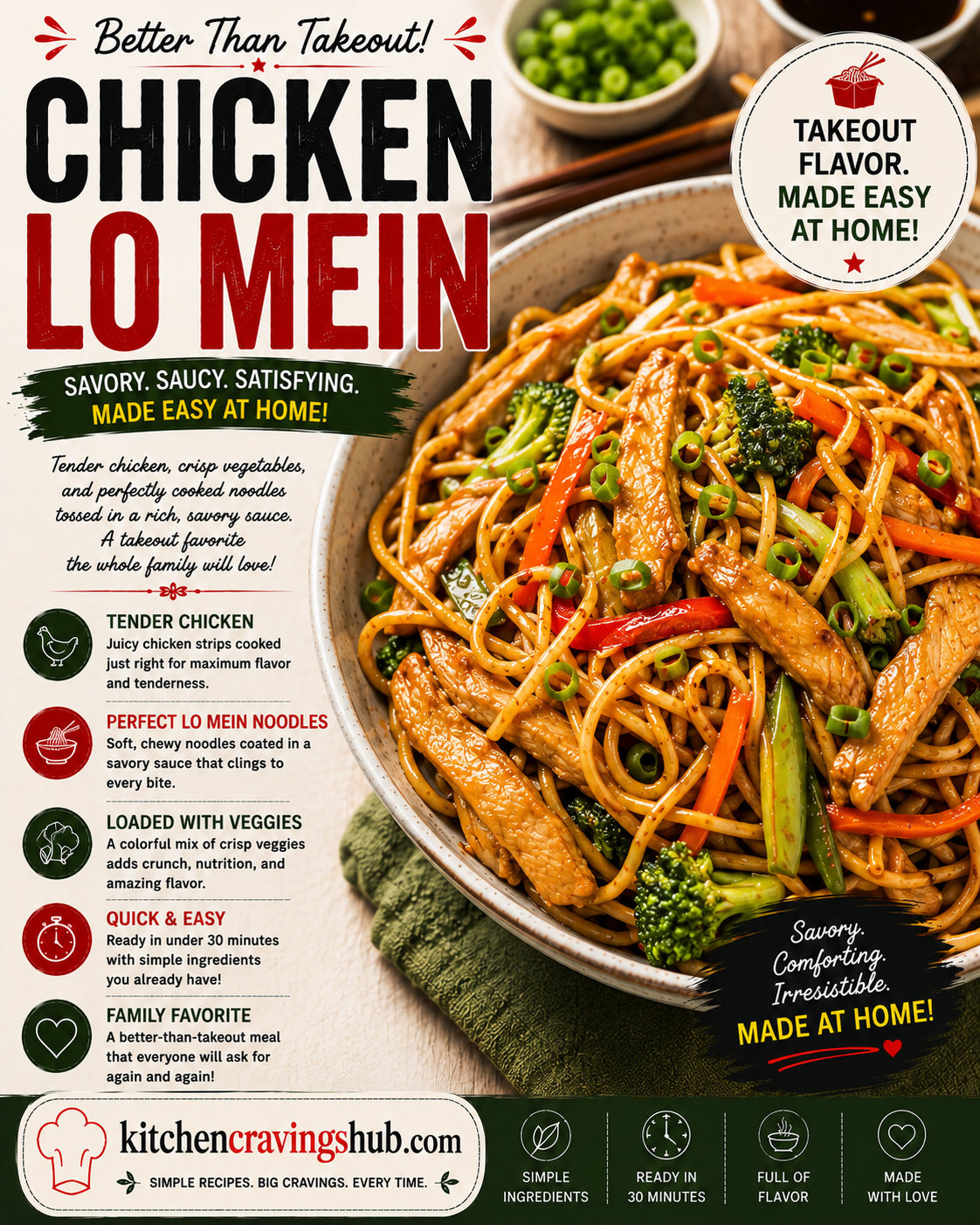
There is a reason chicken lo mein shows up in nearly every Chinese takeout order. It is comforting, it is packed with flavor, and it comes together in one pan with a satisfying tangle of noodles, tender chicken, and crisp vegetables all coated in a glossy savory sauce. It is the kind of meal that feels indulgent but is honestly pretty simple to pull off once you know the basics. 😋
In this guide, we are going to cover everything you need to know about chicken lo mein. We will talk about where this dish comes from, why it has become such a menu staple, the ingredients you need, a full step by step recipe, tips for getting perfectly tender noodles and juicy chicken, common mistakes to avoid, healthier variations, and answers to the most frequently asked questions. Let us get cooking. 🧑🍳
What Is Chicken Lo Mein? 🤔
Lo mein is a Cantonese term that translates roughly to tossed noodles, referring to the cooking method where soft, boiled egg noodles are tossed together with a flavorful sauce, protein, and vegetables rather than being stir fried directly in the pan the way chow mein noodles typically are. This distinction is important because it explains why lo mein noodles tend to be softer and more tender compared to the slightly crispier texture of chow mein.
Chicken lo mein specifically features tender pieces of chicken combined with those soft egg noodles, a savory soy sauce based sauce, and a mix of vegetables like cabbage, carrots, and bean sprouts. The dish has become one of the most popular and recognizable items on Chinese American restaurant menus, prized for its comforting texture and rich, savory flavor.
While lo mein has Cantonese roots, it has evolved over the decades in restaurants outside of China to include a wider variety of proteins and vegetables, making it a flexible dish that adapts easily to whatever ingredients are on hand. 🌟
Why People Love Chicken Lo Mein ❤️
There are plenty of reasons this dish has become such a beloved comfort food.
First, the texture is incredibly satisfying. Soft, tender noodles coated in a glossy sauce feel comforting in a way that few other dishes manage, making lo mein a go to choice on nights when you want something hearty and familiar.
Second, it is a complete meal in one bowl. With protein, vegetables, and noodles all combined together, chicken lo mein does not require a bunch of extra side dishes to feel like a full dinner.
Third, it is incredibly versatile. This dish welcomes almost any vegetable you have on hand, and the protein can easily be swapped for beef, shrimp, or tofu, making it a fantastic way to clean out the produce drawer.
Finally, it comes together relatively quickly, making it a realistic option for a weeknight dinner without needing to place a takeout order. 🏠
Ingredients You Will Need 🛒
Here is everything required to make a great batch of chicken lo mein at home.
For the Chicken
Boneless, skinless chicken breast or chicken thighs, thinly sliced. Soy sauce, for marinating and adding flavor. Cornstarch, used in the marinade to help tenderize the chicken and give it a slightly silky texture. A splash of Shaoxing wine or dry sherry, optional, for extra depth in the marinade.
For the Noodles
Fresh or dried lo mein noodles, which are essentially Chinese egg noodles. If you cannot find lo mein noodles specifically, spaghetti or linguine can work in a pinch as a substitute, though the texture will be slightly different.
For the Sauce
Soy sauce, the backbone of the flavor. Dark soy sauce, optional, for a deeper color and slightly richer flavor. Oyster sauce, for umami depth. Sesame oil, for a nutty, fragrant finish. Sugar, just a touch, to balance the saltiness. Chicken broth or water, to help the sauce coat the noodles evenly.
For the Vegetables
Cabbage, thinly sliced, either green or napa cabbage. Carrots, julienned or thinly sliced. Bean sprouts, for classic crunch. Bell peppers, optional, for extra color and crunch. Garlic, minced, for aromatic depth. Green onions, sliced, for garnish and freshness.
For Cooking
Vegetable oil or peanut oil, for stir frying at high heat. 🌿
Step by Step Recipe: How to Make Chicken Lo Mein 👩🍳
This recipe generally serves about four people and takes around thirty five minutes from start to finish, including a short marinating time.
Step 1: Marinate the Chicken
Slice the chicken thinly, then combine it with soy sauce, cornstarch, and Shaoxing wine if using. Mix well and let it marinate for about fifteen minutes while you prepare the other ingredients. This step helps keep the chicken tender and juicy once cooked.
Step 2: Cook the Noodles
Bring a large pot of water to a boil and cook the lo mein noodles according to the package instructions, usually just a few minutes for fresh noodles or a bit longer for dried. You want the noodles to be just tender, not overcooked, since they will be stir fried again later. Drain the noodles and toss them with a small amount of sesame oil to prevent sticking while you finish the rest of the dish.
Step 3: Sear the Chicken
Heat a wok or large skillet over high heat and add a spoonful of oil. Add the marinated chicken in a single layer, working in batches if needed to avoid overcrowding the pan. Cook for about three to four minutes, stirring occasionally, until the chicken is golden and cooked through. Remove and set aside.
Step 4: Stir Fry the Vegetables
In the same pan, add a bit more oil if needed. Add the garlic and cook for about thirty seconds until fragrant. Add the carrots and cabbage, stir frying for about two minutes until they begin to soften slightly but still retain some crunch. Add the bell peppers if using and cook for another minute, then toss in the bean sprouts just at the end since they only need a few seconds of heat.
Step 5: Add the Noodles and Sauce
Push the vegetables to one side of the pan and add the cooked noodles to the empty space. Pour in the soy sauce, dark soy sauce if using, oyster sauce, sugar, and a splash of chicken broth. Toss everything together thoroughly, making sure the sauce coats the noodles evenly and the color becomes a rich, glossy brown.
Step 6: Combine Everything
Return the cooked chicken to the pan and toss everything together for another minute or two, allowing the chicken to warm through and the flavors to meld. Taste and adjust the seasoning with a bit more soy sauce if needed.
Step 7: Finish and Serve
Drizzle a small amount of sesame oil over the top and give the dish one final toss. Garnish with sliced green onions. Serve immediately while everything is hot and glossy. 🍚
Pro Tips for the Best Chicken Lo Mein 💡
Do not overcook the noodles during the initial boiling step. Since they will be stir fried again, slightly undercooking them at first helps prevent mushy noodles in the final dish.
Toss the cooked noodles with a bit of sesame oil right after draining. This simple step prevents them from sticking together while you finish preparing the rest of the ingredients.
Prep everything before you start cooking. Once the noodles hit the pan, the process moves quickly, so have your chicken marinated, vegetables chopped, and sauce measured out in advance.
Use both regular and dark soy sauce if you can. The combination gives the dish that classic deep brown color and balanced savory flavor found in restaurant versions.
Keep the heat high throughout the stir frying process. This helps develop flavor quickly and keeps the vegetables crisp rather than soggy.
Do not overcrowd the pan when searing the chicken. Cook in batches if necessary to maintain high heat and achieve a proper sear.
Common Mistakes to Avoid ⚠️
Overcooking the noodles during the boiling step. Since the noodles get stir fried again later, boiling them too long results in a mushy final texture.
Skipping the sesame oil toss after draining the noodles. Without this step, noodles can clump together and become difficult to separate once you start stir frying.
Overcrowding the pan while searing the chicken. This drops the pan temperature and leads to steamed rather than properly seared chicken.
Using only regular soy sauce instead of a mix with dark soy sauce. This can leave the noodles looking pale rather than that rich, glossy brown color associated with classic lo mein.
Adding the bean sprouts too early. These should go in at the very end and cook only briefly to preserve their crisp texture.
Healthier Ways to Make Chicken Lo Mein 🥗
If you want a lighter version of this dish, here are a few simple adjustments to try.
Use whole wheat noodles or a vegetable based noodle alternative if you are looking to increase fiber content.
Reduce the amount of oil used for stir frying by cooking in a well seasoned or nonstick pan.
Add extra vegetables such as broccoli, snap peas, or mushrooms to boost the fiber and nutrient content of the dish.
Use a lighter hand with the dark soy sauce and sugar to reduce the overall sodium and sugar content.
Choose chicken breast over chicken thighs for a leaner protein option, though thighs will yield a slightly juicier result. 🌾
What to Serve With Chicken Lo Mein 🍽️
Chicken lo mein is hearty enough to serve as a complete meal on its own, but it also pairs nicely with lighter sides if you want to round out the meal. A simple cucumber salad or a light egg drop soup works well alongside the richness of the noodles.
If you are serving a larger group, spring rolls or dumplings make a great starter, and a side of steamed broccoli or bok choy with garlic adds a fresh, light contrast to the savory noodles. 🥢
Storing and Reheating Leftovers 📦
Store leftover chicken lo mein in an airtight container in the refrigerator for up to three days. The noodles may absorb some of the sauce over time, which is completely normal.
To reheat, use a skillet over medium high heat with a small splash of water or broth to loosen the noodles, stirring frequently until heated through. This method helps preserve the texture better than microwaving. The microwave also works if you are short on time, just cover loosely and heat in short bursts, stirring in between.
Frequently Asked Questions ❓
What is the difference between lo mein and chow mein? Lo mein noodles are boiled and then tossed with sauce and other ingredients, resulting in a softer texture, while chow mein noodles are stir fried directly in the pan, often resulting in a slightly crispier texture.
What kind of noodles should I use for lo mein? Fresh or dried Chinese egg noodles are traditional, but spaghetti or linguine can work as a substitute if you cannot find lo mein noodles at your local grocery store.
Can I make chicken lo mein vegetarian? Yes, simply omit the chicken and add extra vegetables or tofu instead, using a vegetarian oyster sauce alternative to keep that same savory depth of flavor.
Can I make this dish gluten free? This one is a bit trickier since traditional lo mein noodles contain wheat. Look for gluten free egg noodle alternatives or rice noodles, and be sure to use gluten free soy sauce and oyster sauce as well.
Why did my lo mein turn out mushy? This usually happens from overcooking the noodles during the initial boiling step. Slightly undercooking them at first, since they will cook again during stir frying, helps prevent this issue.
Can I use a different protein in this recipe? Absolutely. This same method works wonderfully with beef, shrimp, or tofu, making it an easy dish to customize based on what you have on hand.
Final Thoughts 🌈
Chicken lo mein is a wonderful example of how a handful of simple ingredients, when combined with the right technique, can create a dish that feels both comforting and restaurant quality. The soft, tender noodles, tossed together with juicy chicken, crisp vegetables, and a rich savory sauce, make for a meal that never seems to get old no matter how many times you make it.
Once you get comfortable with the rhythm of boiling the noodles just right, searing the chicken properly, and tossing everything together with that glossy sauce, this recipe becomes a reliable go to whenever you are craving something hearty and familiar. Feel free to swap in whatever vegetables or protein you have on hand to make it your own.
So boil those noodles, heat up your pan, and get ready to fill your kitchen with the savory aroma of homemade chicken lo mein. Happy cooking! 🍳🥳