
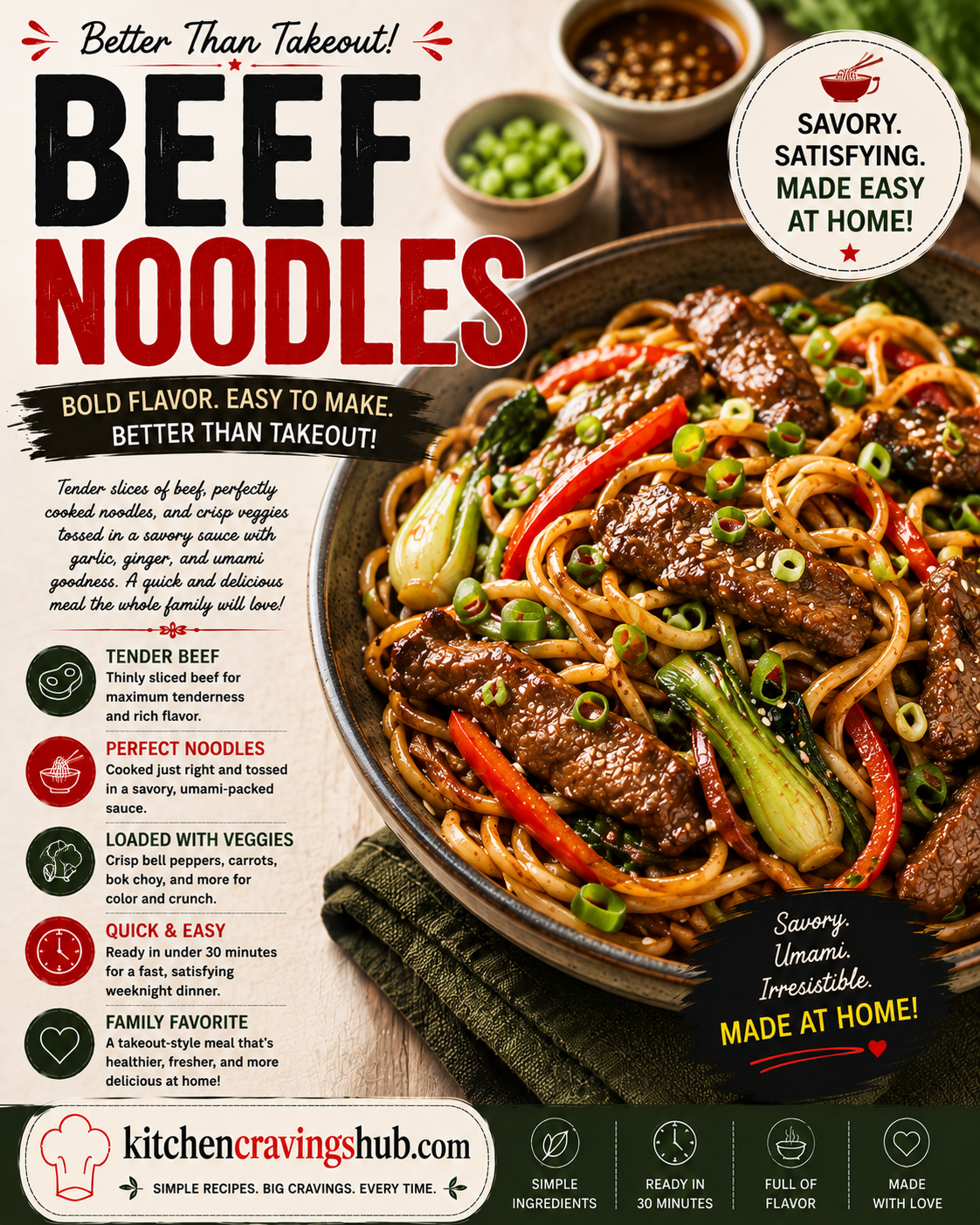
Few dishes feel as satisfying as a big bowl of beef noodles. Whether it is wide rice noodles stir fried with tender beef and a smoky soy sauce, or a steaming bowl of noodle soup loaded with slow braised beef and rich broth, this dish has a way of feeling like a warm hug after a long day. It is hearty, deeply flavorful, and endlessly comforting. 😋
In this guide, we are going to cover everything you need to know about beef noodles. We will look at the different styles of this dish, why it has become such a beloved comfort food, the ingredients you need, a full step by step recipe for a classic stir fried version, tips for getting tender beef and perfectly cooked noodles, common mistakes to avoid, healthier variations, and answers to the most frequently asked questions. Let us dive in. 🧑🍳
What Are Beef Noodles? 🤔
Beef noodles is a broad term that covers several beloved styles of Chinese cooking, all centered around the pairing of beef and noodles. The two most popular versions are stir fried beef noodles, often made with wide flat rice noodles in a dish sometimes called beef chow fun, and beef noodle soup, a rich, slow simmered broth loaded with tender braised beef, often associated with Taiwanese and Sichuan cuisine.
Stir fried beef noodles typically feature thinly sliced beef seared at high heat, tossed together with wide rice noodles, bean sprouts, scallions, and a smoky, savory soy sauce base. The high heat searing gives the noodles a slightly charred flavor known as wok hei, which is a defining characteristic of great Cantonese stir fry cooking.
Beef noodle soup, on the other hand, is a completely different experience. Chunks of beef, often brisket or shank, are braised low and slow in a deeply spiced broth flavored with star anise, cinnamon, soy sauce, and chili bean paste, then ladled over wheat noodles along with pickled greens and fresh herbs.
Both versions share the same comforting core of tender beef and satisfying noodles, but they offer very different textures and flavor profiles. In this guide, we will focus primarily on the classic stir fried beef noodle style, since it is quicker to make at home and incredibly popular on Chinese restaurant menus. 🌟
Why People Love Beef Noodles ❤️
There are so many reasons this dish holds such a special place in so many hearts.
First, it is deeply comforting. There is something about the combination of tender beef, chewy noodles, and a savory sauce that feels like the ultimate comfort food, no matter which version you are eating.
Second, it is incredibly satisfying as a complete meal. With protein, noodles, and vegetables all in one bowl, beef noodles do not require a bunch of side dishes to feel like a full dinner.
Third, the smoky flavor of a well made stir fried version, thanks to that high heat searing, delivers a restaurant quality taste that is hard to replicate with other cooking methods.
Finally, it is a dish that rewards technique. Once you understand how to properly slice the beef, marinate it for tenderness, and stir fry everything at the right heat, you unlock a dish that tastes like it came straight from your favorite noodle shop. 🏠
Ingredients You Will Need 🛒
Here is everything required to make a fantastic batch of classic stir fried beef noodles at home.
For the Beef
Flank steak or skirt steak, thinly sliced against the grain. Soy sauce, for marinating and building flavor. Cornstarch, used in the marinade to tenderize the beef. Shaoxing wine or dry sherry, for depth in the marinade. A pinch of baking soda, optional, to further tenderize the beef.
For the Noodles
Wide flat rice noodles, sometimes labeled as ho fun or chow fun noodles, either fresh or dried. If using dried noodles, they will need to be soaked or briefly boiled before stir frying.
For the Sauce
Dark soy sauce, which gives the dish its deep color and slightly molasses like richness. Regular soy sauce, for saltiness and balance. Oyster sauce, for umami depth. Sugar, just a touch, to round out the flavors. Sesame oil, for a fragrant finishing touch.
For the Vegetables and Aromatics
Bean sprouts, for classic crunch and freshness. Scallions, cut into long pieces. Garlic, minced, for aromatic depth. Optional additions like sliced onions or Chinese chives for extra flavor and texture.
For Cooking
Vegetable oil or peanut oil, for high heat stir frying. 🌿
Step by Step Recipe: How to Make Stir Fried Beef Noodles 👩🍳
This recipe generally serves about four people and takes around thirty five minutes from start to finish, including a short marinating time.
Step 1: Slice and Marinate the Beef
Slice the beef thinly against the grain into strips about a quarter inch thick. This step is essential for tender beef, since cutting against the grain shortens the muscle fibers. Combine the beef with soy sauce, cornstarch, Shaoxing wine, and baking soda if using. Mix well and let it marinate for at least fifteen minutes, though thirty minutes will give you even better results.
Step 2: Prepare the Noodles
If using fresh wide rice noodles, gently separate them by hand, since they often come tightly packed together. If using dried rice noodles, soak them in warm water according to the package instructions until pliable, then drain well. Fresh noodles generally need very little additional cooking, while dried noodles may need a quick blanch in boiling water for about a minute before stir frying.
Step 3: Sear the Beef
Heat a wok or large skillet over high heat until very hot, then add a spoonful of oil. Add the marinated beef in a single layer, working in batches if your pan is small. Sear for about a minute without stirring to develop a good crust, then cook for another minute or two until just cooked through. Remove the beef and set it aside.
Step 4: Stir Fry the Aromatics and Vegetables
In the same hot pan, add a bit more oil if needed. Add the minced garlic and cook for about thirty seconds until fragrant. Add the onions if using and cook for a minute, then add the bean sprouts and scallions, tossing quickly since these vegetables only need a brief time in the pan to stay crisp.
Step 5: Add the Noodles
Push the vegetables to one side of the pan and add the noodles to the empty space along with a touch more oil. Gently toss the noodles over high heat, being careful not to break them apart too much, since wide rice noodles can be delicate. Pour in the dark soy sauce, regular soy sauce, oyster sauce, and sugar, tossing everything together until the noodles are evenly coated in that deep, glossy color.
Step 6: Combine Everything
Return the seared beef to the pan and toss everything together, allowing the beef to warm through and the flavors to meld for about a minute. Taste and adjust the seasoning with a bit more soy sauce if needed.
Step 7: Finish and Serve
Drizzle a small amount of sesame oil over the top and give the dish one final toss. Serve immediately while everything is hot, glossy, and fragrant. 🍚
Pro Tips for the Best Beef Noodles 💡
Always slice the beef against the grain. This is the single most important step for tender, not chewy, beef.
Handle wide rice noodles gently. They can tear easily, especially fresh ones, so use tongs or a gentle folding motion rather than aggressive stirring.
Use a very hot pan or wok. High heat is essential for developing that smoky, slightly charred flavor that defines great stir fried noodles.
Do not overcrowd the pan when searing the beef. Cook in batches if necessary to maintain high heat and get a proper sear rather than steaming the meat.
Prep everything before you start cooking. Once the noodles hit the pan, the cooking process moves quickly, so have your beef marinated, vegetables chopped, and sauce measured out in advance.
Balance the sauce carefully. Dark soy sauce brings color and a slightly sweet, molasses like depth, while regular soy sauce brings saltiness, so use both for the most authentic flavor.
Common Mistakes to Avoid ⚠️
Slicing the beef with the grain instead of against it. This results in tough, chewy meat regardless of how well it is cooked.
Overcooking the noodles or handling them too roughly. Wide rice noodles can break apart easily, so gentle tossing is key to keeping them intact.
Overcrowding the pan while searing the beef. This drops the pan temperature and leads to steamed, rather than seared, beef.
Using only regular soy sauce instead of a combination with dark soy sauce. This can leave the dish looking pale and missing that signature deep, glossy color.
Cooking the bean sprouts too long. These should be added toward the end and cooked briefly to preserve their crisp, fresh texture.
Healthier Ways to Make Beef Noodles 🥗
If you want a lighter version of this dish, here are a few simple adjustments to try.
Use a leaner cut of beef like sirloin instead of fattier cuts, trimming any excess visible fat before slicing.
Reduce the amount of oil used for stir frying by working in a well seasoned or nonstick pan.
Add extra vegetables such as bok choy, mushrooms, or snap peas to increase the fiber and nutrient content of the dish.
Use a lighter hand with the dark soy sauce and sugar to reduce the overall sodium and sugar content, letting the natural flavor of the beef and vegetables shine through more.
Consider substituting part of the rice noodles with zucchini noodles or shirataki noodles if you are looking to reduce the overall carbohydrate content. 🌾
What to Serve With Beef Noodles 🍽️
Beef noodles are hearty enough to serve as a complete meal on their own, but they also pair nicely with lighter sides if you want to round out the spread. A simple cucumber salad or a light broth based soup works well alongside the richness of the noodles.
If you are serving a larger group, spring rolls or dumplings make a great starter, and a side of steamed greens with garlic adds a fresh, light contrast to the deep, savory flavors of the noodles. 🥢
Storing and Reheating Leftovers 📦
Store leftover beef noodles in an airtight container in the refrigerator for up to three days. Keep in mind that rice noodles can become slightly firmer after refrigeration, which is completely normal.
To reheat, use a skillet over medium high heat with a small splash of water to loosen the noodles, stirring gently until heated through. This method helps prevent the noodles from becoming overly mushy. The microwave also works if you are short on time, just cover loosely and heat in short bursts, stirring gently in between.
Frequently Asked Questions ❓
What kind of noodles are used in beef noodles? The classic stir fried version uses wide flat rice noodles, often labeled as ho fun or chow fun noodles. Beef noodle soup, on the other hand, typically uses wheat based noodles.
What is the difference between beef noodles and beef chow fun? Beef chow fun is essentially another name for the classic stir fried version of beef noodles, featuring wide rice noodles, sliced beef, bean sprouts, and scallions in a savory soy sauce.
Can I use a different type of noodle if I cannot find wide rice noodles? Yes, while wide rice noodles are traditional, you can substitute with regular rice noodles, udon noodles, or even lo mein noodles, though the texture and cooking time will vary slightly.
Why did my rice noodles turn out mushy or fall apart? This usually happens from overcooking the noodles before stir frying or handling them too roughly during cooking. Gentle tossing and using fresh noodles when possible can help prevent this.
Can I make this dish gluten free? Yes, use gluten free soy sauce and gluten free oyster sauce, both of which are widely available, and rice noodles are naturally gluten free.
Is beef noodle soup the same as this stir fried version? No, beef noodle soup is a separate dish featuring braised beef in a spiced broth served with wheat noodles, while this recipe focuses on the dry stir fried style made with rice noodles.
Final Thoughts 🌈
Beef noodles, in whichever style you choose to make, represent the kind of deeply satisfying comfort food that never really goes out of style. The smoky, savory flavor of a well executed stir fried version, paired with tender beef and perfectly chewy rice noodles, creates a dish that feels like a warm bowl of nostalgia no matter where or when you enjoy it.
Once you get comfortable slicing the beef properly, handling those delicate rice noodles with care, and balancing that rich, glossy sauce, this recipe becomes one you will want to return to again and again. It is hearty, flavorful, and endlessly adaptable to whatever vegetables or seasonings you have on hand.
So slice that beef, heat up your wok, and get ready to fill your kitchen with the smoky, savory aroma of homemade beef noodles. Happy cooking! 🍳🥳