Singapore Noodles
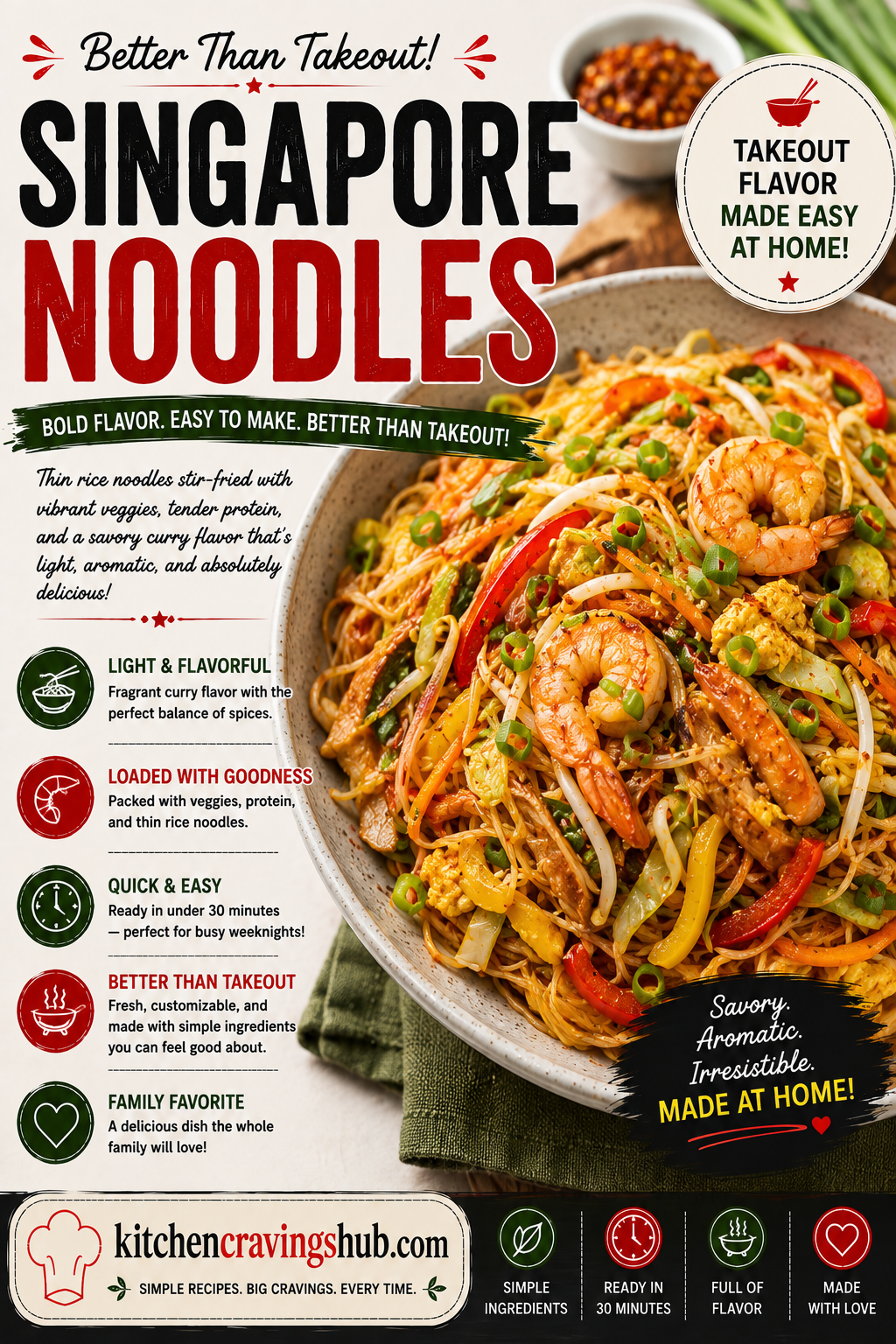
There is a certain magic to a plate of Singapore noodles. Thin rice vermicelli tangled up with shrimp, char siu pork, scrambled egg, and crisp vegetables, all coated in a fragrant golden curry powder that gives the whole dish its signature warmth and color. It is one of those takeout menu staples that somehow manages to be comforting and exciting all at once. 😋
In this guide, we are going to cover everything you need to know about Singapore noodles. We will talk about where this dish actually comes from, why it has become such a menu favorite, the ingredients you need, a full step by step recipe, tips for getting the noodles just right, common mistakes to avoid, healthier variations, and answers to the most frequently asked questions. Let us get into it. 🧑🍳
What Are Singapore Noodles? 🤔
Singapore noodles, sometimes called Singapore mei fun, is a stir fried noodle dish made with thin rice vermicelli, curry powder, shrimp, barbecue pork or chicken, scrambled egg, and a mix of vegetables like bean sprouts, bell peppers, and onions. The dish gets its warm golden color and distinctive flavor from curry powder, which is stir fried along with the other ingredients rather than served as a wet sauce.
Here is the fun twist. Despite the name, Singapore noodles are not actually a traditional dish from Singapore. Food historians generally agree that this dish originated in Hong Kong style Cantonese restaurants, likely inspired by the flavors of Southeast Asian curry brought back by cooks and travelers. The name is thought to be a marketing choice meant to evoke the exotic, spice forward reputation of Singaporean and broader Southeast Asian cuisine, even though the dish itself developed within Cantonese kitchens.
Regardless of its actual origins, Singapore noodles have become a beloved staple on Chinese restaurant menus around the world, prized for their unique curry flavor that sets them apart from more common soy sauce based noodle dishes. 🌟
Why People Love Singapore Noodles ❤️
There are several reasons this dish has earned such a loyal following.
First, the flavor is genuinely unique. Most Chinese takeout noodle dishes lean on soy sauce and garlic, but Singapore noodles bring in warm curry spices, giving the dish a totally different personality on the plate.
Second, the texture is wonderful. Thin rice vermicelli noodles are light and slightly chewy, soaking up the curry flavor while still holding their own texture, unlike thicker noodles that can sometimes feel heavy.
Third, it is a complete meal in one dish. With protein from shrimp and pork, vegetables for crunch and color, and noodles for substance, Singapore noodles check every box without needing a bunch of side dishes.
Finally, it is a fantastic way to use up leftovers. Got a bit of leftover char siu pork or rotisserie chicken in the fridge? Some bean sprouts and half a bell pepper? Singapore noodles are the perfect vehicle to turn odds and ends into something delicious. 🥢
Ingredients You Will Need 🛒
Here is everything required to make a great batch of Singapore noodles at home.
For the Noodles
Thin rice vermicelli noodles, sometimes labeled as rice stick noodles or mei fun. These are much thinner than regular rice noodles used in pad thai.
For the Protein
Shrimp, peeled and deveined. Char siu pork, thinly sliced, or substitute with cooked chicken if preferred. Eggs, lightly beaten, for scrambling into the dish.
For the Vegetables
Bean sprouts, for that classic fresh crunch. Bell peppers, thinly sliced, typically red or green. Onion, thinly sliced. Carrots, julienned or thinly sliced, optional but adds nice color. Green onions, sliced, for garnish and a fresh finish.
For the Sauce and Seasoning
Curry powder, the star ingredient that defines this entire dish. Soy sauce, for saltiness and depth. Oyster sauce, for a bit of extra richness and umami. Sugar, just a touch, to balance the spices. Turmeric, optional, for an extra boost of color if your curry powder is on the milder side. Garlic, minced, for aromatic depth. Sesame oil, for a fragrant finishing touch. Vegetable oil or peanut oil, for stir frying. 🌿
Step by Step Recipe: How to Make Singapore Noodles 👩🍳
This recipe generally serves about four people and takes around forty minutes from start to finish, including noodle prep.
Step 1: Soak the Noodles
Place the rice vermicelli noodles in a large bowl and cover with warm water. Let them soak for about ten to fifteen minutes, or according to the package instructions, until they are pliable but still slightly firm. Drain well and set aside. Avoid over soaking, since the noodles will continue to cook once they hit the hot pan, and overly soft noodles can turn mushy during stir frying.
Step 2: Prepare the Protein
Season the shrimp lightly with salt and pepper. Heat a small amount of oil in a wok or large skillet over high heat and quickly stir fry the shrimp for about two minutes, just until pink and cooked through. Remove and set aside. In the same pan, pour in the beaten eggs and scramble quickly, breaking them into small pieces once cooked. Remove and set aside with the shrimp.
Step 3: Stir Fry the Vegetables
Add a bit more oil to the pan if needed and increase the heat to high. Add the onion and carrots first, stir frying for about a minute, then add the bell peppers and minced garlic, cooking for another minute until fragrant and the vegetables are just starting to soften. Add the bean sprouts last, giving everything a quick toss since bean sprouts only need a few seconds of heat to stay crisp.
Step 4: Add the Curry Powder
Push the vegetables to one side of the pan and add a little more oil to the empty space. Sprinkle in the curry powder directly into the oil and let it sizzle for about fifteen to twenty seconds, which helps bloom the spices and release their full flavor before mixing everything together.
Step 5: Combine Everything
Add the drained noodles to the pan along with the sliced char siu pork. Pour in the soy sauce and oyster sauce, then toss everything together thoroughly using tongs or two spatulas, making sure the curry powder and sauce coat every strand of noodle evenly. Continue stir frying for two to three minutes, allowing the noodles to pick up color and flavor from the curry powder and sauce.
Step 6: Bring It All Together
Return the cooked shrimp and scrambled egg to the pan, tossing everything together gently so it distributes evenly throughout the noodles. Taste and adjust with a bit more soy sauce or a pinch of sugar if needed.
Step 7: Finish and Serve
Drizzle a small amount of sesame oil over the top and give the dish one final toss. Garnish with sliced green onions. Serve immediately while everything is hot and the vegetables are still crisp. 🍚
Pro Tips for the Best Singapore Noodles 💡
Do not over soak the rice vermicelli. Slightly undercooked is actually better than fully soft, since the noodles will finish cooking in the hot pan and can turn mushy if they are too soft going in.
Bloom the curry powder in oil before mixing it into the noodles. This small step makes a big difference in unlocking the full aroma and flavor of the spices.
Keep your heat high throughout the stir frying process. High heat helps everything cook quickly while keeping the vegetables crisp and giving the noodles a slight char in places.
Prep all your ingredients before you start cooking. Once the noodles hit the pan, everything moves fast, so have your protein cooked, vegetables sliced, and sauces measured out ahead of time.
Use a wok if you have one. The high sides and even heat distribution make tossing noodles much easier compared to a flat skillet, though a large skillet will still work fine.
Adjust the curry powder to your taste. Some brands are spicier or more fragrant than others, so start with a bit less than you think you need and add more gradually.
Common Mistakes to Avoid ⚠️
Over soaking the rice noodles. This leads to noodles that turn mushy and clump together once they hit the hot pan.
Adding curry powder directly to the noodles without blooming it in oil first. This can result in a flatter, less aromatic flavor throughout the dish.
Overcrowding the pan. Too many ingredients at once can lower the pan temperature and cause steaming instead of a proper stir fry sear.
Overcooking the shrimp. Shrimp cook very quickly and can turn rubbery if left in the pan too long, so remove them as soon as they turn pink and opaque.
Skipping the bean sprouts or adding them too early. Bean sprouts should be added last and cooked only briefly to preserve their signature crunch.
Healthier Ways to Make Singapore Noodles 🥗
If you want a lighter version of this dish, here are a few simple adjustments to try.
Use brown rice vermicelli if available, or substitute part of the noodles with extra vegetables like shredded cabbage or zucchini noodles to cut down on refined carbohydrates.
Reduce the amount of oil used for stir frying by cooking in batches in a well seasoned or nonstick pan.
Swap char siu pork for lean chicken breast or extra shrimp if you want to cut down on fat.
Load up on extra vegetables such as snap peas, broccoli, or mushrooms to boost the fiber and nutrient content of the dish.
Use low sodium soy sauce to help control the overall salt content, especially if you are also adding oyster sauce. 🌾
What to Serve With Singapore Noodles 🍽️
Singapore noodles are a complete meal on their own thanks to the combination of protein, vegetables, and noodles all in one dish, but they also pair nicely with lighter sides if you want to round out a bigger spread. A simple cucumber salad or a light egg drop soup works well alongside it.
If you are serving a larger group, spring rolls or dumplings make a great starter, and a side of steamed bok choy with garlic adds a fresh, green contrast to the warm curry flavors of the noodles. 🥢
Storing and Reheating Leftovers 📦
Store leftover Singapore noodles in an airtight container in the refrigerator for up to three days. The curry flavor often becomes even more pronounced after a day in the fridge, which many people actually prefer.
To reheat, use a skillet over medium high heat with a small splash of water to loosen the noodles, stirring frequently until heated through. This helps prevent the noodles from drying out or clumping. The microwave also works in a pinch, just cover loosely and heat in short bursts, stirring in between.
Frequently Asked Questions ❓
Are Singapore noodles actually from Singapore? Not quite. Despite the name, food historians generally believe this dish originated in Hong Kong style Cantonese restaurants, inspired by Southeast Asian curry flavors, rather than being a traditional dish from Singapore itself.
What type of noodles should I use? Thin rice vermicelli, sometimes labeled as rice stick noodles or mei fun, is the traditional choice. These are much thinner than the noodles used in dishes like pad thai.
Is this dish very spicy? Not typically. Curry powder gives Singapore noodles warmth and fragrance rather than intense heat. If you enjoy spice, you can add fresh chili or a pinch of red pepper flakes to increase the heat level.
Can I make Singapore noodles vegetarian? Yes, simply omit the shrimp and pork and add extra vegetables or tofu instead, using a vegetarian oyster sauce alternative if you want to keep that same depth of flavor.
Can I make this dish gluten free? Yes, use gluten free soy sauce and check that your curry powder and oyster sauce do not contain any hidden gluten based ingredients, since some brands vary.
What is the difference between Singapore noodles and other curry noodle dishes? Singapore noodles are specifically made with thin rice vermicelli and a dry curry powder seasoning rather than a wet curry sauce, which sets it apart from dishes like Malaysian curry laksa that use a rich coconut curry broth.
Final Thoughts 🌈
Singapore noodles are a wonderful example of how a dish can become beloved worldwide regardless of where its name suggests it came from. The combination of thin rice noodles, warm curry powder, tender shrimp, savory pork, and crisp vegetables creates a plate that feels both familiar and a little bit exciting every single time.
Once you get the hang of soaking the noodles properly and blooming that curry powder in hot oil, this dish becomes a wonderfully flexible weeknight option that welcomes whatever protein or vegetables you happen to have on hand. It is quick, colorful, and endlessly satisfying.
So soak those noodles, heat up your pan, and get ready to fill your kitchen with the warm, fragrant aroma of Singapore noodles. Happy cooking! 🍳🥳