
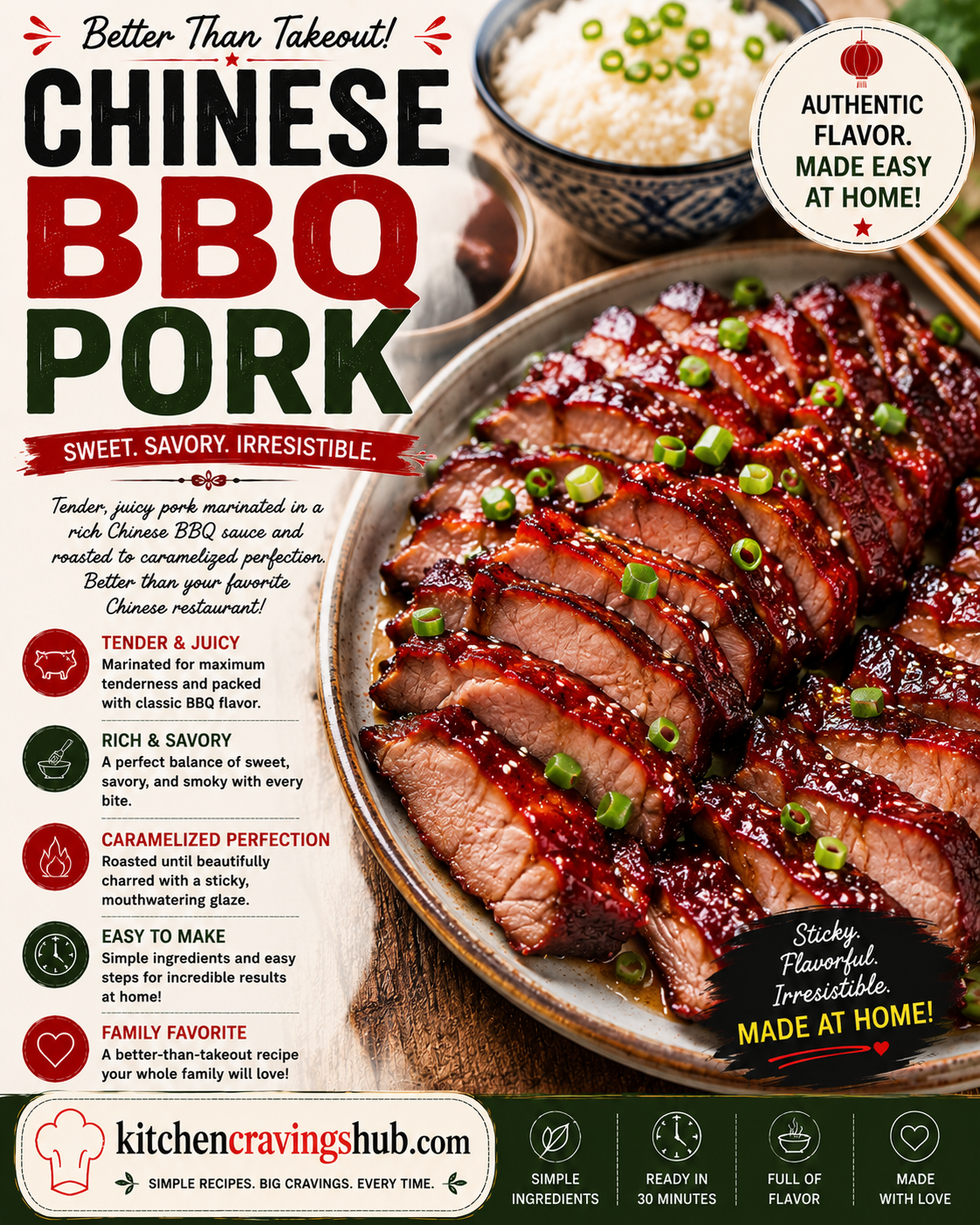
If you have ever walked past a Chinese restaurant window and seen those glossy, deep red strips of pork hanging on hooks, you have seen Chinese BBQ pork in its most iconic form. Known in Cantonese as char siu, this dish is sweet, savory, slightly smoky, and absolutely addictive. It is the kind of meat that makes you want to eat it straight off the cutting board before it even makes it to the plate. 😋
In this guide, we are going to cover everything you need to know about Chinese BBQ pork. We will talk about its history, why people love it so much, the ingredients you need, a full step by step recipe, tips for getting that perfect caramelized crust, common mistakes to avoid, healthier variations, and answers to the questions people ask most often. By the end, you will be ready to make restaurant quality char siu right in your own oven. 🧑🍳
What Is Chinese BBQ Pork? 🤔
Chinese BBQ pork, known as char siu in Cantonese, is a beloved roasted pork dish that originated in Guangdong province in southern China. The name char siu literally translates to fork roast, referring to the traditional cooking method where skewers of marinated pork are hung and roasted over an open fire or in a specialized oven. The result is tender, juicy meat with a beautifully caramelized, slightly charred exterior.
The signature red color of char siu comes from a marinade that traditionally includes red fermented bean curd or red food coloring, along with a mix of hoisin sauce, soy sauce, honey, and Chinese five spice powder. This combination creates the dish’s unmistakable sweet, savory, and slightly smoky flavor profile.
Char siu has become one of the most recognizable dishes in Cantonese cuisine and can be found hanging in the windows of Chinese barbecue shops around the world. It is incredibly versatile, showing up sliced on top of steamed rice, tucked into fluffy baked buns, tossed into fried rice, or served alongside noodles. 🌟
Why People Love Chinese BBQ Pork ❤️
There are plenty of reasons this dish has such a devoted following across the globe.
First, the flavor is simply irresistible. The combination of sweet honey, savory soy sauce, and warm five spice creates a complex flavor that feels both comforting and exciting at the same time.
Second, the texture is incredible. A well made char siu has a slightly sticky, caramelized exterior with tender, juicy meat underneath, giving you contrast in every single bite.
Third, it is incredibly versatile. Char siu can be the star of a rice plate, the filling inside a steamed or baked bun, a topping for noodle soup, or even diced up and tossed into fried rice for an extra boost of flavor.
Finally, making it at home means you get to enjoy that restaurant quality flavor without leaving the house, and you get full control over the sweetness, saltiness, and level of char on the finished pork. 🏠
Ingredients You Will Need 🛒
Here is everything required to make a fantastic batch of Chinese BBQ pork at home.
For the Pork
Pork shoulder, pork butt, or pork tenderloin, cut into long strips about two inches thick. Pork shoulder is the most traditional choice because the fat content keeps the meat juicy during roasting.
For the Marinade
Hoisin sauce, which provides sweetness and a rich, thick base. Soy sauce, for saltiness and depth of flavor. Honey or maltose, for that signature glossy, sticky glaze. Chinese five spice powder, which gives char siu its warm, aromatic backbone. Shaoxing wine or dry sherry, for added depth and a subtle tang. Garlic, minced, for aromatic punch. Red fermented bean curd, optional, used traditionally for both flavor and the classic red color. A few drops of red food coloring, optional, if you want that vibrant red exterior often seen in restaurant versions without using fermented bean curd. Sesame oil, for a nutty fragrance in the marinade. Sugar, to balance and deepen the sweetness.
For Basting and Finishing
Extra honey, mixed with a small amount of hot water, for basting during the final minutes of roasting to create that glossy, caramelized finish.
Optional Garnish
Sliced green onions or toasted sesame seeds, for serving. 🌿
Step by Step Recipe: How to Make Chinese BBQ Pork 👩🍳
This recipe generally serves about four to six people and requires some marinating time, so plan ahead. Active cooking time is around forty five minutes, but the pork should marinate for at least four hours, and overnight is even better.
Step 1: Prepare the Pork
Cut your pork shoulder or tenderloin into long strips roughly two inches thick and about six to eight inches long. Cutting the meat into strips rather than one large piece helps the marinade penetrate more evenly and allows for faster, more even cooking.
Step 2: Make the Marinade
In a bowl, whisk together hoisin sauce, soy sauce, honey, five spice powder, Shaoxing wine, minced garlic, sesame oil, and sugar. If you are using red fermented bean curd or food coloring for that classic red hue, mix it in now as well. Taste the marinade and adjust the sweetness or saltiness to your preference.
Step 3: Marinate the Pork
Place the pork strips into a large resealable bag or a shallow dish and pour the marinade over the top, making sure every piece is well coated. Seal or cover and refrigerate for at least four hours, though marinating overnight will give you a much deeper flavor. Turn the bag or pieces occasionally so the marinade distributes evenly.
Step 4: Set Up for Roasting
When you are ready to cook, preheat your oven to around 375 degrees Fahrenheit. Line a baking sheet with foil and place a wire rack on top. This allows air to circulate around the pork so it cooks evenly on all sides, while also letting excess marinade drip away instead of pooling underneath the meat. Pour a small amount of water into the baking sheet beneath the rack to help prevent the drippings from burning and smoking during roasting.
Step 5: Roast the Pork
Remove the pork strips from the marinade, letting excess liquid drip off, and place them on the wire rack, reserving the leftover marinade for basting. Roast for about twenty minutes, then flip the pieces over and roast for another twenty minutes. Baste the pork with the reserved marinade every ten minutes or so to build up that glossy, caramelized coating.
Step 6: Broil for a Caramelized Finish
For the last few minutes of cooking, switch your oven to the broil setting and watch closely. Brush the pork with a mixture of honey and a bit of hot water, then broil for two to three minutes per side until the edges turn slightly charred and caramelized. This step is what gives char siu its signature sticky, slightly blackened edges, so keep a close eye to avoid burning.
Step 7: Rest and Slice
Remove the pork from the oven and let it rest for about five to ten minutes before slicing. This resting period allows the juices to redistribute throughout the meat, keeping every slice tender and moist. Slice against the grain into thin pieces.
Step 8: Serve
Serve your Chinese BBQ pork sliced over steamed rice, tucked into steamed buns, tossed into fried rice, or alongside noodles. Garnish with sliced green onions or sesame seeds if desired. 🍚
Pro Tips for the Best Chinese BBQ Pork 💡
Choose pork shoulder for the juiciest results. The marbling of fat throughout the cut helps keep the meat tender and moist even after roasting at higher temperatures.
Do not skip the marinating time. Char siu relies heavily on a deeply flavored marinade, and letting the pork sit overnight makes a noticeable difference in the final taste.
Use a wire rack while roasting. This allows heat to circulate evenly around the meat and helps achieve that classic slightly charred exterior on all sides.
Baste often. Repeated basting throughout the roasting process builds up layers of glaze, resulting in that signature sticky, glossy coating.
Watch the broiler closely. The sugar content in the marinade means the pork can go from perfectly caramelized to burnt very quickly, so stay nearby during this final step.
Let the meat rest before slicing. Cutting into the pork too soon lets all the juices run out, leaving you with drier slices than necessary.
Common Mistakes to Avoid ⚠️
Skipping or rushing the marinade time. Char siu depends on a long marinating period to develop its signature flavor, so a quick fifteen minute soak simply will not deliver the same results.
Using a lean cut of pork. Very lean cuts like plain pork loin can dry out during roasting. Pork shoulder or pork butt, which have more fat marbling, hold up much better.
Cooking without a rack. Roasting pork directly on a flat pan can cause it to sit in its own juices and steam rather than roast, resulting in a less caramelized exterior.
Walking away during the broiling step. Because of the sugar in the marinade, char siu can burn quickly under the broiler if left unattended even for a minute or two.
Slicing the pork immediately after roasting. Cutting too soon releases the juices and can leave your slices drier than they should be.
Healthier Ways to Make Chinese BBQ Pork 🥗
If you want a lighter version of this classic dish, here are a few adjustments you can try.
Use pork tenderloin instead of pork shoulder for a leaner option, keeping a close eye on cooking time since tenderloin cooks faster and can dry out if overdone.
Reduce the honey and sugar slightly in the marinade, allowing the savory elements like soy sauce and garlic to take a more prominent role.
Trim visible excess fat from the pork before marinating if you are watching fat intake, though keep in mind a little fat helps keep the meat juicy.
Serve smaller portions alongside a larger helping of vegetables or a big bowl of steamed greens to balance out the meal.
Skip the food coloring entirely, since it is purely cosmetic and does not affect the flavor of the finished dish. 🌾
What to Serve With Chinese BBQ Pork 🍽️
Chinese BBQ pork is incredibly versatile when it comes to pairing. Serve it sliced over steamed jasmine rice with a drizzle of the reserved pan juices for a simple, satisfying plate. It also makes a fantastic filling for steamed or baked buns, known as char siu bao, which are a beloved dim sum staple.
For something heartier, toss diced char siu into fried rice or lo mein noodles for an extra layer of flavor. It also pairs beautifully with a simple stir fried vegetable side, like bok choy or green beans with garlic, and works wonderfully as a topping for wonton noodle soup. 🥢
Storing and Reheating Leftovers 📦
Store leftover Chinese BBQ pork in an airtight container in the refrigerator for up to four days. It also freezes very well, so consider making a larger batch and freezing portions for up to three months.
To reheat, slice the pork if it is not already sliced, then warm it gently in a skillet over medium heat, or wrap it in foil and reheat in the oven at around 300 degrees Fahrenheit until warmed through. This helps preserve the texture better than microwaving. If using a microwave, cover the pork loosely and heat in short bursts to avoid drying it out.
Frequently Asked Questions ❓
Is char siu the same as Chinese BBQ pork? Yes, char siu is the traditional Cantonese name for what is commonly referred to as Chinese BBQ pork in English speaking countries.
Why is char siu red? The red color traditionally comes from red fermented bean curd used in the marinade, though many modern recipes use red food coloring instead for convenience. The color is purely visual and does not significantly affect the flavor.
Can I make char siu without an oven? While traditional versions are roasted, some home cooks use a grill or even an air fryer with great results, adjusting cooking times accordingly since these methods can cook faster than a conventional oven.
What cut of pork is best for char siu? Pork shoulder or pork butt are the most popular choices because their fat content keeps the meat juicy throughout the roasting process, though pork tenderloin can be used for a leaner alternative.
Can I make this dish gluten free? Yes, use gluten free soy sauce and check that your hoisin sauce is labeled gluten free, since some brands contain wheat based ingredients.
How long can I marinate the pork? Marinating for at least four hours is recommended, though overnight, or even up to twenty four hours, will give you the deepest flavor without negatively affecting the texture of the meat.
Final Thoughts 🌈
Chinese BBQ pork is one of those dishes that feels like a true labor of love, yet the actual process is far more approachable than it might seem. With a well balanced marinade, a bit of patience during the marinating stage, and careful attention during that final broiling step, you can recreate the glossy, caramelized magic of your favorite Chinese barbecue shop right in your own kitchen.
The beauty of making char siu at home is being able to enjoy it fresh, warm, and exactly to your liking, whether that means extra sweet, deeply savory, or perfectly balanced. Slice it over rice, stuff it into buns, or toss it into a stir fry, this dish rewards a little planning with a whole lot of flavor.
So marinate that pork, fire up the oven, and get ready to fill your kitchen with the irresistible aroma of Chinese BBQ pork. Happy cooking! 🍳🥳