
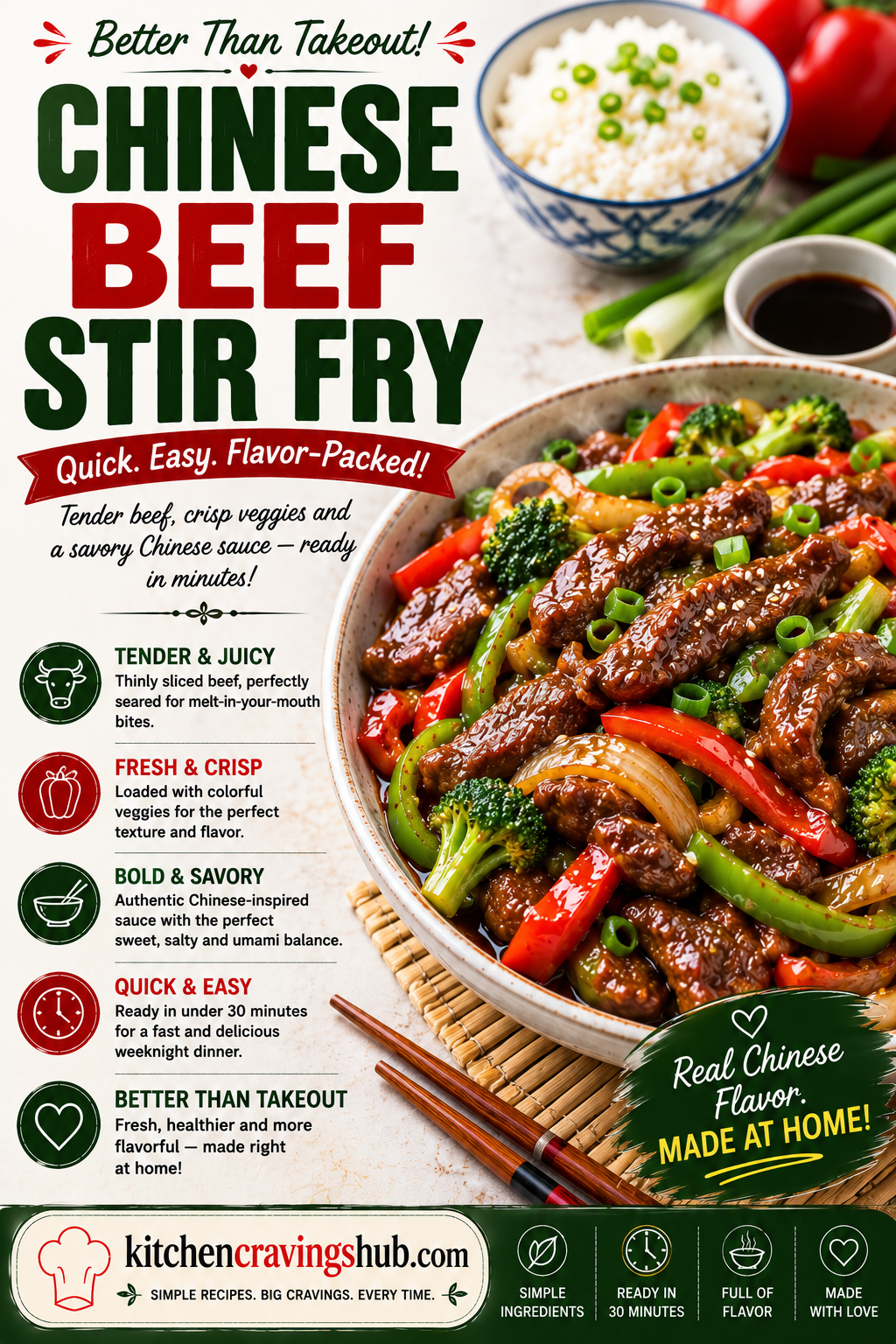
There is a reason Chinese beef stir fry shows up on so many dinner tables around the world. It is quick, it is bursting with flavor, and it turns a handful of everyday ingredients into something that feels like a real accomplishment. Tender beef, crisp vegetables, and a glossy savory sauce all come together in one pan in under thirty minutes. What is not to love? 😋
In this guide, we are going to break down everything you need to know about Chinese beef stir fry. We will talk about where it comes from, why it has become such a staple, the ingredients you need, a full step by step recipe, tips for getting perfectly tender beef, mistakes to avoid, healthier variations, and answers to the most common questions people ask. Let us get cooking. 🧑🍳
What Is Chinese Beef Stir Fry? 🤔
Chinese beef stir fry refers to a broad category of dishes where thinly sliced beef is cooked quickly over very high heat, usually in a wok, along with vegetables and a savory sauce. Unlike slow cooked stews or braises, stir frying is all about speed. The high heat sears the beef fast, locking in juices while keeping vegetables crisp and colorful.
This cooking method has deep roots in Chinese culinary tradition, particularly in Cantonese cooking, where the technique known as wok hei describes the smoky, charred flavor that develops when ingredients are tossed rapidly in a scorching hot wok. While there are countless regional and family variations, the basic formula stays the same: thin strips of beef, a mix of vegetables, aromatics like garlic and ginger, and a sauce built from soy sauce, a splash of something sweet, and a thickening agent like cornstarch.
Because it is so adaptable, Chinese beef stir fry can be made with almost any vegetable combination you have on hand, which is part of why it has become such a popular weeknight meal in kitchens far beyond China. 🌟
Why People Love Chinese Beef Stir Fry ❤️
There are several reasons this dish has earned such a devoted following.
First, it is fast. From start to finish, a good beef stir fry can be on the table in under thirty minutes, making it perfect for busy weeknights when takeout might otherwise be the easier option.
Second, it is endlessly customizable. Do you have broccoli in the fridge? Toss it in. Snap peas, mushrooms, carrots, or bok choy? All fair game. This flexibility means you rarely need a special trip to the grocery store to make it happen.
Third, it delivers big flavor without a long ingredient list. Soy sauce, garlic, ginger, and a touch of sugar create a deeply savory sauce that coats every bite of beef and vegetable beautifully.
Finally, it is a fantastic way to make a small amount of beef feel like a hearty, satisfying meal. Thin slicing and quick high heat cooking stretch the meat further while keeping every piece tender and flavorful. 💰
Ingredients You Will Need 🛒
Here is everything required to make a delicious batch of Chinese beef stir fry at home.
For the Beef
Flank steak, sirloin, or skirt steak, thinly sliced against the grain. Soy sauce, for both marinating and flavor. Cornstarch, used in the marinade to tenderize the beef and create a slightly silky texture once cooked. Rice wine or dry sherry, added to the marinade for depth of flavor. A small pinch of baking soda, optional, but often used to further soften tougher cuts of beef.
For the Sauce
Soy sauce, the main savory base. Oyster sauce, for richness and umami depth. Beef broth or water, to thin the sauce slightly. Brown sugar or honey, for a touch of natural sweetness. Cornstarch mixed with water, to thicken the sauce to that glossy, clingy consistency. Garlic and ginger, minced or grated, for aromatic warmth.
For the Vegetables
Broccoli florets, bell peppers, carrots, snap peas, mushrooms, or bok choy, or any combination you prefer. Onion, sliced into strips or wedges. Green onions, for garnish and a fresh finishing bite.
For Cooking
Vegetable oil, canola oil, or peanut oil, since these can handle high heat without burning. Sesame oil, added at the very end for a nutty, fragrant finish. 🌿
Step by Step Recipe: How to Make Chinese Beef Stir Fry 👩🍳
This recipe generally serves about four people and takes roughly thirty five minutes from start to finish, including a short marinating time.
Step 1: Slice and Marinate the Beef
Slice the beef thinly against the grain into strips about a quarter inch thick. Slicing against the grain shortens the muscle fibers, which is the secret to tender, not chewy, beef. Place the sliced beef into a bowl and add soy sauce, a spoonful of cornstarch, a splash of rice wine, and a pinch of baking soda if using. Mix everything together and let it marinate for at least fifteen minutes, though thirty minutes will give you even better results.
Step 2: Prepare the Sauce
In a small bowl, combine soy sauce, oyster sauce, beef broth, brown sugar, and a cornstarch and water slurry. Whisk until smooth and set aside. Having this ready before you start cooking is important because stir frying moves quickly once the wok is hot, and you will not have time to measure things on the fly.
Step 3: Sear the Beef
Heat a wok or a large skillet over high heat until it is very hot, then add a spoonful of oil. Add the marinated beef in a single layer, working in batches if your pan is small so you do not overcrowd it. Let the beef sit undisturbed for about a minute to develop a good sear, then stir and cook for another minute or two until just cooked through. Remove the beef from the pan and set it aside, even if it looks slightly underdone, since it will finish cooking later when combined with the sauce.
Step 4: Stir Fry the Vegetables
In the same hot pan, add a touch more oil if needed. Start with harder vegetables like carrots or broccoli since they take longer to cook, stir frying for about two minutes. Then add softer vegetables like bell peppers, mushrooms, or snap peas, along with the onion, and continue cooking for another two to three minutes until everything is crisp tender and vibrant. Add the garlic and ginger during the last thirty seconds so they become fragrant without burning.
Step 5: Combine Everything
Return the seared beef to the pan with the vegetables. Give the prepared sauce a quick stir since the cornstarch tends to settle, then pour it into the pan. Toss everything together and let it simmer for about a minute until the sauce thickens and coats the beef and vegetables in a beautiful glossy layer.
Step 6: Finish and Serve
Drizzle a small amount of sesame oil over the top and give the whole dish one final toss. Garnish with sliced green onions and, if you like, a sprinkle of sesame seeds. Serve hot over steamed white rice, fried rice, or noodles. 🍚
Pro Tips for the Best Chinese Beef Stir Fry 💡
Always slice the beef against the grain. This one step makes the biggest difference in how tender the final dish turns out.
Do not rush the marinating step. Even a short fifteen minute soak helps the beef absorb flavor and develop that signature velvety restaurant style texture.
Cook the beef in batches if needed. Overcrowding the pan drops the temperature and causes the beef to steam instead of sear, which leads to a duller, chewier result.
Prep everything before turning on the stove. Stir frying happens fast, so have your beef marinated, your sauce mixed, and your vegetables chopped and ready to go before the wok gets hot.
Cook vegetables in stages based on how long they take to soften. Adding everything at once often means some vegetables end up overcooked while others are still hard.
Keep the heat high throughout the cooking process. A wok or skillet that is not hot enough will not give you that signature seared, slightly smoky flavor that makes stir fry so good.
Common Mistakes to Avoid ⚠️
Cutting the beef with the grain instead of against it. This is the single most common reason homemade stir fry beef turns out tough.
Overcrowding the pan. Too much beef or too many vegetables at once causes steaming instead of searing, which robs the dish of flavor and texture.
Skipping the marinade entirely. Even a short marinating time makes a noticeable difference in both tenderness and taste.
Overcooking the vegetables. Mushy, overdone vegetables lose the crunch and color that make stir fry so appealing.
Adding the sauce too early. Pour the sauce in only near the end of cooking so the vegetables do not sit in liquid longer than necessary and turn soggy.
Healthier Ways to Make Chinese Beef Stir Fry 🥗
If you want a lighter version of this dish without losing the flavor, try these simple swaps.
Choose a leaner cut of beef like sirloin, or substitute with chicken breast, shrimp, or firm tofu for a different protein option.
Cut back slightly on the sugar in the sauce and let the natural sweetness of the vegetables shine through instead.
Use less oil by cooking in a good quality nonstick pan, which requires less fat to prevent sticking.
Add extra vegetables to boost the fiber and nutrient content while stretching the dish to feed more people.
Serve over brown rice, cauliflower rice, or a bed of leafy greens instead of white rice for a more balanced, lower carbohydrate meal. 🌾
What to Serve With Chinese Beef Stir Fry 🍽️
Chinese beef stir fry pairs beautifully with steamed jasmine rice, which soaks up the savory sauce perfectly. Fried rice is a heartier option if you want something more filling. Lo mein or chow mein noodles also make a wonderful base for this dish, turning it into a noodle stir fry with just a small adjustment.
For a lighter meal, serve it alongside a simple cucumber salad, steamed edamame, or a light egg drop soup. If you are hosting guests, spring rolls or potstickers make a great starter to round out a full homemade Chinese dinner spread. 🥢
Storing and Reheating Leftovers 📦
Store leftover beef stir fry in an airtight container in the refrigerator for up to three days. The flavors often deepen overnight, so leftovers can taste even better the next day.
To reheat, use a skillet over medium high heat with a small splash of water or broth to loosen the sauce, stirring frequently until heated through. This method helps the beef retain a better texture compared to microwaving. If you are in a hurry, the microwave works fine too, just heat in short bursts and stir in between to avoid uneven reheating.
Frequently Asked Questions ❓
What is the best cut of beef for stir fry? Flank steak, sirloin, and skirt steak are all excellent choices because they are flavorful and become tender when sliced thinly against the grain and cooked quickly over high heat.
How do restaurants get their beef so tender? Many restaurants use a technique called velveting, which involves marinating beef in a mixture with cornstarch and sometimes baking soda or egg white before a brief blanch or fry. This same idea is built into the marinade step of this recipe.
Can I make Chinese beef stir fry without a wok? Yes, a large wide skillet works well too. The most important thing is making sure the pan is very hot before adding the beef so it sears rather than steams.
What vegetables work best in beef stir fry? Broccoli, bell peppers, snap peas, carrots, mushrooms, and bok choy are all popular choices, but this dish is flexible enough to work with almost any vegetables you have on hand.
Can I make this dish gluten free? Yes, simply use gluten free soy sauce and oyster sauce, both of which are widely available at most grocery stores.
Can I prep this meal ahead of time? Absolutely. You can slice and marinate the beef, chop your vegetables, and mix the sauce a few hours in advance, then store everything separately in the refrigerator until you are ready to stir fry.
Final Thoughts 🌈
Chinese beef stir fry proves that you do not need a long ingredient list or hours in the kitchen to make something genuinely delicious. With tender seared beef, crisp colorful vegetables, and a rich glossy sauce, this dish delivers big flavor in a fraction of the time it takes to order takeout and wait for it to arrive.
Once you get comfortable with the basic rhythm of marinating, searing, and stir frying over high heat, this recipe becomes one you can return to again and again, swapping in whatever vegetables or protein you have on hand. It is a forgiving, flexible dish that rewards a little practice with consistently great results.
So heat up that pan, get your ingredients prepped and ready, and enjoy the fast, satisfying process of bringing this dish together. Happy cooking! 🍳🥳