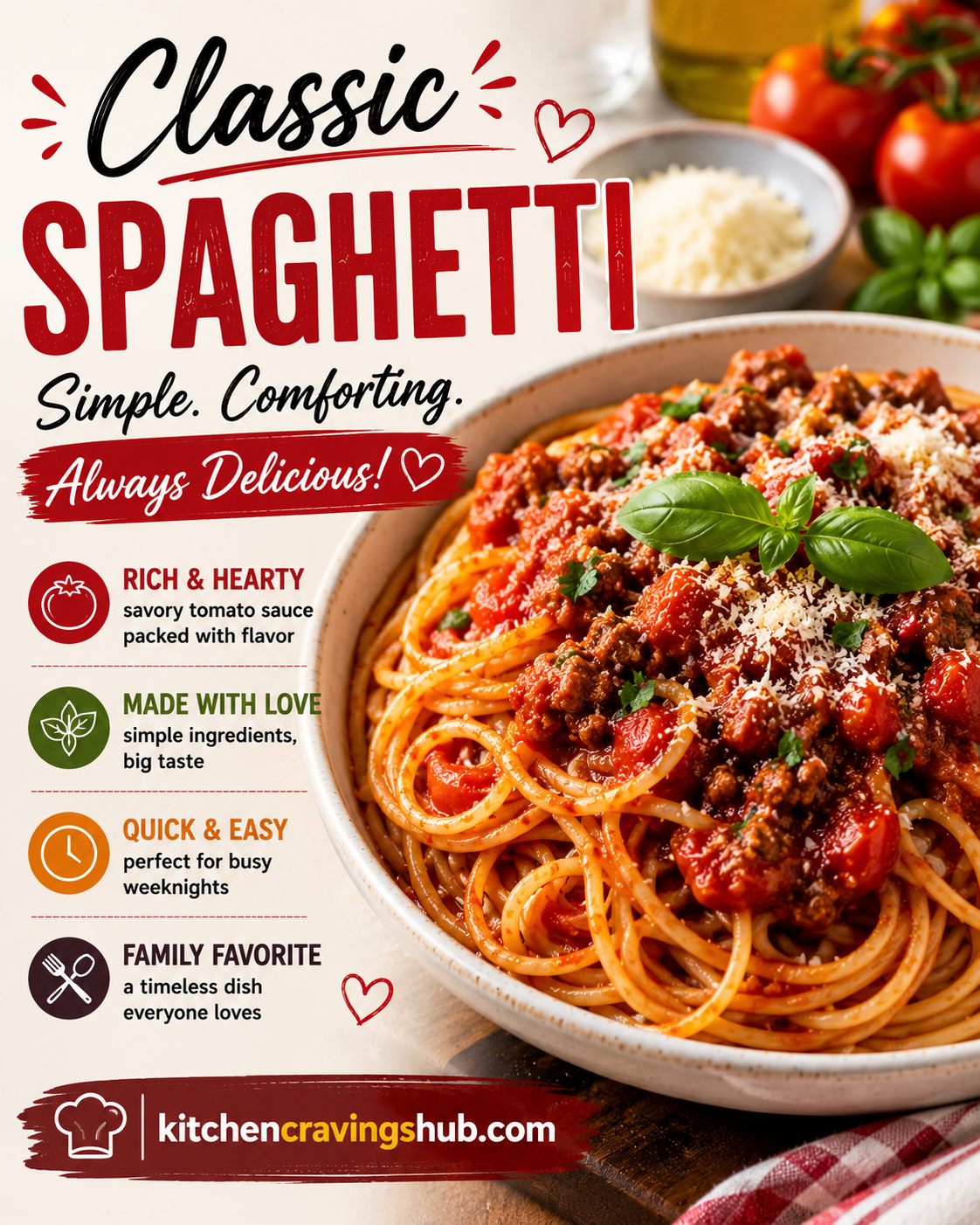
There are few dishes as universally comforting as a big bowl of spaghetti. 🍅 Whether it’s twirled with a rich tomato sauce, tossed in garlicky olive oil, or piled high with meatballs, spaghetti has a way of feeling like home no matter where you’re eating it. It’s one of those recipes nearly everyone has some version of in their back pocket, and yet there’s always room to make it a little better, a little more flavorful, and a little more foolproof
Below you’ll find everything you need to make truly great spaghetti at home, including step by step instructions, my favorite tips for perfectly cooked pasta and a rich, flavorful sauce, fun variations to try, storage advice, and answers to the most common questions people ask about this classic dish. Let’s get twirling. 🍝✨
🍅 What Makes Great Spaghetti?
At its core, spaghetti is a simple dish: long strands of pasta paired with a sauce. But the difference between an average bowl and a truly memorable one often comes down to a few key details. Perfectly cooked pasta with a bit of bite, a sauce that’s been given enough time to develop deep flavor, and a final toss that brings everything together with a touch of starchy pasta water are what separate good spaghetti from great spaghetti.
This recipe focuses on a classic tomato based sauce, simmered low and slow for maximum flavor, paired with expertly cooked spaghetti noodles. It’s a foundational recipe that you can dress up or simplify depending on what you’re in the mood for, and it’s a wonderful base to build countless variations from. 🍝
💛 Why You’ll Love This Recipe
- A true comfort food classic. Few meals feel as satisfying and nostalgic as a bowl of spaghetti.
- Budget friendly. This is an affordable meal that stretches to feed a family without breaking the bank.
- Simple pantry ingredients. Most of what you need is likely already in your kitchen.
- Endlessly customizable. Easily adapted for meat lovers, vegetarians, and everyone in between.
- Great for meal prep. The sauce keeps and reheats beautifully, making it perfect for busy weeknights.
🍝 Ingredients You’ll Need
For the pasta:
- 1 pound spaghetti noodles
- Salt, for the pasta water
- A drizzle of olive oil (optional, for finishing)
For the sauce:
- 2 tablespoons olive oil
- 1 small yellow onion, finely diced
- 4 cloves garlic, minced
- 1 pound ground beef or Italian sausage (optional, for a meat sauce)
- 1 can (28 ounces) crushed tomatoes
- 1 can (14 ounces) diced tomatoes
- 2 tablespoons tomato paste
- 1 teaspoon dried oregano
- 1 teaspoon dried basil
- 1/2 teaspoon red pepper flakes (optional, for a little heat)
- 1 teaspoon sugar (helps balance the acidity of the tomatoes)
- Salt and black pepper, to taste
- A handful of fresh basil leaves, torn, for finishing
- Grated Parmesan cheese, for serving
👩🍳 How to Make Spaghetti
Step 1: Bring your pasta water to a boil. Fill a large pot with water and bring it to a rolling boil. Salt the water generously, it should taste noticeably salty, similar to sea water, since this is your main opportunity to season the pasta itself.
Step 2: Sauté the aromatics. While the water heats, warm the olive oil in a large saucepan or Dutch oven over medium heat. Add the diced onion and cook for about four to five minutes, until softened and translucent. Add the minced garlic and cook for another thirty seconds, just until fragrant.
Step 3: Brown the meat (if using). If making a meat sauce, add the ground beef or Italian sausage to the pot, breaking it apart with a wooden spoon as it cooks. Cook until fully browned, about six to eight minutes, then drain any excess fat if needed.
Step 4: Build the sauce. Stir in the crushed tomatoes, diced tomatoes, and tomato paste. Add the oregano, basil, red pepper flakes if using, sugar, salt, and black pepper, stirring everything together until well combined.
Step 5: Simmer low and slow. Bring the sauce to a gentle simmer, then reduce the heat to low. Let it simmer uncovered for at least thirty minutes, stirring occasionally, though simmering for closer to an hour will give you an even deeper, richer flavor. Add a splash of water if the sauce becomes too thick.
Step 6: Cook the spaghetti. Once your pasta water is at a rolling boil, add the spaghetti noodles. Cook according to the package instructions until al dente, usually about nine to eleven minutes, stirring occasionally to prevent sticking.
Step 7: Reserve pasta water. Just before draining, scoop out about a cup of the starchy pasta water and set it aside. This liquid gold helps loosen and bind the sauce to the noodles in the next step.
Step 8: Combine the pasta and sauce. Drain the spaghetti and add it directly to the pot of sauce, tossing everything together with tongs. If the sauce feels too thick, add a splash of the reserved pasta water until you reach a silky, well coated consistency.
Step 9: Finish and serve. Stir in the torn fresh basil leaves, then divide the spaghetti among bowls. Top with a generous sprinkle of grated Parmesan cheese and an extra drizzle of olive oil if desired. 🍝
🧂 Tips for the Best Spaghetti
- Salt your pasta water generously. This is one of the only chances you have to season the pasta itself, so don’t be shy with the salt.
- Cook your pasta to al dente. Slightly firm noodles hold up much better when tossed with sauce and won’t turn mushy.
- Save that pasta water. The starchy water is a secret weapon for creating a silky, well bound sauce that clings beautifully to every strand.
- Let the sauce simmer. A longer simmer time allows the flavors to deepen and meld together, resulting in a noticeably richer tasting sauce.
- Toss, don’t just top. Combining the pasta directly with the sauce in the pot, rather than simply spooning sauce over plain noodles, ensures every bite is perfectly coated.
🌈 Fun Variations to Try
Spaghetti Aglio e Olio 🧄 Skip the tomato sauce entirely and toss cooked spaghetti with olive oil, plenty of sliced garlic, red pepper flakes, and fresh parsley for a simple, garlicky Italian classic.
Spaghetti Carbonara 🥓 Toss hot spaghetti with crispy pancetta or bacon, eggs, Parmesan cheese, and black pepper for a rich, creamy, sauce free classic.
Spicy Arrabbiata Spaghetti 🌶️ Increase the red pepper flakes and add a splash of red wine to the sauce for a spicier, bolder tomato based dish.
Spaghetti with Turkey Meatballs 🦃 Serve your sauce over spaghetti with baked or pan seared turkey meatballs for a lighter twist on the classic spaghetti and meatballs combination.
Vegetarian Spaghetti 🥕 Skip the meat and add extra vegetables like diced zucchini, mushrooms, or bell peppers to the sauce for a hearty, meatless version.
🧊 How to Store Spaghetti
This dish stores and reheats wonderfully, making it a fantastic option for meal prep or planned leftovers.
- Refrigerator: Store leftover spaghetti in an airtight container in the fridge for up to four days.
- Freezer: The sauce alone freezes beautifully for up to three months. For the best texture, freeze the sauce separately from the noodles and cook fresh pasta when you’re ready to serve.
- Reheating: Reheat leftovers gently on the stovetop over medium low heat, adding a splash of water or broth to loosen the sauce as needed. The microwave also works well for individual portions.
- Freezing tip: If freezing already combined pasta and sauce, know that the texture of the noodles may soften slightly upon reheating, which is why freezing the sauce alone is generally recommended.
🍝 Perfect Occasions for Spaghetti
Spaghetti is one of those meals that fits into nearly every part of life:
- Easy weeknight family dinners 🏠
- Casual dinner parties with friends 🍷
- Meal prepping for busy weeks ahead 📦
- Cozy comfort food on a cold evening 🍂
- A crowd pleasing dish for potlucks and gatherings 🎉
Its familiar, universally loved flavor makes it a reliable go to whenever you need a meal that everyone at the table will enjoy.
❓ Frequently Asked Questions About Spaghetti
Why do you save the pasta water? The starchy water helps emulsify and thicken the sauce, allowing it to cling more evenly to the noodles and creating a smoother, more cohesive final dish.
How do I keep my spaghetti from sticking together? Stir the pasta frequently during the first minute or two of cooking, use plenty of water in your pot, and avoid rinsing the noodles after draining, since the starch left on the surface actually helps the sauce adhere.
Can I make the sauce ahead of time? Yes, the sauce can be made up to three days in advance and stored in the fridge, or frozen for up to three months, making it a great option for meal prep.
What’s the difference between al dente and fully cooked pasta? Al dente means “to the tooth” in Italian, referring to pasta that’s cooked until tender but still has a slight firmness when bitten, rather than being fully soft throughout.
Can I make this recipe without meat? Absolutely. Simply omit the ground beef or sausage, and consider adding extra vegetables or a can of drained lentils for added heartiness in a vegetarian version.
Why does my sauce taste too acidic? This is common with tomato based sauces and can usually be balanced with a small pinch of sugar, which helps round out the natural acidity of the tomatoes without making the sauce taste sweet.
🍝 Final Thoughts
Spaghetti is proof that some of the most beloved meals are also the simplest. With a handful of pantry staples, a bit of patience while the sauce simmers, and a few key techniques like salting your pasta water and saving a splash for the sauce, you can turn this everyday classic into something truly memorable. Whether you’re feeding a busy family on a weeknight or serving up a comforting bowl for friends, this is a recipe worth having in your regular rotation for years to come. 🍅✨
Give this recipe a try tonight, and enjoy every rich, comforting, twirl worthy bite. Happy cooking! 🍝🎉