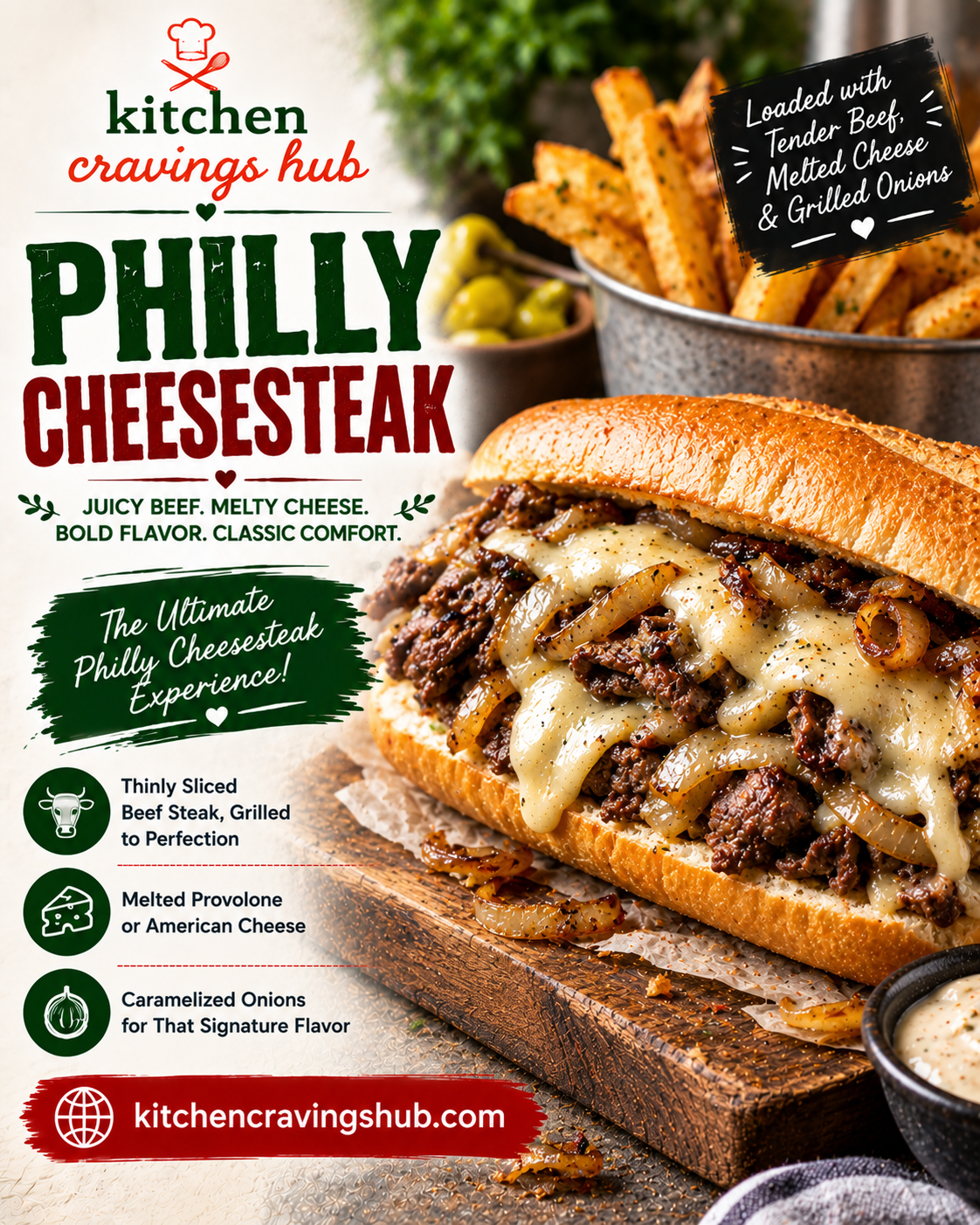
Few sandwiches carry as much regional pride and passionate devotion as the Philly Cheesesteak. With its thinly sliced, sizzling steak, melted cheese, and soft, chewy roll, this iconic sandwich has become synonymous with the city of Philadelphia itself, sparking decades of friendly debate over the “correct” way to order one. Whether piled high with onions, smothered in cheese whiz, or kept simple and classic, the Philly Cheesesteak remains one of America’s most beloved regional specialties.
In this article, we are going to explore everything you need to know about the Philly Cheesesteak. What makes it truly authentic, the fascinating rivalry behind its creation, how to make one at home, and why this iconic sandwich continues to hold such a special place in American food culture. Let us dig in! 🧀
🍽️ What Exactly Is a Philly Cheesesteak?
A Philly Cheesesteak is a sandwich made from thinly sliced, griddle cooked ribeye steak, piled onto a long, soft roll and topped with melted cheese, most traditionally provolone, American cheese, or the famously debated Cheese Whiz. Sauteed onions are a classic addition, and the sandwich is often customized with peppers, mushrooms, or other toppings based on personal preference.
The key to an authentic Philly Cheesesteak lies in the quality of the beef, thinly sliced and quickly cooked on a flat top griddle, along with the choice of a proper roll, traditionally an Amoroso roll, known for its soft interior and slightly crisp exterior that holds up beautifully to the juicy filling without falling apart.
You will often find Philly Cheesesteaks:
- 🏙️ At legendary sandwich shops throughout Philadelphia
- 🍽️ On menus at casual American restaurants nationwide
- 🎉 At sporting events and casual gatherings
- 🏠 In home kitchens for a satisfying weeknight dinner
📜 The Fascinating History and Rivalry Behind Philly Cheesesteak
The Philly Cheesesteak is widely credited to Pat Olivieri, a hot dog vendor in South Philadelphia, who reportedly created the sandwich in the 1930s by grilling thinly sliced beef and placing it on an Italian roll, initially without cheese. According to popular legend, a taxi driver caught the enticing aroma and requested one for himself, sparking growing interest and eventually leading Pat to open Pat’s King of Steaks, which remains a beloved Philadelphia institution to this day.
Cheese was reportedly added to the sandwich sometime later, either by Pat himself or by an employee, evolving the original steak sandwich into the cheesesteak we recognize today. As the sandwich grew in popularity throughout South Philadelphia, a rival establishment called Geno’s Steaks opened directly across the street from Pat’s in the 1960s, founded by Joey Vento, sparking a legendary and good natured rivalry between the two competing steak shops that continues to this day.
This friendly rivalry between Pat’s and Geno’s has become such an iconic part of Philadelphia culture that tourists and locals alike often make a point of trying both, debating passionately over which establishment truly serves the superior cheesesteak, a debate that shows no signs of slowing down even decades later. 🕰️
🧡 Why People Love Philly Cheesesteaks
There are countless reasons this iconic sandwich has remained such a beloved favorite for generations.
- 🥩 The thinly sliced, griddle cooked steak delivers incredible flavor and texture
- 🧀 The melted cheese adds rich, gooey indulgence to every bite
- 🍞 The soft, chewy roll perfectly holds the juicy filling together
- 🏙️ It carries deep regional pride and cultural significance tied to Philadelphia
- 🎉 The playful rivalry between competing steak shops adds fun cultural context
Whether you are a lifelong Philadelphia local or trying this iconic sandwich for the very first time, the Philly Cheesesteak delivers a satisfying, flavorful experience deeply rooted in regional pride and culinary tradition.
🛒 Ingredients You Will Need
Making an authentic Philly Cheesesteak at home requires quality beef, the right cheese, and a proper roll.
🍽️ Core Ingredients Table
| Ingredient | Quantity | Notes |
|---|---|---|
| 🥩 Ribeye steak, thinly sliced | 700 grams | Partially freezing the steak makes slicing easier |
| 🧅 Onion, thinly sliced | 1 large | Sauteed until soft and golden |
| 🧀 Provolone cheese, American cheese, or Cheese Whiz | 4 slices or equivalent | Choose based on your personal preference |
| 🧂 Salt and pepper | To taste | For seasoning the steak |
| 🛢️ Vegetable oil | 2 tablespoons | For cooking the steak and onions |
| 🍞 Hoagie rolls or Amoroso style rolls | 4 rolls | Soft rolls that hold up well to the filling |
| 🫑 Green bell peppers | Optional | Some variations include sauteed peppers |
| 🍄 Mushrooms | Optional | A popular additional topping |
👩🍳 How to Make a Philly Cheesesteak at Home
This recipe comes together quickly on a hot griddle or skillet and is wonderfully approachable for home cooks. Here is a step by step guide.
Step by Step Instructions
- 🥩 Partially freeze the ribeye steak for about 30 minutes to make slicing easier, then thinly slice it against the grain
- 🔥 Heat a large skillet or griddle over medium high heat with a bit of oil
- 🧅 Add the sliced onions, and if using, peppers or mushrooms, cooking until softened and lightly golden, about 5 to 7 minutes
- 🍽️ Push the cooked vegetables to one side of the skillet
- 🥩 Add the thinly sliced steak to the empty side of the skillet, breaking it apart with a spatula as it cooks
- 🧂 Season the steak generously with salt and pepper while cooking, about 3 to 4 minutes, until fully cooked through
- 🔀 Combine the cooked steak with the onions and any other vegetables directly on the skillet
- 🧀 Divide the mixture into four portions on the skillet, then top each portion generously with your chosen cheese
- ⏳ Allow the cheese to melt fully over the steak mixture, about 1 to 2 minutes
- 🍞 While the cheese melts, lightly warm or toast your rolls
- 🥖 Use a spatula to carefully transfer each cheesy steak portion into a roll
- 🍽️ Serve immediately while hot and the cheese is still gooey
And there you have it, an authentic, satisfying Philly Cheesesteak ready to enjoy.
🎨 Popular Variations to Try
While the classic version remains a beloved favorite, there are plenty of fun variations worth exploring.
🍴 Variation Comparison Table
| Variation Name | Key Difference | Flavor Profile |
|---|---|---|
| 🧀 Cheese Whiz Style | Traditional Philadelphia style with Cheese Whiz | Creamy and nostalgic |
| 🫑 Pizza Steak | Marinara sauce and mozzarella added | Bold and pizza inspired |
| 🍄 Mushroom Cheesesteak | Sauteed mushrooms added generously | Earthy and savory |
| 🌶️ Spicy Cheesesteak | Hot peppers or hot sauce added | Bold and fiery |
| 🐔 Chicken Cheesesteak | Thinly sliced chicken used instead of beef | Lighter and milder |
Feel free to experiment with different cheese types and toppings to create your own signature version of this iconic sandwich.
🥤 What to Pair With a Philly Cheesesteak
Since this dish is rich, savory, and satisfying, it pairs beautifully with classic sides and refreshing beverages.
- 🍺 A cold beer, a classic pairing enjoyed throughout Philadelphia
- 🍟 Crispy French fries or seasoned wedges
- 🥤 A classic soda for a nostalgic, casual pairing
- 🥗 A simple side salad to balance out the richness
- 🥤 Sparkling water with lemon for a refreshing contrast
🌍 Where Philly Cheesesteak Fits Into American Food Culture
The Philly Cheesesteak holds a proud, iconic place within American regional food culture. It is often associated with:
- 🏙️ Deep regional pride tied specifically to the city of Philadelphia
- 🏆 The legendary, good natured rivalry between Pat’s and Geno’s
- 🎉 Sporting events, casual gatherings, and late night dining
- 🇺🇸 A celebrated symbol of authentic American regional cuisine
Few sandwiches carry as much cultural significance and passionate regional pride as the Philly Cheesesteak, a true testament to how deeply this dish has become woven into the identity of an entire city.
💡 Tips for the Best Philly Cheesesteak
To make sure your Philly Cheesesteak turns out perfectly every time, keep these helpful tips in mind.
- 🥩 Partially freeze your steak before slicing to achieve the thinnest possible cuts
- 🔥 Cook on high heat for a quick sear that keeps the meat tender and juicy
- 🧀 Choose your cheese based on personal preference, as each option offers a distinctly different flavor and texture
- 🍞 Use a sturdy roll that can hold up to the juicy filling without becoming soggy
- 🧅 Do not skip the onions, as they add essential sweetness and depth to the overall flavor
❓ Frequently Asked Questions
What is the best cheese for a Philly Cheesesteak? This is a matter of passionate personal preference, with provolone, American cheese, and Cheese Whiz all being popular traditional choices in Philadelphia.
What cut of beef is traditionally used? Ribeye steak is the traditional choice, prized for its marbling and tenderness when thinly sliced and quickly cooked.
Is it Pat’s or Geno’s that makes the better cheesesteak? This remains one of Philadelphia’s most passionately debated culinary questions, with loyal fans on both sides, and the only true way to decide is to try both yourself.
Can I make a Philly Cheesesteak with chicken instead of beef? Yes, chicken cheesesteaks have become a popular lighter alternative, using thinly sliced chicken breast prepared in the same style as the traditional beef version.
🍽️ Final Thoughts
The Philly Cheesesteak is far more than just a delicious sandwich, it is a proud symbol of regional identity, culinary history, and friendly rivalry that continues to define Philadelphia’s food culture. From its humble beginnings as a hot dog vendor’s creative experiment to its status as one of America’s most iconic regional sandwiches, the Philly Cheesesteak has earned every bit of its devoted, passionate following.
Whether you are planning a trip to try the original versions at Pat’s and Geno’s or simply attempting to recreate this iconic sandwich in your own kitchen, the Philly Cheesesteak offers a truly satisfying, flavorful experience deeply rooted in American culinary history. Once you take that first bite of tender steak and melted cheese wrapped in a soft roll, you will understand exactly why this sandwich has remained a beloved American classic for generations. 🧡🥖🧀
Have you ever tried an authentic Philly Cheesesteak? I would love to hear which side of the Pat’s versus Geno’s debate you fall on in the comments below!