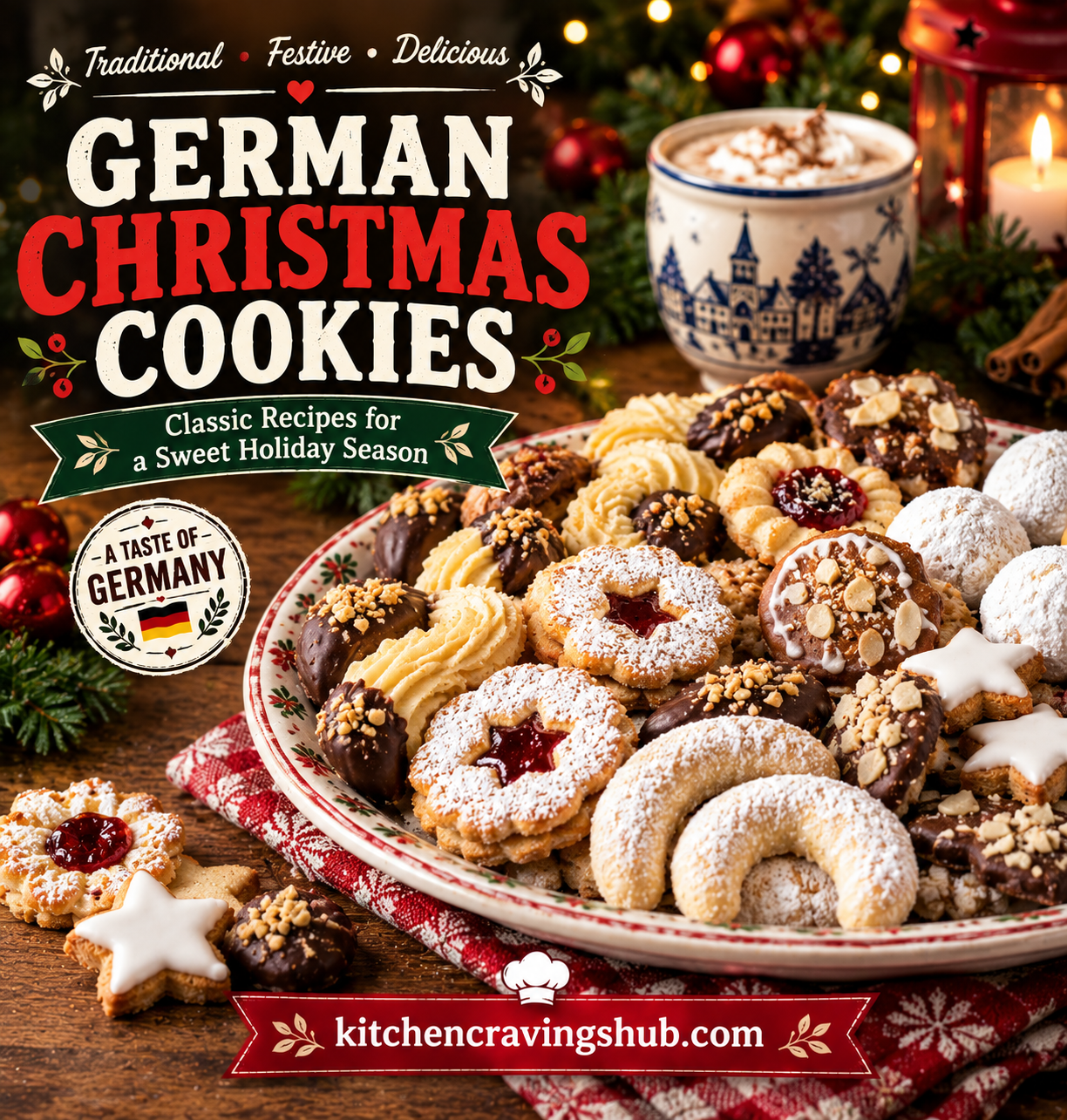
When December arrives in Germany, kitchens fill with the warm scent of cinnamon, cloves, and orange zest as families gather to bake their way through the holiday season. German Christmas cookies, collectively known as “Weihnachtsplätzchen,” are a beloved tradition with roots stretching back centuries. From delicate spiced gingerbread to buttery vanilla crescents, these cookies are as much about the ritual of baking together as they are about the finished treats themselves. This guide explores their history, the most iconic varieties, how to make them, and everything else you need to bring a taste of German holiday baking into your own kitchen.
📜 A Brief History of German Christmas Cookie Traditions
The tradition of baking spiced cookies during the winter months in Germany dates back to the medieval era, when honey, spices, and nuts imported along European trade routes became more accessible to bakers, particularly monasteries. Nuremberg, in particular, became famous as early as the 1400s for its spiced honey cakes, thanks to its location along key trade routes for exotic spices like cinnamon, cardamom, and cloves.
Over the following centuries, the tradition expanded beyond a single city and became woven into the broader culture of Advent, the four week period leading up to Christmas. Baking became a communal, multigenerational activity, with cookie recipes passed down through families and often tied to specific towns or regions, each with its own signature shapes and flavors.
Today, the tradition remains extremely strong. Many German households bake several different varieties of cookies each December, storing them in decorative tins to enjoy throughout the holiday season and to share with guests during Advent gatherings.
| Cookie | Region of Origin | Signature Trait |
|---|---|---|
| Lebkuchen | Nuremberg | Spiced honey cookie, often glazed or chocolate coated |
| Vanillekipferl | Austria and Southern Germany | Crescent shaped, rolled in vanilla sugar |
| Zimtsterne | Southern Germany | Cinnamon and almond, star shaped, with meringue glaze |
| Spekulatius | Northern Germany and the Netherlands | Thin, spiced, pressed with decorative molds |
| Springerle | Swabia | Anise flavored, embossed with detailed pictorial designs |
🍪 The Most Iconic German Christmas Cookies
🍯 Lebkuchen
Often compared to gingerbread, Lebkuchen is a soft, chewy, deeply spiced cookie made with honey, warming spices, and sometimes ground nuts instead of flour as a base. Nuremberg remains the spiritual home of Lebkuchen, and the city’s version, called “Nürnberger Lebkuchen,” carries a protected geographical status, similar to champagne or parmesan cheese.
🌙 Vanillekipferl
These delicate, crescent shaped cookies are made from a rich dough of ground almonds or hazelnuts, butter, and flour, then rolled in vanilla sugar while still warm. Vanillekipferl are beloved for their melt in your mouth texture and delicate nutty vanilla flavor, and they’re one of the most universally popular cookies across German speaking countries.
⭐ Zimtsterne
Meaning “cinnamon stars,” these star shaped cookies combine ground almonds, cinnamon, and whipped egg whites to create a chewy, almost macaron like texture beneath a glossy meringue topping. They’re naturally gluten free, since the recipe traditionally uses no flour at all.
🎨 Spekulatius
Thin, crisp, and deeply spiced with a blend often called “speculaas spice,” including cinnamon, nutmeg, cloves, and ginger, Spekulatius cookies are traditionally pressed into wooden molds carved with festive shapes like windmills, ships, or figures, giving them a beautifully embossed appearance.
🎭 Springerle
Perhaps the most visually striking of all German Christmas cookies, Springerle are pale, anise flavored cookies stamped with intricate pictorial designs using specially carved molds or rolling pins. The dough is left to dry briefly before baking, which helps the design hold its shape and creates the cookie’s distinctive smooth, slightly raised pattern.
🌱 Nutritional Overview
German Christmas cookies vary quite a bit nutritionally depending on the variety, but here’s a general sense of what to expect.
| Nutrient (per typical cookie) | Approximate Amount | Note |
|---|---|---|
| ⚡ Calories | 60 to 120 | Varies significantly by size and richness |
| 🧈 Fat | 3 to 7 grams | Higher in butter rich cookies like Vanillekipferl |
| 🍬 Sugar | 4 to 10 grams | Varies by glaze and sweetness level |
| 🌰 Protein | 1 to 3 grams | Slightly higher in nut based cookies like Zimtsterne |
| 🌿 Fiber | Minimal to moderate | Nut based cookies contain more fiber than flour based ones |
As with most holiday treats, these cookies are meant to be enjoyed in moderation, often alongside a cup of tea, mulled wine, or coffee during Advent gatherings.
🛒 Core Ingredients Across German Christmas Baking
While each cookie has its own specific recipe, several ingredients appear again and again throughout German holiday baking traditions.
| Ingredient | Role in the Recipes |
|---|---|
| 🍯 Honey | Central to Lebkuchen, provides moisture and deep flavor |
| 🌰 Ground almonds or hazelnuts | Common base for Vanillekipferl and Zimtsterne |
| 🌿 Cinnamon | The defining spice of Zimtsterne and Spekulatius |
| 🧂 Cloves, nutmeg, cardamom | Frequently blended into Lebkuchen spice mixes |
| 🍋 Orange and lemon zest | Adds brightness to spiced cookie doughs |
| 🧈 Butter | Essential richness in Vanillekipferl and Spekulatius |
| 🥚 Egg whites | Whipped for the glossy topping on Zimtsterne |
| 🍬 Vanilla sugar | Used for rolling Vanillekipferl after baking |
| 🌾 Anise seed or extract | The signature flavor of Springerle |
👩🍳 How to Make Vanillekipferl: Step by Step
Since Vanillekipferl are among the most approachable and universally loved German Christmas cookies, here is a full recipe that yields about 40 small crescents.
🧾 Ingredient List
| Ingredient | Amount |
|---|---|
| All purpose flour | 2 cups |
| Ground almonds or hazelnuts | 1 cup |
| Unsalted butter, cold and cubed | 1 cup |
| Granulated sugar | 1/2 cup |
| Egg yolks | 2 |
| Vanilla extract | 1 teaspoon |
| Salt | A pinch |
| Powdered sugar | 1/2 cup, for rolling |
| Vanilla sugar or extra vanilla extract | 1 tablespoon, mixed into powdered sugar |
🔥 Step by Step Instructions
- 🥣 In a large bowl or food processor, combine the flour, ground almonds, sugar, and salt.
- 🧈 Add the cold cubed butter and pulse or work it in with your fingers until the mixture resembles coarse crumbs.
- 🥚 Add the egg yolks and vanilla extract, then mix just until the dough comes together into a smooth ball. Avoid overworking it.
- ❄️ Wrap the dough in plastic wrap and refrigerate for at least 30 minutes, which makes it much easier to shape.
- 🔥 Preheat your oven to 350°F, or 175°C, and line baking sheets with parchment paper.
- 🌙 Pinch off small pieces of dough, roughly a tablespoon each, and roll them into little logs about 2 inches long, then curve them gently into crescent shapes.
- 🍪 Arrange the crescents on the prepared baking sheets, spacing them about an inch apart.
- 🔥 Bake for 12 to 15 minutes, until the cookies are just barely golden at the edges. They should remain pale on top.
- 🍬 While still warm, gently roll each cookie in the vanilla sugar and powdered sugar mixture, coating them generously.
- ❄️ Allow to cool completely on a wire rack before storing.
⏲️ Baking Time and Temperature Guide
| Cookie | Oven Temperature | Baking Time |
|---|---|---|
| 🍯 Lebkuchen | 350°F or 175°C | 12 to 15 minutes |
| 🌙 Vanillekipferl | 350°F or 175°C | 12 to 15 minutes |
| ⭐ Zimtsterne | 300°F or 150°C | 20 to 25 minutes, low and slow |
| 🎨 Spekulatius | 375°F or 190°C | 8 to 10 minutes |
| 🎭 Springerle | 325°F or 165°C | 15 to 20 minutes, after a resting period |
🥄 Tips for Getting It Just Right
- ❄️ Keep butter cold when making Vanillekipferl and Spekulatius dough, since this helps achieve the correct tender, crumbly texture.
- 🌡️ Let Lebkuchen dough rest, sometimes for a day or more, allowing the spices and honey to fully meld before baking.
- 🎨 Dust wooden cookie molds lightly with flour before pressing dough into them, which helps the design release cleanly.
- 🥚 Whip egg whites to stiff peaks for Zimtsterne topping, ensuring a glossy, stable meringue layer that won’t collapse during baking.
- 🌬️ Let Springerle dough dry uncovered for several hours or overnight before baking, which helps the stamped design hold its shape.
- 🧊 Store different cookie varieties in separate airtight tins, since soft cookies can make crisp ones lose their texture if stored together.
🌍 Regional and Family Variations
Beyond the five classics above, many regions and families put their own spin on holiday baking.
| Variation | Distinct Features |
|---|---|
| 🍫 Chocolate Dipped Lebkuchen | Half dipped in dark or milk chocolate for extra richness |
| 🌰 Hazelnut Vanillekipferl | Swaps almonds for hazelnuts for a slightly different nutty depth |
| 🍊 Orange Zimtsterne | Adds orange zest to the almond meringue mixture |
| 🎄 Printen | A Aachen specialty, similar to Lebkuchen but slightly firmer and often flavored with molasses |
| 🥜 Nut Free Spekulatius | Uses only flour and spices, skipping the traditional almond flecks |
☕ What to Serve Alongside German Christmas Cookies
These cookies are traditionally enjoyed as part of a broader Advent ritual, often alongside warm drinks and holiday gatherings.
- ☕ A strong cup of coffee, especially alongside Vanillekipferl
- 🍷 Glühwein, warm spiced mulled wine, a classic pairing at German Christmas markets
- 🍵 Black tea with a touch of cinnamon or clove
- 🥛 Hot chocolate, particularly appealing to children during Advent gatherings
- 🍊 Fresh citrus segments, which complement the warm spices nicely
🧊 Storing German Christmas Cookies
One of the wonderful things about many of these cookies is how well they keep, which is why German households often begin baking weeks before Christmas itself.
| Storage Method | How Long It Lasts | Tips |
|---|---|---|
| 🧊 Airtight tin at room temperature | 2 to 4 weeks | Lebkuchen actually improves in flavor after a few days of resting |
| ❄️ Freezer | Up to 3 months | Most varieties freeze well, thaw at room temperature before serving |
| 🍬 Vanillekipferl specifically | 2 to 3 weeks | Re roll in sugar if the coating fades over time |
| 🎭 Springerle | Several weeks | Traditionally allowed to age slightly to soften their firm texture |
❓ Frequently Asked Questions
Why do some German Christmas cookies taste better after resting for a few days? Spiced cookies like Lebkuchen contain honey and warming spices that continue to meld and deepen in flavor over time, similar to how a good curry or stew often tastes better the next day.
Do I need special equipment to make Springerle cookies? Yes, authentic Springerle require carved wooden molds or a specially designed rolling pin to stamp the traditional pictorial designs into the dough before baking.
Are any of these cookies naturally gluten free? Zimtsterne are traditionally made without any flour at all, relying entirely on ground almonds and whipped egg whites, making them naturally gluten free.
What’s the difference between Lebkuchen and gingerbread? While closely related, Lebkuchen tends to rely more heavily on honey and often includes ground nuts, giving it a denser, chewier texture, while American style gingerbread typically leans more heavily on molasses and a firmer, snappier bite.
🌟 Final Thoughts
German Christmas cookies represent centuries of tradition distilled into small, fragrant bites of holiday cheer. From the honeyed spice of Lebkuchen to the delicate almond crescents of Vanillekipferl, each cookie carries its own regional history and family stories passed down through generations of Advent baking. Whether you attempt just one variety or decide to fill your kitchen with the full spectrum of German holiday flavors, baking these cookies is a wonderful way to bring warmth, tradition, and a touch of Old World magic into your own celebration. 🎄🍪✨