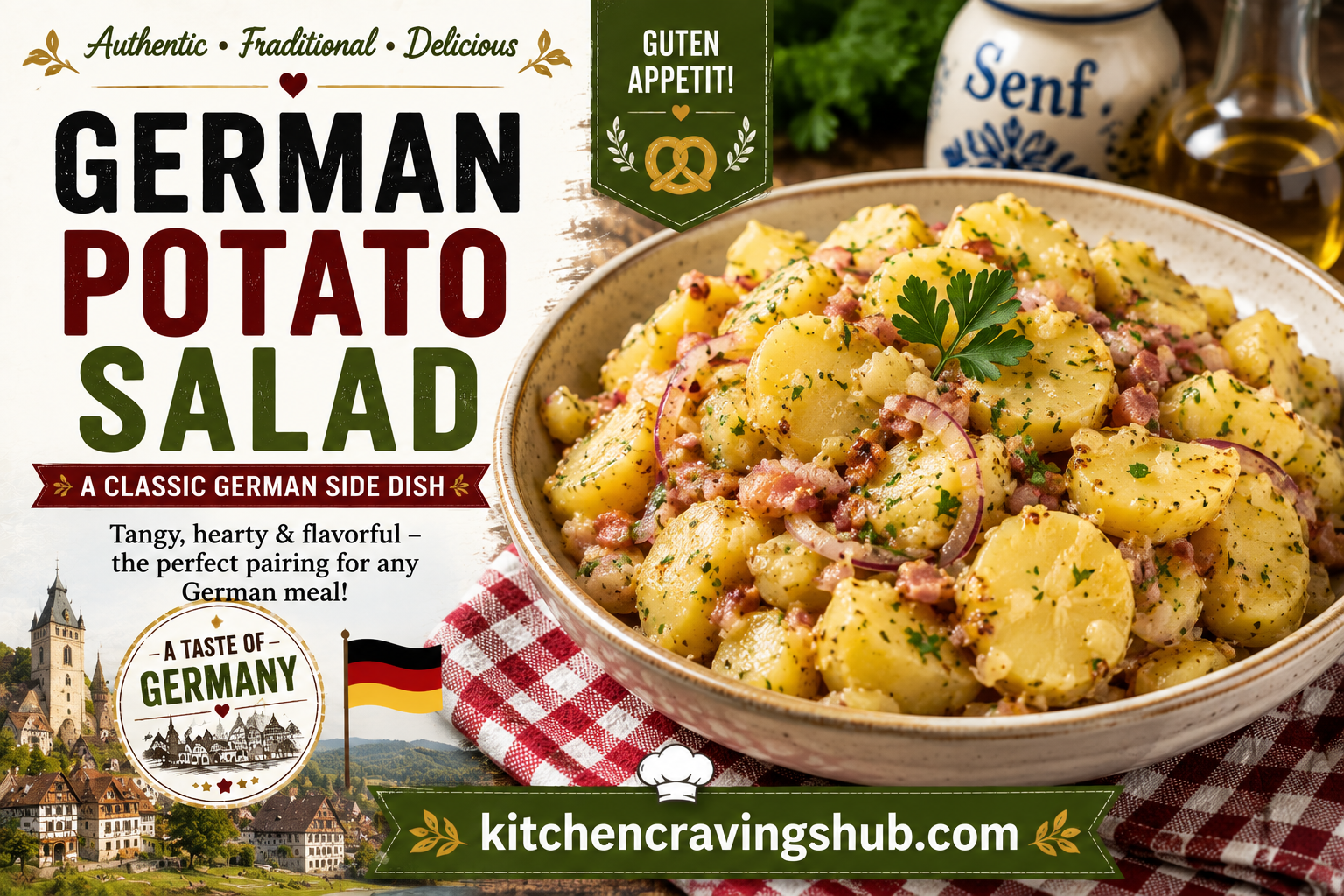
There is something wonderfully comforting about a warm bowl of German potato salad. Tender potato slices coated in a tangy, slightly sweet dressing made with vinegar and bacon drippings, studded with crispy bits of bacon and fresh herbs. Unlike the cold, mayonnaise based potato salads common in American cooking, this version is served warm, offering a completely different but equally satisfying experience. 😋
In this guide, we are going to cover everything you need to know about German potato salad. We will talk about what makes it so distinct, why it has become such a beloved side dish, the ingredients you need, a full step by step recipe, tips for getting that perfect balance of tangy and savory, common mistakes to avoid, healthier variations, and answers to the most frequently asked questions. Let us get cooking. 🧑🍳
What Is German Potato Salad? 🤔
German potato salad, known as Kartoffelsalat, is a warm potato salad made with sliced boiled potatoes dressed in a tangy vinaigrette typically built from bacon drippings, vinegar, mustard, and a touch of sugar, then tossed with crispy bacon bits, onions, and fresh herbs. This style of potato salad differs significantly from the cold, creamy, mayonnaise based versions common in American cooking, offering instead a warm, tangy, and savory profile that reflects broader European culinary traditions.
There are actually several regional variations of German potato salad found throughout the country. Southern German and Bavarian versions tend to skip mayonnaise entirely, relying on a vinegar and broth based dressing, often served warm, which is the style covered in this guide. Northern German versions, however, sometimes incorporate mayonnaise, creating a result that is a bit closer to American style potato salad, though still distinct in flavor and preparation.
This warm, bacon studded version of potato salad has become particularly beloved for its rich, savory flavor and satisfying texture, making it a popular side dish alongside German sausages, schnitzel, and other hearty main courses. 🌟
Why People Love German Potato Salad ❤️
There are several reasons this dish has earned such a devoted following.
First, the flavor profile is wonderfully distinct. That tangy, slightly sweet dressing combined with savory bacon creates a flavor combination that feels different from typical mayonnaise based potato salads, offering something exciting for those looking to try a new take on a familiar side dish.
Second, serving it warm makes it a fantastic side for hearty, warm main courses like sausages or schnitzel, creating a cohesive, comforting meal rather than pairing a warm dish with a cold side.
Third, the texture is satisfying, with tender potato slices, crispy bacon bits, and a light, tangy coating rather than the heavier, creamier texture of mayonnaise based versions.
Finally, it is a fantastic make ahead dish for gatherings, since it can be prepared in advance and gently reheated, making it a practical and delicious choice for larger meals or celebrations. 🏠
Ingredients You Will Need 🛒
Here is everything required to make a fantastic batch of German potato salad at home.
For the Potatoes
Waxy potatoes, such as Yukon Gold or red potatoes, which hold their shape well when boiled and sliced. Salt, for the boiling water.
For the Dressing
Bacon, diced, which provides both flavor and the fat used in the dressing. Onion, finely diced. Chicken broth or beef broth, which forms part of the liquid base for the dressing. Apple cider vinegar or white wine vinegar, for that essential tangy flavor. Dijon mustard, for depth and a bit of sharpness. Sugar, to balance the acidity of the vinegar. Salt and black pepper, for seasoning.
For Garnish
Fresh chives or parsley, chopped, for freshness and color. Additional crispy bacon bits, reserved for topping. 🌿
Step by Step Recipe: How to Make German Potato Salad 👩🍳
This recipe generally serves about six people and takes around forty five minutes from start to finish.
Step 1: Boil the Potatoes
Place the potatoes, whole and unpeeled, in a large pot and cover with cold water. Add a generous pinch of salt, then bring to a boil. Cook for about twenty to twenty five minutes, until the potatoes are tender when pierced with a fork. Boiling them whole and unpeeled helps prevent them from absorbing too much water, resulting in a better texture for the final salad.
Step 2: Cool and Slice the Potatoes
Drain the potatoes and let them cool just enough to handle, then peel while still warm, since the skins come off much more easily at this stage. Slice the potatoes into rounds about a quarter inch thick and place them in a large bowl.
Step 3: Cook the Bacon
While the potatoes cook, heat a skillet over medium heat and cook the diced bacon until crispy, about six to eight minutes. Remove the bacon with a slotted spoon and set aside, leaving the rendered fat in the pan.
Step 4: Sauté the Onion
In the same pan with the bacon fat, add the diced onion and cook for about three to four minutes, until softened and translucent.
Step 5: Build the Dressing
Pour the chicken broth and vinegar into the pan with the onions, stirring to combine. Whisk in the Dijon mustard and sugar, then bring the mixture to a gentle simmer, letting it cook for about two minutes to meld the flavors together.
Step 6: Season the Dressing
Taste the warm dressing and adjust with salt, pepper, and additional sugar or vinegar as needed to achieve that classic sweet and tangy balance.
Step 7: Combine with the Potatoes
Pour the warm dressing over the sliced potatoes, tossing gently to coat every piece evenly. Be gentle during this step, since potatoes can break apart easily if tossed too vigorously.
Step 8: Add the Bacon and Garnish
Fold in most of the crispy bacon, reserving a small amount for garnish. Taste once more and adjust seasoning if needed.
Step 9: Serve
Transfer the potato salad to a serving dish, topping with the reserved bacon bits and freshly chopped chives or parsley. Serve warm, alongside your favorite German main dishes. 🥔
Pro Tips for the Best German Potato Salad 💡
Use waxy potatoes rather than starchy varieties. Waxy potatoes like Yukon Gold or red potatoes hold their shape much better when sliced and tossed, whereas starchy potatoes like russets tend to fall apart more easily.
Boil the potatoes whole and unpeeled. This method helps prevent excess water absorption, resulting in a firmer, better textured final salad compared to boiling peeled, cut potatoes.
Peel the potatoes while still warm. The skins slip off much more easily at this stage compared to waiting until they have fully cooled.
Toss the potatoes gently with the warm dressing. Since sliced boiled potatoes can be delicate, handling them with care during this step helps keep the pieces intact rather than turning mushy.
Taste and adjust the dressing as you go. The balance of vinegar, sugar, and salt can vary based on personal preference, so do not hesitate to make small adjustments to suit your taste.
Serve the salad warm for the most authentic experience. While it can also be enjoyed at room temperature, serving it warm right after preparation showcases this dish at its best.
Common Mistakes to Avoid ⚠️
Using starchy potatoes instead of waxy varieties. Starchy potatoes tend to fall apart more easily when sliced and tossed, resulting in a mushier, less appealing texture.
Overcooking the potatoes. Boiling them too long can result in potatoes that are too soft and prone to breaking apart during the tossing process.
Tossing the potatoes too vigorously. This can cause the delicate slices to break apart, resulting in a less visually appealing and less pleasantly textured final salad.
Not tasting and adjusting the dressing. Since the balance of tangy, sweet, and savory flavors is central to this dish, skipping the tasting step can result in a dressing that feels unbalanced.
Serving the salad too cold. Since this dish is traditionally meant to be enjoyed warm, letting it cool completely before serving misses out on part of the intended experience.
Healthier Ways to Make German Potato Salad 🥗
If you want a lighter version of this dish, here are a few simple adjustments to try.
Use less bacon, or substitute turkey bacon for a leaner option, though the flavor will be somewhat different from traditional pork bacon.
Reduce the amount of sugar in the dressing slightly, letting the natural flavors of the vinegar and mustard carry more of the taste.
Use a low sodium chicken broth to help control the overall salt content of the dressing.
Leave the potato skins on during the boiling and slicing process for added fiber, though this does create a slightly different texture and appearance compared to the traditional peeled version.
Serve smaller portions alongside a larger variety of vegetable side dishes to help balance out the meal. 🌾
What to Serve With German Potato Salad 🍽️
German potato salad pairs wonderfully with a wide variety of German main dishes, including bratwurst, pork schnitzel, and German sausage with sauerkraut. It is also a fantastic side for grilled meats of any kind, making it a versatile addition to summer barbecues as well as traditional German meals.
For a complete spread, serve alongside crusty bread, a simple green salad, and your favorite German mustard to create a well rounded, hearty meal. 🥖
Storing and Reheating Leftovers 📦
Store leftover German potato salad in an airtight container in the refrigerator for up to three days. Since this salad is traditionally served warm, the dressing may thicken slightly once chilled, which is completely normal.
To reheat, warm the potato salad gently in a skillet over low heat, stirring occasionally, until heated through, adding a small splash of broth or water if the dressing seems too thick. The microwave also works well for individual portions, just heat in short bursts, stirring in between to ensure even reheating.
Frequently Asked Questions ❓
What is the difference between German potato salad and American potato salad? German potato salad is typically served warm and uses a tangy vinegar based dressing, often incorporating bacon and bacon fat, while American potato salad is usually served cold and relies on a creamy mayonnaise based dressing. The two offer quite different flavor profiles and textures despite sharing the same base ingredient.
Can I make this salad without bacon? Yes, though bacon and its rendered fat contribute significantly to the traditional flavor of this dish. If omitting bacon, you can substitute a bit of oil or butter for sautéing the onions and building the dressing, though the flavor will be noticeably different.
Why do I need to boil the potatoes whole and unpeeled? Boiling potatoes whole and unpeeled helps prevent them from absorbing excess water during cooking, resulting in a firmer texture that holds up better once sliced and tossed with the warm dressing.
Can I make this salad ahead of time? Yes, you can prepare it a few hours in advance and gently reheat it before serving, or make it a day ahead and reheat thoroughly, keeping in mind the texture and flavor are traditionally best enjoyed fresh and warm.
What type of vinegar works best for this recipe? Apple cider vinegar and white wine vinegar are both popular choices, offering a good balance of acidity without being overly harsh. White vinegar can also be used, though it tends to have a sharper, more straightforward tang.
Can I make this dish gluten free? Yes, this dish is naturally gluten free as written, since it relies on potatoes, bacon, vinegar, and basic seasonings without any wheat based ingredients, though always double check that your specific mustard brand does not contain any gluten based additives.
Final Thoughts 🌈
German potato salad offers a delicious and distinct take on a classic side dish, proving that potato salad does not always have to be cold and creamy to be satisfying. That warm, tangy dressing combined with crispy bacon and tender potato slices creates a flavor and texture combination that pairs beautifully with hearty German mains and beyond.
Once you get comfortable with boiling the potatoes just right and balancing that sweet, tangy dressing, this recipe becomes a wonderful addition to your regular side dish rotation, whether serving it alongside sausages, schnitzel, or your favorite grilled meats. It is proof that trying a different take on a familiar dish can lead to a genuinely delightful discovery.
So boil those potatoes, crisp up your bacon, and get ready to enjoy the warm, tangy comfort of homemade German potato salad. Happy cooking! 🍳🥳