
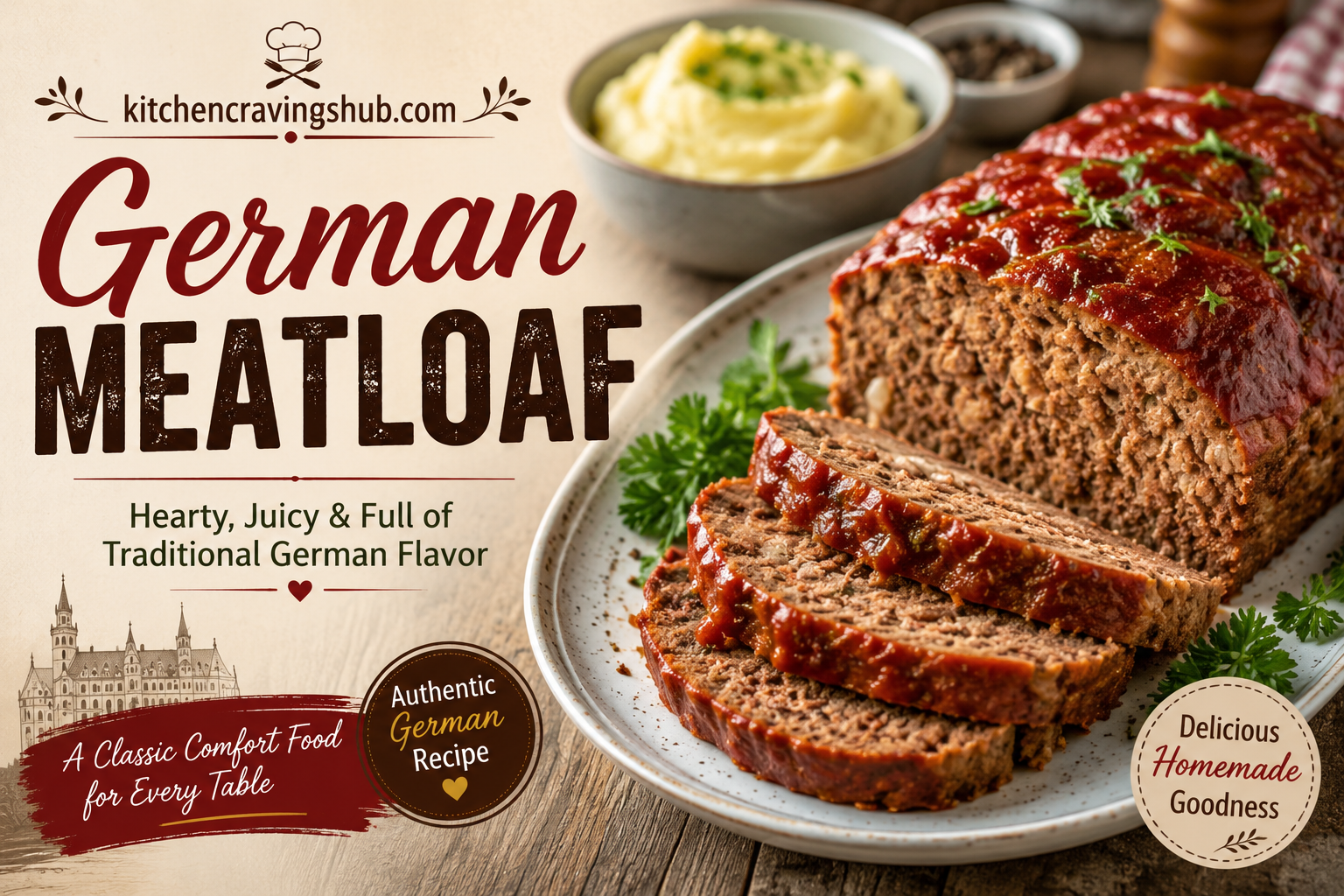
There is something deeply comforting about a warm slice of meatloaf, and German meatloaf, known as Falscher Hase, takes that comfort to a whole new level. Rich, savory ground meat studded with a hard boiled egg running through the center, wrapped in a beautifully browned crust, and often served with a rich gravy. It is hearty, nostalgic, and the kind of dish that feels like a true family recipe passed down through generations. 😋
In this guide, we are going to cover everything you need to know about German meatloaf. We will talk about the fascinating meaning behind its name, why it has become such a beloved comfort food staple, the ingredients you need, a full step by step recipe, tips for getting that perfect texture and flavor, common mistakes to avoid, healthier variations, and answers to the most frequently asked questions. Let us get cooking. 🧑🍳
What Is German Meatloaf? 🤔
German meatloaf, known as Falscher Hase, which translates literally to false hare or fake rabbit, is a traditional German dish made from a mixture of ground beef and pork, seasoned with onions, garlic, and herbs, then shaped into a loaf, often with a hard boiled egg placed in the center, and baked until beautifully browned on the outside. The whimsical name is thought to reference a time when rabbit meat was expensive or scarce, and cooks would shape a more affordable ground meat mixture into a loaf resembling a roasted hare as a clever, economical substitute.
This dish holds a beloved place in traditional German home cooking, often associated with hearty, comforting family meals passed down through generations. Unlike some American style meatloaf recipes that rely heavily on ketchup based glazes, German meatloaf tends to focus more on a well seasoned meat mixture and a rich, savory gravy served alongside, letting the quality of the meat and seasoning shine through.
The classic addition of a hard boiled egg running through the center is one of the most distinctive and beloved features of this dish, creating a beautiful presentation when sliced and adding a wonderful textural contrast to the tender, savory meat. 🌟
Why People Love German Meatloaf ❤️
There are so many reasons this dish has earned such a devoted following.
First, it is deeply nostalgic comfort food for many German households, evoking memories of family dinners and traditional home cooking passed down through generations.
Second, that hard boiled egg running through the center creates a wonderful surprise and visual appeal when the loaf is sliced, along with a lovely textural contrast to the tender ground meat.
Third, it is a fantastic way to stretch a modest amount of meat into a filling, satisfying meal, especially when paired with hearty sides like potatoes and vegetables.
Finally, it is relatively simple to make, using accessible ingredients and straightforward technique, making it an achievable dish for home cooks of all skill levels while still delivering genuinely comforting, flavorful results. 🏠
Ingredients You Will Need 🛒
Here is everything required to make a fantastic batch of German meatloaf at home.
For the Meatloaf
Ground beef, for richness and flavor. Ground pork, which adds moisture and a slightly different flavor profile when combined with the beef. Onion, finely diced. Garlic, minced, for aromatic depth. Bread, torn into small pieces, or breadcrumbs, soaked briefly in milk, which helps keep the meatloaf tender and moist. Milk, for soaking the bread. Eggs, for binding the meat mixture together. Fresh parsley, chopped, for freshness. Salt and black pepper, for seasoning. A pinch of nutmeg, optional, for a subtle traditional German flavor note. Hard boiled eggs, peeled and left whole, for placing in the center of the loaf.
For the Topping
Butter or oil, for greasing the loaf and helping it brown nicely in the oven.
For the Gravy, Optional
Beef broth, for the base of the gravy. Flour or cornstarch, to thicken the gravy. Pan drippings from the meatloaf, which add rich, savory flavor to the finished sauce. 🌿
Step by Step Recipe: How to Make German Meatloaf 👩🍳
This recipe generally serves about six people and takes around one hour and fifteen minutes from start to finish.
Step 1: Prepare the Hard Boiled Eggs
If you have not already done so, hard boil several eggs, then peel them and set aside. These will go into the center of the meatloaf, so having them ready ahead of time makes the assembly process smoother.
Step 2: Soak the Bread
Tear the bread into small pieces and place them in a bowl with the milk, letting them soak for about five minutes until softened. This step helps keep the meatloaf moist and tender rather than dense and dry.
Step 3: Sauté the Onion and Garlic
Heat a small amount of butter or oil in a pan over medium heat and sauté the diced onion until softened and translucent, about four to five minutes. Add the minced garlic and cook for another thirty seconds until fragrant. Let this mixture cool slightly before combining with the meat.
Step 4: Mix the Meat Mixture
In a large bowl, combine the ground beef and ground pork. Add the soaked bread, sautéed onion and garlic, eggs, chopped parsley, salt, pepper, and nutmeg if using. Mix everything together gently with your hands until just combined, being careful not to overwork the mixture, since this can result in a denser, tougher final texture.
Step 5: Shape the Meatloaf
Preheat your oven to around 375 degrees Fahrenheit. On a lightly greased baking sheet or in a loaf pan, shape about half of the meat mixture into an oval or loaf shape, creating a slight indentation down the center.
Step 6: Add the Hard Boiled Eggs
Line the hard boiled eggs end to end along the center indentation of the meat mixture. Carefully cover the eggs with the remaining meat mixture, shaping and smoothing it around the eggs to fully enclose them, forming a neat, cohesive loaf.
Step 7: Bake the Meatloaf
Brush the outside of the loaf with a bit of melted butter or oil, which helps it brown beautifully. Bake for about fifty to sixty minutes, until the internal temperature reaches 160 degrees Fahrenheit and the exterior is deeply golden brown.
Step 8: Rest the Meatloaf
Remove the meatloaf from the oven and let it rest for about ten minutes before slicing. This resting period helps the loaf hold its shape and allows the juices to redistribute.
Step 9: Make the Gravy, If Desired
While the meatloaf rests, prepare a simple gravy using the pan drippings, beef broth, and a bit of flour or cornstarch to thicken, simmering over the stovetop until it reaches a rich, pourable consistency.
Step 10: Slice and Serve
Slice the meatloaf into thick pieces, revealing that beautiful egg running through the center of each slice. Serve hot, with gravy spooned over the top if desired. 🍽️
Pro Tips for the Best German Meatloaf 💡
Do not overwork the meat mixture. Mixing too vigorously can result in a denser, tougher final texture, so combine the ingredients just until evenly distributed.
Soak the bread properly before adding it to the meat mixture. This step is essential for keeping the meatloaf moist and tender rather than dry and crumbly.
Let the sautéed onions cool slightly before mixing them into the raw meat. Adding them while still very hot can begin cooking the meat mixture prematurely, affecting the final texture.
Center the hard boiled eggs carefully when shaping the loaf. Taking a bit of extra care during this step ensures each slice reveals that beautiful egg cross section once the meatloaf is cut.
Use a meat thermometer to check doneness. This is the most reliable way to ensure the meatloaf is fully cooked without overbaking it, which can result in a drier final texture.
Let the meatloaf rest before slicing. This resting period allows the juices to redistribute and helps the loaf hold together better when sliced.
Common Mistakes to Avoid ⚠️
Overworking the meat mixture. This develops the proteins too much, resulting in a denser, tougher meatloaf rather than a tender, well textured one.
Skipping the bread soaking step. This can result in a meatloaf that is drier and more crumbly than the traditional, moist texture this dish is known for.
Not positioning the eggs properly in the center. Rushing this step can result in eggs that are off center or too close to the surface, affecting both presentation and structural integrity when sliced.
Overbaking the meatloaf. Cooking it for too long can result in a dry, tough final texture, so using a meat thermometer helps prevent this common issue.
Slicing the meatloaf too soon after baking. Cutting into it immediately can cause it to fall apart more easily and lose some of its juices, so allowing it to rest first helps it hold together better.
Healthier Ways to Make German Meatloaf 🥗
If you want a lighter version of this dish, here are a few simple adjustments to try.
Use leaner ground beef, or substitute part of the meat mixture with ground turkey for a lighter option, though the texture and flavor will be slightly different from the traditional beef and pork combination.
Use whole wheat bread for the soaking step to add a bit more fiber to the dish.
Reduce the amount of butter used for greasing and browning the loaf.
Serve smaller portions alongside a larger serving of steamed or roasted vegetables to help balance out the meal.
Skim excess fat from the pan drippings before making gravy, if serving the meatloaf with a sauce. 🌾
What to Serve With German Meatloaf 🍽️
German meatloaf pairs beautifully with classic German sides like mashed potatoes, spaetzle, or simple boiled potatoes, which are perfect for soaking up any extra gravy. Braised red cabbage or a simple green salad also make wonderful accompaniments, adding a nice contrast to the rich, savory meatloaf.
For a more traditional German meal, serve alongside sautéed mushrooms or green beans, creating a complete, hearty, home cooked spread reminiscent of a classic German family dinner. 🥗
Storing and Reheating Leftovers 📦
Store leftover German meatloaf in an airtight container in the refrigerator for up to four days. It also freezes well for up to three months, either as a whole loaf or in individual slices, making it a great option for meal prep.
To reheat, warm slices in a covered skillet over medium low heat with a small splash of broth or water to help keep them moist, or reheat in an oven at around 300 degrees Fahrenheit, covered loosely with foil, until heated through. The microwave also works if you are short on time, just be mindful that it may result in a slightly drier texture compared to gentler reheating methods.
Frequently Asked Questions ❓
What does Falscher Hase mean, and why is it called that? Falscher Hase translates to false hare or fake rabbit, a whimsical name thought to originate from a time when rabbit meat was expensive or scarce, leading cooks to shape a more affordable ground meat mixture into a loaf resembling a roasted hare as a clever, budget friendly substitute.
Do I have to include the hard boiled egg in the center? While not strictly required, the hard boiled egg is one of the most distinctive and traditional features of this dish, creating a beautiful presentation and pleasant textural contrast when the loaf is sliced. That said, you can certainly make a version without it if you prefer a simpler meatloaf.
Can I use only ground beef instead of a beef and pork combination? Yes, though the combination of beef and pork traditionally used in this dish adds a wonderful balance of flavor and moisture. Using only beef will still work, though the texture and richness may be slightly different from the traditional version.
Why did my meatloaf fall apart when I sliced it? This is often caused by not letting the meatloaf rest long enough after baking, or from using too little binding ingredient like egg or soaked bread. Allowing adequate resting time and following the ingredient ratios closely can help the loaf hold together better.
Can I make this dish ahead of time? Yes, you can assemble the meatloaf, including positioning the hard boiled eggs, a few hours ahead of time and refrigerate it until you are ready to bake, making it a convenient option for planning ahead.
Can I make this dish gluten free? Yes, substitute the bread with a gluten free bread or gluten free breadcrumbs, and use cornstarch instead of flour if making a gravy, to create a gluten free version of this classic dish.
Final Thoughts 🌈
German meatloaf, with its whimsical name and comforting, hearty character, represents a wonderful piece of traditional German home cooking. That combination of well seasoned ground meat, a beautifully placed hard boiled egg running through the center, and a rich, savory gravy creates a dish that feels both nostalgic and genuinely satisfying.
Once you get comfortable with the technique of shaping the loaf around those eggs and achieving that perfect tender texture, this recipe becomes a wonderful addition to your regular cooking rotation, whether for a cozy family dinner or when you are craving a true taste of German comfort food.
So mix that meat mixture, position your eggs carefully, and get ready to enjoy the hearty, nostalgic comfort of homemade German meatloaf. Happy cooking! 🍳🥳