
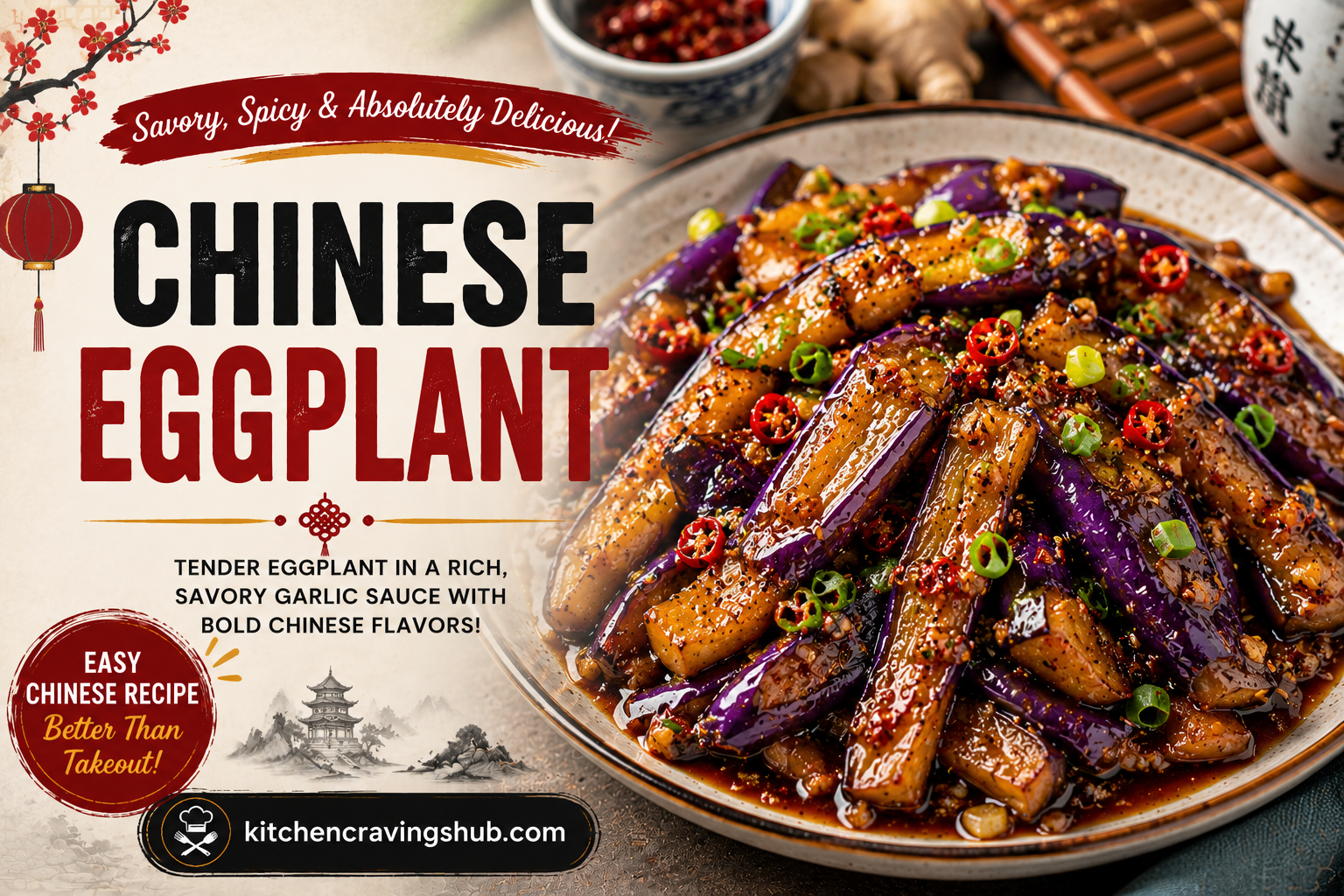
There is something wonderfully comforting about a plate of Chinese eggplant. Long, slender purple eggplant, cooked until silky and tender, coated in a rich, savory garlic sauce that soaks into every single bite. It is the kind of dish that converts even the most hesitant eggplant skeptics into true believers. 😋
In this guide, we are going to cover everything you need to know about Chinese eggplant. We will talk about why this dish has become such a beloved favorite, the ingredients you need, a full step by step recipe, tips for getting that perfect silky texture without excess oil, common mistakes to avoid, healthier variations, and answers to the most frequently asked questions. Let us get cooking. 🧑🍳
What Is Chinese Eggplant? 🤔
Chinese eggplant refers both to a specific variety of eggplant and to the popular stir fried dish made using it. The eggplant itself, sometimes called Asian eggplant, is long and slender with thin, delicate skin and a milder, sweeter flavor compared to the larger, rounder globe eggplant commonly found in Western grocery stores. It also has fewer seeds and a less bitter taste, which makes it especially well suited for quick cooking methods like stir frying.
As a dish, Chinese eggplant typically features this variety cooked until tender and silky, then combined with a savory sauce built from garlic, ginger, soy sauce, and often a touch of sweetness from sugar or hoisin sauce. Some versions include ground pork for extra richness, while others keep things fully vegetarian, letting the eggplant itself take center stage. A popular variation known as fish fragrant eggplant, or yu xiang eggplant, comes from Sichuan cuisine and includes a bold, slightly spicy and tangy sauce despite not actually containing any fish.
This dish has become a beloved staple both in home cooking across China and on Chinese restaurant menus around the world, admired for transforming a vegetable that can sometimes feel bland or spongy into something rich, silky, and deeply flavorful. 🌟
Why People Love Chinese Eggplant ❤️
There are several reasons this dish has earned such a devoted following.
First, the texture is simply irresistible. When cooked properly, Chinese eggplant becomes incredibly silky and tender, almost melting in your mouth while still holding its shape enough to be satisfying to eat.
Second, it soaks up flavor beautifully. Eggplant has a naturally spongy structure that absorbs sauce exceptionally well, meaning every bite is packed with that rich, garlicky, savory flavor rather than tasting bland or watered down.
Third, it is a fantastic way to enjoy a vegetable forward meal that still feels hearty and satisfying. Whether made with ground pork for extra richness or kept fully vegetarian, this dish never feels like a boring side.
Finally, it pairs beautifully with rice and other Chinese dishes, making it a versatile addition to any meal, whether as a main dish or a flavorful side. 🍆
Ingredients You Will Need 🛒
Here is everything required to make a fantastic batch of Chinese eggplant at home.
For the Eggplant
Chinese or Japanese eggplant, sliced into long strips or bite sized pieces. If you cannot find these varieties, regular globe eggplant can be used as a substitute, though the texture and flavor will be slightly different. Salt, for lightly salting the eggplant before cooking, which helps draw out excess moisture.
For the Protein, Optional
Ground pork, for a richer, heartier version of this dish. This can easily be omitted or substituted with a plant based ground meat alternative for a vegetarian version.
For the Sauce
Soy sauce, for saltiness and depth of flavor. Hoisin sauce, for a touch of sweetness and rich umami depth. Chinkiang vinegar or rice vinegar, for a bit of tang that balances the richness of the dish. Sugar, to round out the savory and tangy elements. Chicken broth or water, to thin the sauce slightly. Cornstarch mixed with water, to thicken the sauce into a glossy, clingy consistency. Chili garlic sauce or doubanjiang, optional, for a spicy, fish fragrant style variation.
For the Aromatics
Garlic, minced generously, since it defines much of this dish’s flavor. Ginger, minced, for warmth and depth. Green onions, sliced, for garnish and a fresh finishing touch.
For Cooking
Vegetable oil or peanut oil, for stir frying at high heat. 🌿
Step by Step Recipe: How to Make Chinese Eggplant 👩🍳
This recipe generally serves about four people and takes around thirty five minutes from start to finish.
Step 1: Prepare the Eggplant
Slice the eggplant into long strips or bite sized pieces. If you have time, lightly salt the pieces and let them sit in a colander for about fifteen to twenty minutes, which helps draw out excess moisture and can reduce the amount of oil the eggplant absorbs during cooking. Rinse and pat dry thoroughly before cooking.
Step 2: Cook the Eggplant
Heat a generous amount of oil in a wok or large skillet over medium high heat. Eggplant tends to absorb oil quickly, so do not be afraid to use a bit more than you might for other vegetables. Add the eggplant in a single layer, working in batches if necessary, and cook for about five to seven minutes, stirring occasionally, until the pieces turn golden and tender. Remove and set aside on a plate.
Step 3: Prepare the Sauce
While the eggplant is cooking, whisk together soy sauce, hoisin sauce, vinegar, sugar, chicken broth, and a cornstarch and water slurry in a small bowl. If making a fish fragrant style version, whisk in chili garlic sauce or doubanjiang at this stage as well. Set the sauce aside so it is ready to use once the aromatics are cooked.
Step 4: Cook the Protein, If Using
If using ground pork, add a small amount of oil to the same pan and cook the pork over medium high heat, breaking it apart with a spatula, until browned and cooked through, about four to five minutes.
Step 5: Add the Aromatics
Add the minced garlic and ginger to the pan, stirring for about thirty seconds until fragrant, being careful not to let them burn.
Step 6: Combine Everything
Return the cooked eggplant to the pan, then pour in the prepared sauce. Toss everything together over high heat for about one to two minutes, allowing the sauce to thicken and coat every piece of eggplant evenly.
Step 7: Finish and Serve
Garnish with sliced green onions and serve immediately over steamed rice while everything is hot and glossy. 🍚
Pro Tips for the Best Chinese Eggplant 💡
Salt the eggplant before cooking if you have time. This step helps draw out excess moisture and bitterness, resulting in a better final texture, though it is not strictly necessary if you are short on time.
Do not be shy with the oil during the initial cooking step. Eggplant naturally absorbs a lot of oil, and using too little can result in unevenly cooked, tough pieces rather than that signature silky texture.
Cook the eggplant in batches if needed. Overcrowding the pan can cause the eggplant to steam rather than properly sear and soften.
Use Chinese or Japanese eggplant if you can find it. These varieties have thinner skin, fewer seeds, and a milder flavor compared to regular globe eggplant, resulting in a more tender, less bitter final dish.
Prepare your sauce and aromatics before cooking the eggplant. This helps the final stir frying steps move quickly and smoothly once everything is ready to combine.
Adjust the sweetness and spice level to your taste. This dish is very forgiving, so feel free to add more hoisin sauce for sweetness or more chili garlic sauce for heat, depending on your preference.
Common Mistakes to Avoid ⚠️
Using too little oil when cooking the eggplant. Eggplant absorbs oil readily, and using too little can result in tough, unevenly cooked pieces instead of that signature silky texture.
Overcrowding the pan during the initial cooking step. This causes the eggplant to steam rather than properly sear, leading to a less flavorful, less silky result.
Skipping the salting step entirely when you have time to spare. While not strictly necessary, salting the eggplant beforehand can help reduce bitterness and improve the final texture.
Burning the garlic and ginger. These aromatics cook quickly and can turn bitter if left in the hot pan too long, so timing matters during this step.
Not thickening the sauce enough. A thin, watery sauce will not cling properly to the eggplant, so let it simmer until it reaches that glossy, spoon coating consistency.
Healthier Ways to Make Chinese Eggplant 🥗
If you want a lighter version of this dish, here are a few adjustments to try.
Bake or air fry the eggplant instead of pan frying it in oil. Toss the eggplant pieces with a small amount of oil and roast at around four hundred degrees Fahrenheit, or use an air fryer, until tender and lightly browned, significantly reducing the amount of oil used.
Omit the ground pork entirely for a fully vegetarian version, or substitute with a plant based ground meat alternative if you still want that heartier texture.
Reduce the sugar and hoisin sauce slightly, letting the natural sweetness of the eggplant and the savory depth of the soy sauce carry more of the flavor.
Use low sodium soy sauce to help control the overall salt content of the finished dish.
Serve alongside a larger portion of steamed rice or additional vegetables to round out the meal. 🌾
What to Serve With Chinese Eggplant 🍽️
Chinese eggplant pairs beautifully with steamed white rice, which soaks up the rich, savory sauce perfectly. It also works well as a side dish alongside other Chinese entrees like chicken lo mein, honey garlic pork, or salt and pepper shrimp, offering a silky, saucy contrast to crispier or drier dishes.
For a lighter meal, serve it alongside a simple cucumber salad or a light egg drop soup. If you are hosting a bigger dinner, this dish fits wonderfully into a larger spread featuring a variety of Chinese favorites. 🥢
Storing and Reheating Leftovers 📦
Store leftover Chinese eggplant in an airtight container in the refrigerator for up to three days. The flavors often deepen after a day in the fridge, making leftovers just as delicious, if not more so.
To reheat, use a skillet over medium heat with a small splash of water or broth to loosen the sauce, stirring frequently until heated through. This method helps preserve the texture better than microwaving, though the microwave also works fine if you are short on time, just heat in short bursts and stir in between.
Frequently Asked Questions ❓
What is the difference between Chinese eggplant and regular eggplant? Chinese eggplant, also called Asian eggplant, is longer and thinner than regular globe eggplant, with thinner skin, fewer seeds, and a milder, slightly sweeter flavor. This makes it especially well suited for quick cooking methods like stir frying.
Can I use regular eggplant if I cannot find Chinese eggplant? Yes, regular globe eggplant can be substituted, though you may want to salt it beforehand to help reduce bitterness, and the final texture will be slightly different since globe eggplant tends to have a spongier structure.
What is fish fragrant eggplant, and does it contain fish? Fish fragrant eggplant, or yu xiang eggplant, is a Sichuan style variation that despite its name does not contain any fish at all. The name refers to a specific sauce style traditionally used with fish dishes in Sichuan cuisine, later applied to other ingredients like eggplant.
Why does my eggplant turn out mushy or greasy? This usually happens from either using too little oil, which causes uneven cooking, or overcrowding the pan, which causes steaming instead of proper searing. Cooking in batches with enough oil helps achieve that ideal silky, not mushy, texture.
Can I make this dish vegetarian or vegan? Yes, simply omit the ground pork or substitute it with a plant based ground meat alternative, and the rest of the ingredients are naturally vegetarian and can easily be made vegan as well.
Can I make this dish gluten free? Yes, use gluten free soy sauce and check that your hoisin sauce and any chili garlic sauce are labeled gluten free, since some brands contain wheat based ingredients.
Final Thoughts 🌈
Chinese eggplant proves that with the right technique, a vegetable that can sometimes feel spongy or bland transforms into something truly silky, rich, and satisfying. That combination of tender eggplant and a bold, savory garlic sauce creates a dish that works wonderfully as a hearty vegetarian main course or a flavorful side dish alongside other favorites.
Once you get comfortable with cooking the eggplant properly, whether through traditional pan frying or a lighter baking method, this dish becomes a wonderful addition to your regular cooking rotation. Feel free to experiment with the sauce, add ground pork for extra heartiness, or turn up the heat with a fish fragrant style twist to make it your own.
So slice that eggplant, heat up your pan, and get ready to enjoy the silky, savory comfort of homemade Chinese eggplant. Happy cooking! 🍳🥳