
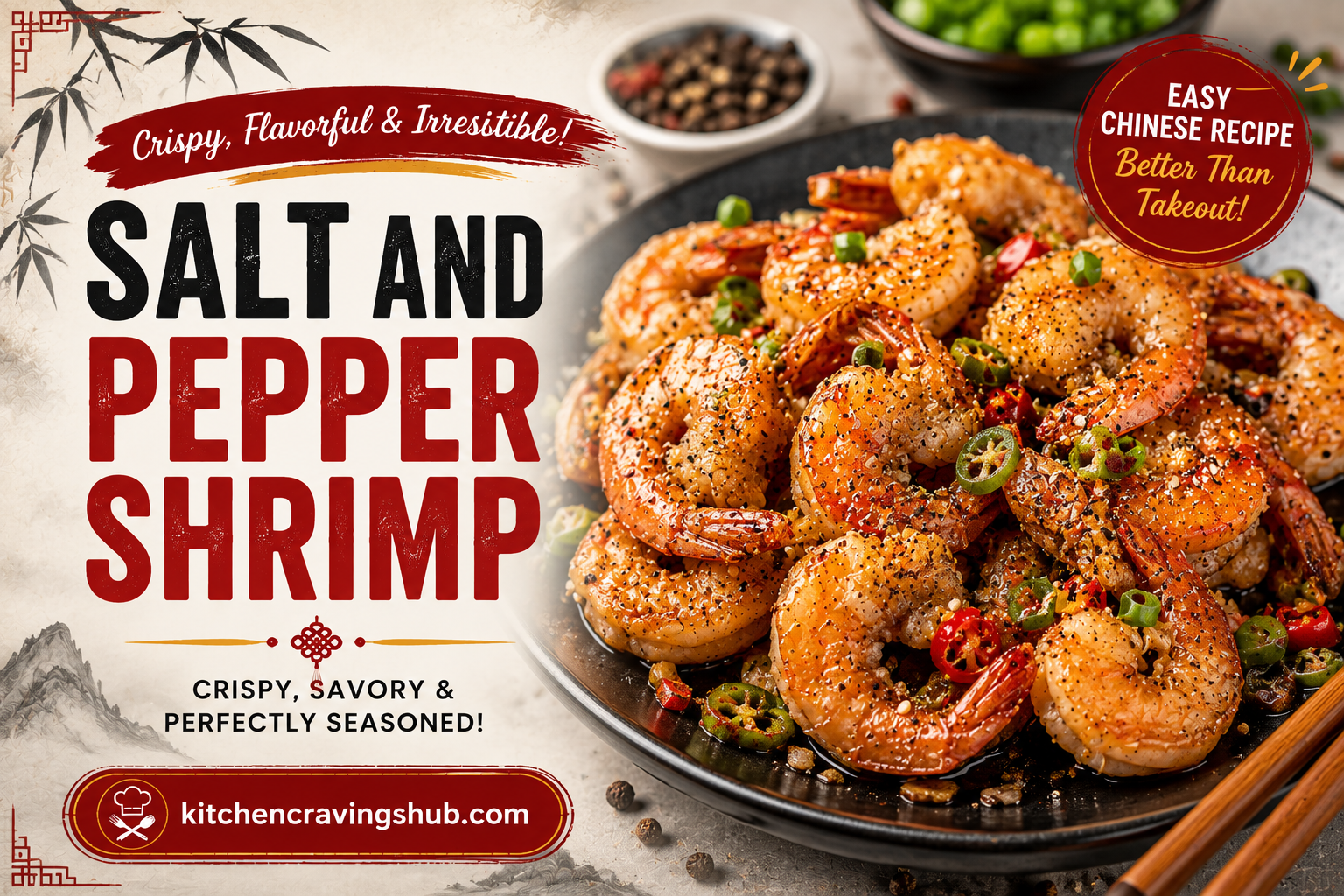
There is a reason salt and pepper shrimp disappears within minutes of hitting the table at any Chinese restaurant. Crispy, golden shrimp, shell and all, tossed with a fragrant mix of garlic, chili, and scallions, all seasoned with that signature salt and pepper blend. It is bold, crunchy, and packed with flavor in every single bite. 😋
In this guide, we are going to cover everything you need to know about salt and pepper shrimp. We will talk about where this dish comes from, why it has become such a beloved favorite, the ingredients you need, a full step by step recipe, tips for getting that perfect crispy texture, common mistakes to avoid, healthier variations, and answers to the most frequently asked questions. Let us get into it. 🧑🍳
What Is Salt and Pepper Shrimp? 🤔
Salt and pepper shrimp is a Cantonese style dish featuring shrimp that is lightly coated, deep fried until golden and crispy, then quickly tossed in a hot wok with garlic, ginger, chili peppers, scallions, and a seasoning blend built around salt and white or black pepper. Unlike many Chinese shrimp dishes that rely on a thick, glossy sauce, salt and pepper shrimp is intentionally dry, letting the crispy texture and bold aromatics take center stage instead.
One of the defining features of traditional salt and pepper shrimp is that it is often cooked with the shell still on. While this might seem unusual at first, the shell actually becomes wonderfully crispy and edible once fried, adding an extra layer of crunch and flavor that shell off versions simply cannot replicate. That said, many home cooks and restaurants also offer a peeled version for those who prefer not to eat the shell.
This dish showcases a different side of Chinese cooking compared to saucier favorites like sweet and sour chicken or honey garlic shrimp. It is all about texture and aromatic seasoning rather than a rich sauce, making it a standout on any Chinese restaurant menu. 🌟
Why People Love Salt and Pepper Shrimp ❤️
There are several reasons this dish has earned such a devoted following.
First, the texture is absolutely irresistible. That light, crispy coating combined with the natural crunch of the shell, when included, creates a mouthfeel that is hard to find in other shrimp preparations.
Second, the flavor is bold without being heavy. Since there is no thick sauce involved, the dish relies on garlic, chili, scallions, and a well balanced salt and pepper seasoning to deliver flavor, resulting in something that feels lighter than saucier alternatives while still being deeply satisfying.
Third, it comes together relatively quickly. Once the shrimp is fried, the actual stir frying with aromatics takes just a couple of minutes, making this an achievable dish for a weeknight dinner despite its restaurant quality results.
Finally, it offers a bit of spice and excitement. The chili peppers add a gentle heat that builds with each bite, making this dish feel a little more adventurous compared to some of the milder, sweeter shrimp dishes on a typical menu. 🌶️
Ingredients You Will Need 🛒
Here is everything required to make a fantastic batch of salt and pepper shrimp at home.
For the Shrimp
Large or jumbo shrimp, shell on or peeled and deveined depending on your preference. If keeping the shell on, it is best to at least devein the shrimp by cutting along the back of the shell. Cornstarch, for coating the shrimp before frying, which creates that signature light and crispy texture. A pinch of salt and white pepper, for seasoning the shrimp before coating. Oil for frying, such as vegetable oil, canola oil, or peanut oil, all of which have a high smoke point suitable for deep frying.
For the Aromatics
Garlic, minced, used generously since it is one of the defining flavors of this dish. Fresh chili peppers, sliced, such as jalapeños or Thai chilies, depending on how much heat you prefer. Dried chili flakes can also be used as a substitute. Ginger, minced, for warmth and depth. Scallions, cut into short pieces, for freshness and a mild oniony bite.
For the Seasoning
Salt, the star seasoning that gives this dish its name. White pepper, for a slightly different, more floral heat compared to black pepper, though black pepper can be used as a substitute. A pinch of sugar, optional, to round out the seasoning and balance the salt. Five spice powder, optional, for an extra layer of aromatic complexity.
For Cooking
Oil for stir frying the aromatics, a small amount separate from the frying oil. 🌿
Step by Step Recipe: How to Make Salt and Pepper Shrimp 👩🍳
This recipe generally serves about four people and takes around thirty five minutes from start to finish.
Step 1: Prepare the Shrimp
If keeping the shell on, use kitchen scissors to trim the legs and cut along the back of the shell to devein the shrimp while leaving the shell intact. If peeling, simply peel and devein as usual. Pat the shrimp very dry with paper towels, since excess moisture will cause the oil to splatter and prevent a crispy coating.
Step 2: Season and Coat the Shrimp
Toss the shrimp with a light seasoning of salt and white pepper, then coat them in a generous layer of cornstarch, shaking off any excess. The cornstarch is what creates that light, crispy exterior once fried, so make sure every piece is evenly coated.
Step 3: Fry the Shrimp
Heat about two inches of oil in a wok or deep skillet to around 350 degrees Fahrenheit. Fry the shrimp in small batches to avoid overcrowding the pan, which helps maintain the oil temperature and ensures even, crispy results. Fry for about two to three minutes, until golden and crispy, then remove with a slotted spoon and drain on a wire rack or paper towel lined plate.
Step 4: Prepare the Seasoning Mix
While the shrimp is frying, combine salt, white pepper, a pinch of sugar, and five spice powder if using in a small bowl. Having this seasoning blend ready to go makes the final stir frying step move quickly and smoothly.
Step 5: Stir Fry the Aromatics
Carefully drain most of the oil from the wok, leaving just a small amount, about a tablespoon, for stir frying. Reheat the wok over high heat and add the minced garlic, ginger, and sliced chili peppers. Stir fry for about thirty seconds until fragrant, being careful not to let the garlic burn.
Step 6: Combine Everything
Add the fried shrimp back into the wok along with the scallions and the prepared salt and pepper seasoning mix. Toss everything together quickly over high heat for about one minute, making sure the shrimp gets evenly coated in the aromatics and seasoning.
Step 7: Serve Immediately
Transfer the shrimp to a serving plate right away while it is still hot and crispy. Salt and pepper shrimp is best enjoyed immediately after cooking, since the crispy coating will soften the longer it sits. 🍚
Pro Tips for the Best Salt and Pepper Shrimp 💡
Pat the shrimp completely dry before coating. Any excess moisture will cause the oil to splatter and prevent the cornstarch coating from crisping up properly.
Fry in small batches. Overcrowding the pan drops the oil temperature quickly, resulting in soggy shrimp instead of a light, crispy coating.
Keep the oil temperature consistent. Using a thermometer to monitor the oil helps ensure even frying, since oil that is too cool will make the shrimp greasy while oil that is too hot can burn the coating before the shrimp cooks through.
Prepare your seasoning mix and aromatics before frying the shrimp. The final stir frying step happens quickly, so having everything ready to go prevents you from scrambling once the shrimp comes out of the oil.
Serve immediately. Unlike saucier dishes that hold up a bit longer, salt and pepper shrimp is best enjoyed the moment it comes off the stove while the coating is still crispy.
Adjust the chili amount to your spice preference. Since this dish relies on fresh chilies for heat rather than a spicy sauce, you have a lot of control over how mild or spicy the final result turns out.
Common Mistakes to Avoid ⚠️
Not drying the shrimp thoroughly before frying. Excess moisture leads to oil splattering and a coating that does not crisp up properly.
Overcrowding the frying pan. This drops the oil temperature and results in soggy, unevenly cooked shrimp instead of that signature crispy texture.
Burning the garlic during the stir frying step. Garlic cooks very quickly, so it needs to be added at the right time and watched closely to avoid a bitter flavor.
Letting the shrimp sit too long before serving. The crispy coating begins to soften shortly after cooking, so this dish is best served and eaten right away.
Skipping the seasoning mix preparation. Having the salt, pepper, and other seasonings measured and ready before the final stir fry step ensures even seasoning throughout the dish.
Healthier Ways to Make Salt and Pepper Shrimp 🥗
If you want a lighter version of this dish, here are a few adjustments to try.
Bake or air fry the coated shrimp instead of deep frying. Toss the coated shrimp with a small amount of oil and bake at around four hundred degrees Fahrenheit, or use an air fryer, until golden and crispy, significantly reducing the amount of oil used.
Peel the shrimp instead of keeping the shell on if you are looking to reduce overall texture heaviness, though keep in mind the shell on version is traditional and offers a unique crunch.
Use a light hand with the salt in the seasoning mix, letting the garlic, ginger, and chili carry more of the flavor.
Serve alongside a larger portion of steamed vegetables to help balance out the meal.
Choose smaller shrimp if you want more pieces to go around without needing to significantly increase the total amount of oil used for frying. 🌾
What to Serve With Salt and Pepper Shrimp 🍽️
Salt and pepper shrimp works wonderfully as an appetizer, often served alongside other Chinese restaurant favorites like spring rolls or dumplings. It also makes a great main dish when paired with steamed white rice or fried rice to help balance out the bold, spicy flavors.
For a lighter meal, serve it alongside a simple cucumber salad or steamed bok choy. If you are hosting a bigger dinner, this dish pairs beautifully with other stir fry favorites like Chinese pepper steak or honey garlic pork to create a full, varied spread. 🥢
Storing and Reheating Leftovers 📦
Store leftover salt and pepper shrimp in an airtight container in the refrigerator for up to two days. Since this dish relies so heavily on its crispy texture, leftovers will not taste quite the same as when freshly made, though the flavor will still be enjoyable.
To reheat, use an oven or air fryer to help restore some of the original crispiness. Spread the shrimp out on a baking tray and reheat at around 350 degrees Fahrenheit for about five to eight minutes. Avoid microwaving if possible, since this method will make the coating soft and somewhat rubbery rather than crispy.
Frequently Asked Questions ❓
Do I have to keep the shell on the shrimp? No, keeping the shell on is traditional and adds extra crunch, but peeled shrimp works perfectly well too if you prefer not to eat the shell. Just adjust your expectations for texture slightly, since the shell contributes a unique crispiness.
Is salt and pepper shrimp very spicy? The spice level depends on how many chili peppers you use and what type. Using fewer chilies or removing the seeds will result in a milder dish, while more chilies will increase the heat significantly.
Can I make this dish without deep frying? Yes, baking or air frying the coated shrimp is a great alternative that still delivers a crispy texture with far less oil, though the result will be slightly less crispy than traditional deep frying.
What is the difference between salt and pepper shrimp and other fried shrimp dishes? Salt and pepper shrimp is distinct because it is not coated in a thick, sweet, or savory sauce. Instead, it relies on a light cornstarch coating and a stir fried mix of garlic, chili, and seasoning for its flavor, making it drier and more texture focused than saucier shrimp dishes.
Can I use frozen shrimp for this recipe? Yes, just make sure to thaw the shrimp completely and pat them very dry before coating and frying, since excess moisture will prevent the coating from crisping up properly.
Can I make this dish gluten free? Yes, this dish is naturally gluten free as written, since it relies on cornstarch rather than flour for the coating, though always double check that any additional seasonings or sauces you use are certified gluten free.
Final Thoughts 🌈
Salt and pepper shrimp stands out as a dish that celebrates texture and bold aromatics rather than leaning on a heavy sauce. That perfectly crispy coating, paired with fragrant garlic, a touch of heat from fresh chilies, and a well balanced seasoning blend, creates a dish that feels exciting and a little different from the saucier Chinese takeout favorites many people are used to.
Once you get comfortable with the frying process and understand how quickly that final stir fry with aromatics comes together, this recipe becomes a fantastic option whenever you want something bold, crispy, and packed with flavor. Serve it as an appetizer or a main dish, and either way, it is bound to disappear fast.
So heat up that oil, prep your aromatics, and get ready to enjoy the crispy, spicy, garlicky goodness of homemade salt and pepper shrimp. Happy cooking! 🍳🥳