
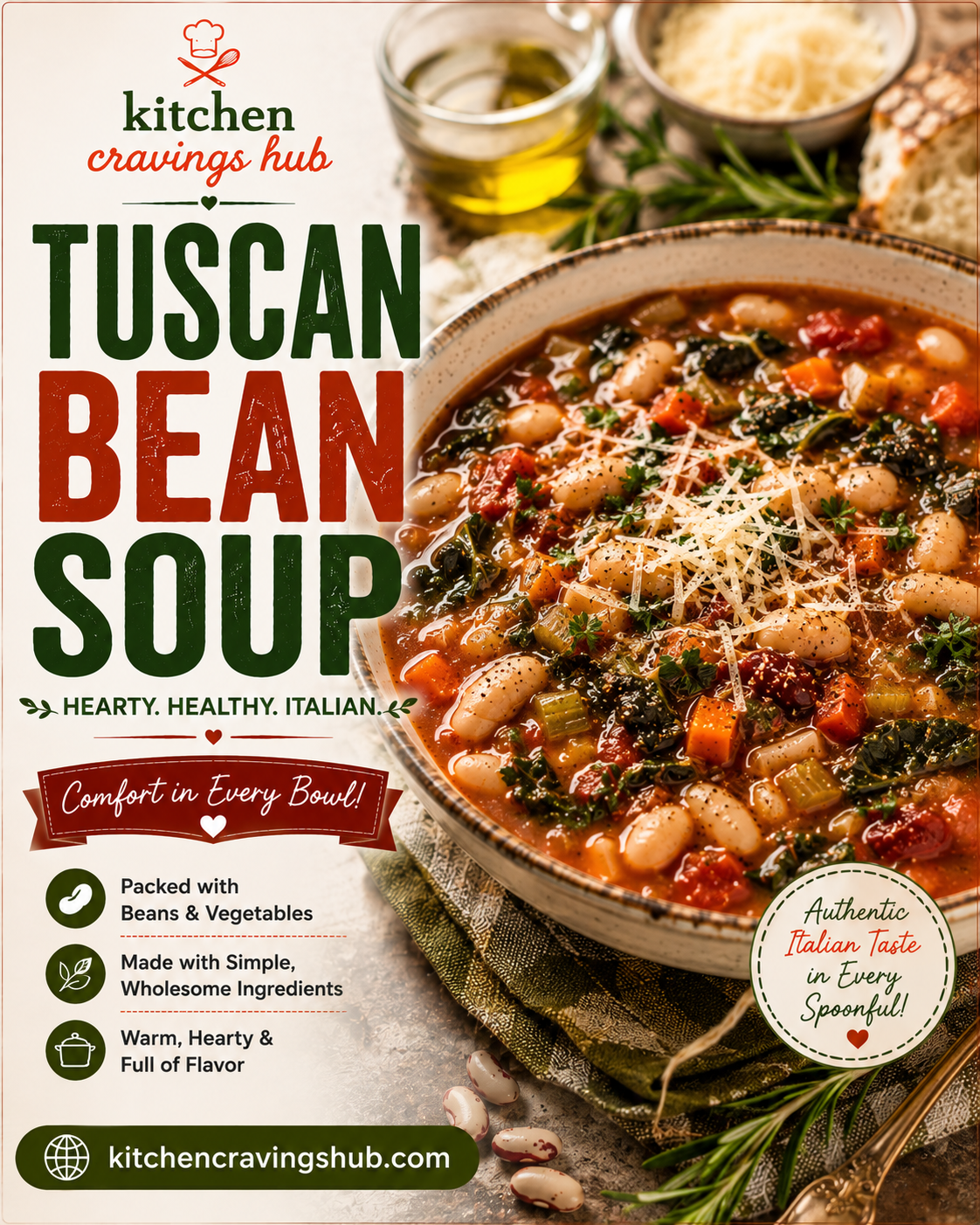
There’s a certain rustic elegance to Tuscan cooking, a way of turning humble, simple ingredients into something deeply satisfying, and this Tuscan bean soup captures that spirit perfectly. 🌿 Creamy white beans, hearty greens, and a rich, herby broth come together in a soup that feels both wholesome and indulgent at the same time. It’s the kind of meal that warms you from the inside out, especially when finished with a generous drizzle of good olive oil and a slice of crusty bread on the side.
Below you’ll find everything you need to make a truly delicious Tuscan bean soup at home, including step by step instructions, my favorite tips for building rich, rustic flavor, fun variations to try, storage advice, and answers to the most common questions people ask about this comforting classic. Let’s get simmering. 🫘✨
🌿 What Is Tuscan Bean Soup?
Tuscan bean soup draws its inspiration from the rustic, ingredient forward cooking style found throughout the Tuscany region of Italy, where creamy white beans, hearty greens like kale or cavolo nero, and simple pantry staples come together in deeply flavorful, satisfying dishes. This soup typically features a base of sautéed onion, carrot, and celery, simmered with white beans, tomatoes, and leafy greens in a savory broth, often finished with a swirl of good olive oil, a nod to the region’s famous olive groves.
Some versions lean thinner and more brothy, while others, especially when a portion of the beans is blended or mashed, take on a heartier, creamier texture, similar to a rustic ribollita. Either way, this soup showcases the beauty of Tuscan cooking: simple, wholesome ingredients, treated with care, resulting in something far greater than the sum of its parts. 🍅🫘
💛 Why You’ll Love This Recipe
- Wholesome and hearty. Packed with creamy beans and nutrient rich greens for a satisfying, well rounded meal.
- Simple, pantry friendly ingredients. Made largely from staples you likely already have on hand.
- Naturally vegetarian and vegan friendly. Easily adapted with a simple broth swap.
- Great for meal prep. This soup keeps and reheats beautifully throughout the week.
- Rustic, comforting flavor. A wonderful way to bring a taste of the Tuscan countryside into your own kitchen.
🫘 Ingredients You’ll Need
For the soup base:
- 3 tablespoons olive oil, plus more for drizzling
- 1 small yellow onion, diced
- 2 carrots, diced
- 2 celery stalks, diced
- 4 cloves garlic, minced
- 1 can (14 ounces) diced tomatoes
- 6 cups vegetable or chicken broth
- 1 Parmesan rind (optional, for extra depth of flavor)
- 1 teaspoon dried oregano
- 1 teaspoon dried thyme
- 1 bay leaf
- 1/2 teaspoon red pepper flakes (optional, for a little heat)
- Salt and black pepper, to taste
For the finishing touches:
- 3 cans (15 ounces each) cannellini beans, drained and rinsed
- 4 cups chopped kale or cavolo nero, tough stems removed
- Fresh rosemary or thyme sprigs, for garnish
- Grated Parmesan cheese, for serving
- Crusty bread, for serving
👩🍳 How to Make Tuscan Bean Soup
Step 1: Sauté the aromatics. Heat the olive oil in a large pot or Dutch oven over medium heat. Add the diced onion, carrots, and celery, cooking for about six to eight minutes, until softened.
Step 2: Add the garlic. Stir in the minced garlic and cook for another thirty seconds to a minute, just until fragrant.
Step 3: Build the soup base. Add the diced tomatoes, broth, Parmesan rind if using, oregano, thyme, bay leaf, and red pepper flakes if using. Season with salt and black pepper.
Step 4: Simmer. Bring the soup to a gentle boil, then reduce the heat to low. Cover and let it simmer for about twenty minutes, allowing the vegetables to become tender and the flavors to meld.
Step 5: Add the beans. Stir in two of the three cans of drained beans, reserving the third can for the next step.
Step 6: Create a creamy texture. In a small bowl, mash the remaining can of beans with a fork until mostly smooth, then stir this mashed bean mixture into the soup. This simple trick adds a wonderfully creamy body to the broth without needing any added cream.
Step 7: Simmer again. Let the soup simmer for another ten minutes, stirring occasionally, allowing the mashed beans to fully incorporate and thicken the broth slightly.
Step 8: Add the greens. Stir in the chopped kale or cavolo nero, letting it simmer for another five to seven minutes, until tender and wilted.
Step 9: Adjust seasoning. Remove and discard the bay leaf and Parmesan rind. Taste the soup and adjust salt and black pepper as needed.
Step 10: Serve and garnish. Ladle the soup into bowls and top with a sprig of fresh rosemary or thyme, a generous drizzle of good olive oil, and a sprinkle of grated Parmesan cheese. Serve with crusty bread on the side. 🫘
🧂 Tips for the Best Tuscan Bean Soup
- Use a Parmesan rind if you have one. Simmering a leftover Parmesan rind in the broth adds incredible savory depth, similar to using a good stock. Simply remove it before serving.
- Try the mashed bean trick. Mashing a portion of the beans and stirring them back into the soup creates a naturally creamy texture, a simple technique borrowed from traditional Tuscan cooking.
- Don’t overcook the greens. Kale and cavolo nero should be tender but still hold their shape and color, so avoid letting them simmer for too long.
- Finish with good olive oil. A generous drizzle of quality extra virgin olive oil right before serving is essential for that authentic, rustic Tuscan finish.
- Let it rest before serving. Like many bean soups, this dish tends to taste even better after resting for a few minutes, or even the next day, as the flavors continue to meld.
🌈 Fun Variations to Try
Tuscan Bean and Sausage Soup 🌭 Brown crumbled Italian sausage in the pot before adding the onions and vegetables for a heartier, meat forward variation.
Ribollita Style Soup 🍞 Stir in torn pieces of stale, crusty bread near the end of cooking for a thick, hearty texture, transforming this soup into a version of the classic Tuscan bread soup known as ribollita.
Tuscan Bean Soup with Pancetta 🥓 Render diced pancetta in the pot before sautéing the vegetables for an extra layer of rich, savory flavor throughout the soup.
Lemon Tuscan Bean Soup 🍋 Add a squeeze of fresh lemon juice and a bit of lemon zest just before serving for a bright, fresh finish that balances the richness of the beans.
Slow Cooker Tuscan Bean Soup 🍲 Sauté the aromatics on the stovetop first, then transfer everything except the greens to a slow cooker, cooking on low for six to seven hours. Stir in the greens during the last twenty to thirty minutes of cooking.
🧊 How to Store Tuscan Bean Soup
This soup stores and freezes exceptionally well, making it a wonderful option for meal prep.
- Refrigerator: Store leftover soup in an airtight container in the fridge for up to five days. Many find the flavor actually improves after a day or two, as the ingredients continue to meld together.
- Freezer: This soup freezes beautifully for up to three months, since it doesn’t contain pasta that can turn mushy upon thawing. Let it cool completely before transferring to a freezer safe container, leaving a bit of room for expansion.
- Reheating: Reheat gently on the stovetop over medium low heat, adding a splash of broth or water to loosen the soup as needed, since it tends to thicken as it sits.
- Meal prep tip: This is a wonderful dish to make in a big batch over the weekend and portion out for quick, satisfying lunches or dinners throughout the week.
🫘 Perfect Occasions for Tuscan Bean Soup
This wholesome, comforting soup fits beautifully into all kinds of meals and gatherings:
- Cozy weeknight dinners, especially during the fall and winter months 🍂
- Meal prepping for busy weeks ahead 📦
- A light yet satisfying lunch paired with crusty bread 🍞
- Comfort food cravings on a cold or rainy day 🌧️
- A wholesome, plant forward dish for gatherings with mixed dietary needs 🥗
Its rustic, nourishing nature makes it a reliable go to whenever you want a hearty, wholesome meal that still feels a bit special.
❓ Frequently Asked Questions About Tuscan Bean Soup
What’s the difference between Tuscan bean soup and minestrone? While both are hearty Italian vegetable soups, Tuscan bean soup places a heavier emphasis on white beans and leafy greens, often with a creamier texture from mashed beans, while minestrone typically includes a wider variety of vegetables and a small pasta or rice.
Can I use dried beans instead of canned? Yes, dried cannellini beans can be soaked overnight and cooked separately until tender before adding them to the soup, though canned beans offer a convenient, time saving shortcut for this recipe.
What’s the best green to use in this soup? Kale and cavolo nero, also known as Tuscan or lacinato kale, are traditional choices, though spinach or Swiss chard can also be used as a substitute, with slightly shorter cooking times needed for more delicate greens like spinach.
Can I make this soup vegan? Yes, simply use vegetable broth instead of chicken broth, skip the Parmesan rind and grated cheese, or use a plant based Parmesan alternative for garnish.
Why do you mash some of the beans? Mashing a portion of the beans and stirring them back into the soup creates a naturally creamy, hearty texture without needing to add any cream, a classic technique used in traditional Tuscan bean soups.
Can I turn this into ribollita? Yes, ribollita is essentially a heartier version of this soup with the addition of torn, stale bread stirred in near the end of cooking, which thickens the soup into a thick, stew like consistency.
🫘 Final Thoughts
Tuscan bean soup is proof that simple, humble ingredients, when treated with care, can create something truly special. With creamy white beans, hearty greens, and a rich, herby broth, finished with a generous drizzle of good olive oil, this soup captures the rustic, comforting spirit of Tuscan cooking in every single bowl. Whether you’re making it for a cozy weeknight dinner or meal prepping for the week ahead, this is a soup that’s well worth adding to your regular rotation. 🌿✨
Give this recipe a try this week, and enjoy every hearty, comforting spoonful. Happy simmering! 🫘🎉