
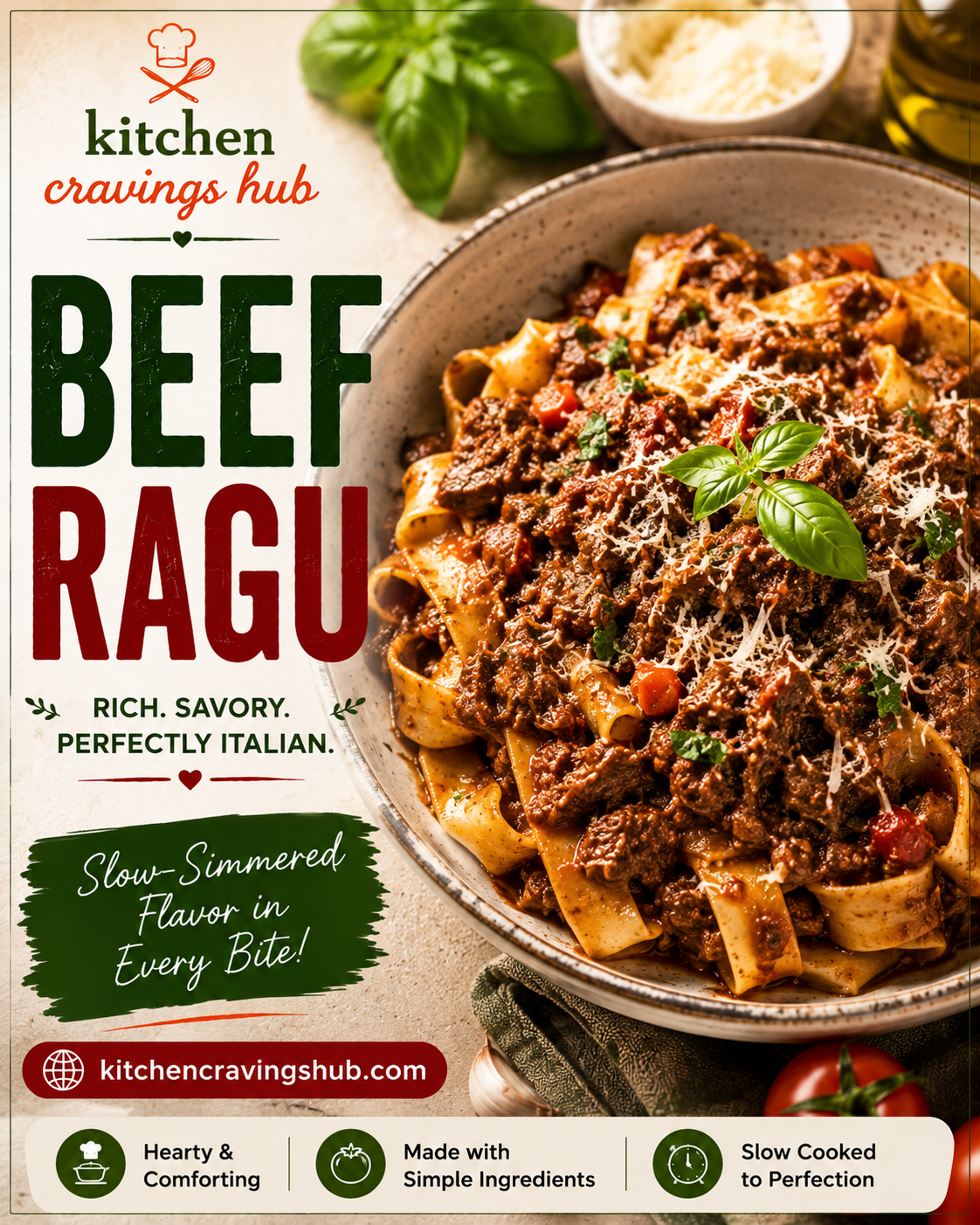
There’s a reason a rich, slow simmered beef ragu is considered one of the crown jewels of Italian home cooking. 🍅 This deeply flavorful, meaty sauce takes its time on the stove, allowing tender beef to break down into silky, fall apart shreds while the sauce itself develops layers upon layers of savory, wine kissed depth. Spooned generously over a bed of wide pasta, polenta, or creamy mashed potatoes, it’s the kind of dish that turns an ordinary dinner into something truly special.
Below you’ll find everything you need to make a truly outstanding beef ragu at home, including step by step instructions, my favorite tips for building maximum flavor, fun variations to try, storage advice, and answers to the most common questions people ask about this beloved Italian classic. Let’s get simmering. 🍷✨
🍅 What Is Beef Ragu?
Ragu refers to a broad category of slow cooked Italian meat sauces, with regional variations found throughout the country. While Bolognese is perhaps the most famous version, made with a finer grind of meat cooked in milk and wine, beef ragu typically features larger, tougher cuts of beef, braised low and slow in wine and tomatoes until they become tender enough to fall apart with just the gentle pressure of a fork.
The magic of a great beef ragu lies entirely in time and patience. The long, slow braising process allows the collagen in tougher cuts of beef to break down into rich, silky gelatin, while the sauce itself reduces and deepens in flavor. The result is a sauce so rich and satisfying that a little goes a very long way, making it a wonderfully hearty, comforting meal. 🍷🥩
💛 Why You’ll Love This Recipe
- Deep, rich flavor. The slow braising process creates layers of savory depth you simply can’t rush.
- Great for entertaining. An impressive, restaurant worthy dish that’s largely hands off once it’s simmering.
- Perfect make ahead meal. Beef ragu tastes even better the next day, making it ideal for advance prep.
- Freezer friendly. This sauce freezes beautifully, making it a wonderful meal prep option.
- Versatile serving options. Delicious over pasta, polenta, mashed potatoes, or even in a hearty sandwich.
🍷 Ingredients You’ll Need
For the ragu:
- 2 pounds beef chuck roast, cut into large chunks
- Salt and black pepper, to taste
- 2 tablespoons olive oil
- 1 small yellow onion, finely diced
- 1 carrot, finely diced
- 1 celery stalk, finely diced
- 4 cloves garlic, minced
- 2 tablespoons tomato paste
- 1 cup dry red wine
- 1 can (28 ounces) crushed tomatoes
- 2 cups beef broth
- 1 bay leaf
- 1 teaspoon dried oregano
- 1/2 teaspoon red pepper flakes (optional, for a little heat)
- Fresh basil or parsley, chopped, for garnish
For serving:
- Cooked pappardelle, tagliatelle, or your preferred pasta
- Grated Parmesan cheese
- Creamy polenta or mashed potatoes (optional alternative to pasta)
👩🍳 How to Make Beef Ragu
Step 1: Season the beef. Pat the beef chunks dry with a paper towel, then season generously with salt and black pepper on all sides.
Step 2: Sear the beef. Heat the olive oil in a large Dutch oven or heavy pot over medium high heat. Working in batches to avoid overcrowding, sear the beef chunks on all sides until deeply browned, about three to four minutes per side. Transfer the seared beef to a plate and set aside.
Step 3: Sauté the vegetables. In the same pot, add the diced onion, carrot, and celery, cooking for about five to six minutes, until softened and just beginning to turn golden.
Step 4: Add the garlic and tomato paste. Stir in the minced garlic and tomato paste, cooking for about one to two minutes, until fragrant and the tomato paste has darkened slightly in color, which helps deepen its flavor.
Step 5: Deglaze with wine. Pour in the red wine, using a wooden spoon to scrape up any flavorful browned bits stuck to the bottom of the pot. Let it simmer for about three to four minutes, allowing the wine to reduce slightly.
Step 6: Build the sauce. Stir in the crushed tomatoes, beef broth, bay leaf, oregano, and red pepper flakes if using.
Step 7: Return the beef to the pot. Nestle the seared beef chunks back into the pot, along with any accumulated juices from the plate, submerging them as much as possible in the sauce.
Step 8: Braise low and slow. Bring the mixture to a gentle simmer, then reduce the heat to low. Cover and let it braise for about three to three and a half hours, checking occasionally and stirring, until the beef is completely fork tender and easily shreds apart.
Step 9: Shred the beef. Remove the beef chunks from the pot and shred them using two forks, discarding any large pieces of fat. Return the shredded beef to the sauce, stirring to combine.
Step 10: Reduce if needed. If the sauce seems too thin, let it simmer uncovered for an additional ten to fifteen minutes to reduce and thicken slightly. Remove and discard the bay leaf, then taste and adjust seasoning as needed.
Step 11: Serve over pasta. Toss the ragu with freshly cooked pappardelle or tagliatelle, or spoon it generously over creamy polenta or mashed potatoes. Top with fresh basil or parsley and a generous sprinkle of grated Parmesan cheese. 🍷
🔥 Tips for the Best Beef Ragu
- Choose the right cut of beef. Chuck roast is ideal for this recipe, since its marbling and connective tissue break down beautifully during the long braising process, creating that signature silky, tender texture.
- Don’t rush the searing step. Taking time to properly brown the beef adds significant depth of flavor to the entire dish.
- Let the tomato paste caramelize slightly. Cooking the tomato paste briefly before adding liquid helps deepen and concentrate its flavor.
- Be patient with the braise. The long, slow cooking time is truly what makes this dish special, so resist the urge to rush it with higher heat.
- Choose a wine you’d drink. Since the wine’s flavor concentrates significantly as it cooks down, avoid using a wine you wouldn’t otherwise enjoy on its own.
🌈 Fun Variations to Try
Short Rib Ragu 🥩 Substitute bone in beef short ribs for the chuck roast for an even richer, more decadent version of this dish.
Mushroom Beef Ragu 🍄 Add a cup of sliced cremini or portobello mushrooms along with the other vegetables for an earthy, umami rich addition.
Slow Cooker Beef Ragu 🍲 After searing the beef and sautéing the vegetables, transfer everything to a slow cooker and cook on low for eight hours, or on high for four to five hours, for a convenient, hands off version.
Spicy Beef Ragu 🌶️ Increase the red pepper flakes and add a splash of extra tomato paste for a bolder, spicier take on the classic recipe.
Beef Ragu Shepherd’s Pie 🥔 Use leftover ragu as the filling for a comforting shepherd’s pie, topped with creamy mashed potatoes and baked until golden.
🧊 How to Store Beef Ragu
This dish stores and freezes exceptionally well, and many people find the flavor actually improves after a day or two in the fridge.
- Refrigerator: Store leftover ragu in an airtight container in the fridge for up to five days.
- Freezer: This sauce freezes wonderfully for up to three months. Let it cool completely before transferring to a freezer safe container, leaving a bit of room for expansion. Thaw overnight in the fridge before reheating.
- Reheating: Reheat gently on the stovetop over medium low heat, stirring occasionally and adding a splash of beef broth if the sauce has thickened too much. The microwave also works well for individual portions.
- Meal prep tip: This is a wonderful dish to make in a big batch over the weekend and portion out for quick, satisfying dinners throughout the week.
🍷 Perfect Occasions for Beef Ragu
This rich, comforting dish fits beautifully into all kinds of meals and gatherings:
- Cozy Sunday dinners with family 🏠
- Dinner parties where you want an impressive, largely hands off main course 🍽️
- Meal prepping for busy weeks ahead 📦
- Comfort food cravings on a cold, rainy evening 🌧️
- Special date night dinners at home 🕯️
Its deep, luxurious flavor makes it a wonderful choice whenever you want a meal that feels both rustic and refined at the same time.
❓ Frequently Asked Questions About Beef Ragu
What’s the difference between ragu and Bolognese? While related, Bolognese typically uses finely ground meat cooked with milk, wine, and a small amount of tomato, resulting in a smoother, more delicate sauce. Beef ragu, as featured here, uses larger cuts of beef that are braised whole and then shredded, resulting in a heartier, more rustic texture.
Can I make beef ragu without wine? Yes, if you prefer to skip the wine, simply substitute an equal amount of additional beef broth for deglazing the pan. The flavor will be slightly different, but still delicious.
What’s the best cut of beef to use for ragu? Beef chuck roast is ideal, since its marbling and connective tissue break down beautifully during a long braise, resulting in that signature tender, shreddable texture. Beef short ribs also work wonderfully for an even richer version.
Can I make this recipe in a slow cooker? Yes, after searing the beef and sautéing the vegetables on the stovetop, transfer everything to a slow cooker and cook on low for about eight hours, or on high for four to five hours, until the beef is completely tender.
Why is my ragu too thin? If your sauce seems thin after braising, remove the lid and let it simmer uncovered for an additional ten to fifteen minutes to allow excess liquid to reduce and thicken naturally.
What should I serve with beef ragu? This rich sauce pairs beautifully with wide pasta shapes like pappardelle or tagliatelle, as well as creamy polenta or mashed potatoes, all of which help soak up every bit of that flavorful sauce.
🍷 Final Thoughts
Beef ragu is proof that truly great cooking often comes down to time, patience, and quality ingredients working together. With tender, shredded beef simmered low and slow in a rich, wine infused tomato sauce, this Italian classic delivers deep, luxurious flavor in every single bite. Whether you’re planning a cozy Sunday dinner or want to impress guests at your next dinner party, this ragu is a comforting, rewarding dish that’s well worth the wait. 🍅✨
Give this recipe a try this weekend, and enjoy every rich, tender, deeply flavorful bite. Happy braising! 🍷🎉