
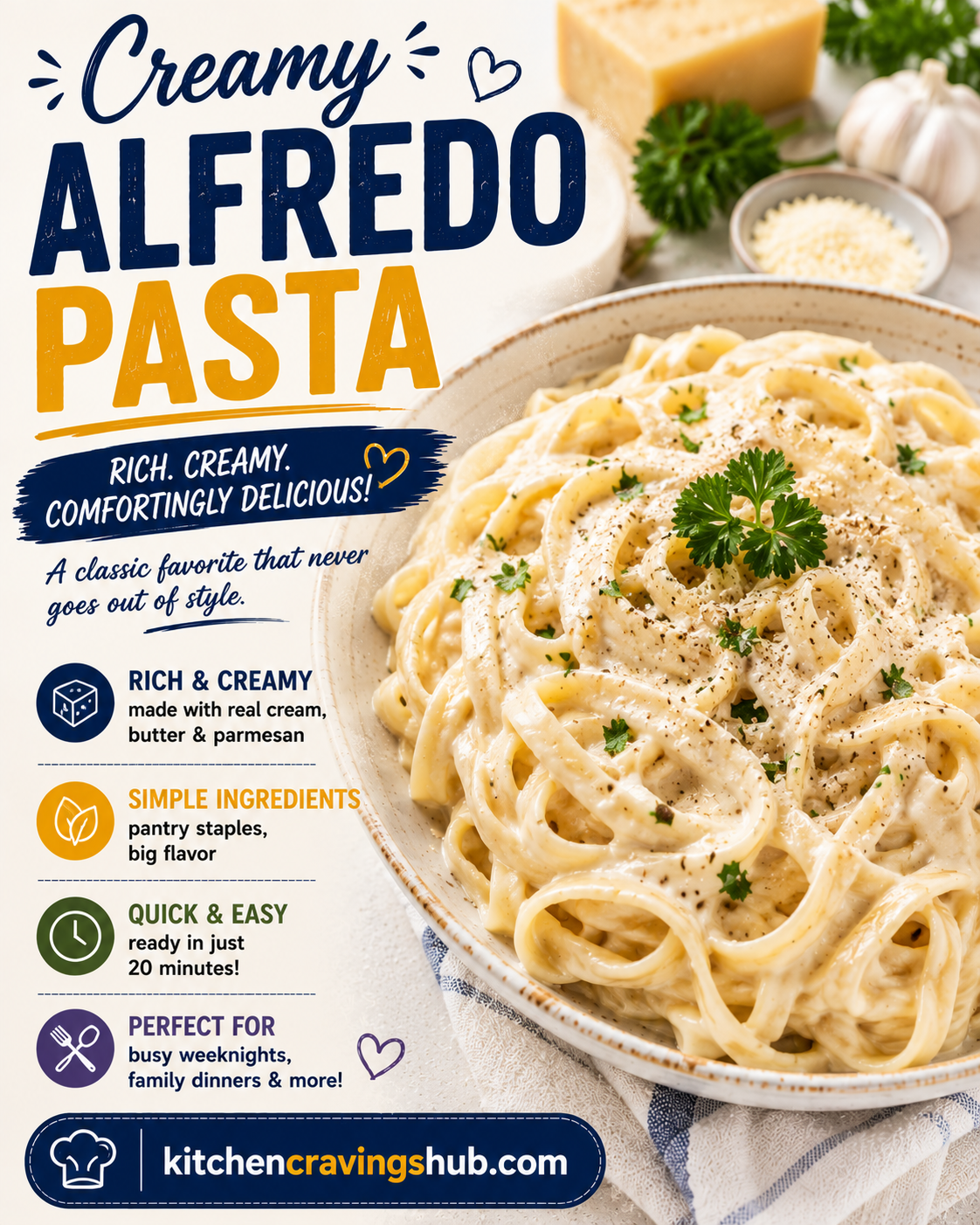
There’s a reason fettuccine alfredo has remained one of the most beloved pasta dishes for generations. 🥛 That rich, velvety, buttery sauce clinging to every strand of pasta is pure comfort food magic, and the best part is, you don’t need a restaurant to enjoy a truly incredible version. Made with just a handful of simple ingredients, homemade alfredo pasta comes together in about twenty minutes and tastes far better than anything from a jarred sauce.
Below you’ll find everything you need to make silky, restaurant quality alfredo pasta at home, including step by step instructions, my favorite tips for a smooth, never grainy sauce, fun variations to try, storage advice, and answers to the most common questions people ask about this creamy classic. Let’s get whisking. 🧀✨
🥛 What Is Alfredo Sauce?
Alfredo sauce is a rich, creamy pasta sauce made primarily from butter, heavy cream, and Parmesan cheese, traditionally tossed with fettuccine noodles, though it pairs beautifully with almost any pasta shape. It originated in Rome in the early twentieth century, created by a restaurateur named Alfredo di Lelio, who famously tossed pasta with butter and Parmesan tableside for his wife after the birth of their son.
While the original version relied simply on butter and cheese to create its creamy texture, most modern American versions, including this one, add heavy cream to the mix, resulting in an even more luxurious, velvety sauce. The key to a truly great alfredo lies in using good quality cheese, real butter, and a gentle hand with the heat to avoid a grainy or broken sauce. 🧀
💛 Why You’ll Love This Recipe
- Ready in about twenty minutes. This is a quick, weeknight friendly dish that still feels indulgent.
- Only a handful of ingredients. Butter, cream, garlic, and Parmesan are really all you need for that classic flavor.
- Far better than jarred sauce. Homemade alfredo has a freshness and richness that store bought versions simply can’t match.
- Comforting and satisfying. A true crowd pleasing dish that both kids and adults love.
- Easily customizable. A wonderful base recipe for adding chicken, shrimp, or vegetables.
🧀 Ingredients You’ll Need
For the pasta:
- 1 pound fettuccine noodles (or your preferred pasta shape)
- Salt, for the pasta water
For the alfredo sauce:
- 1/2 cup unsalted butter
- 3 cloves garlic, minced
- 2 cups heavy cream
- 2 cups freshly grated Parmesan cheese, plus more for serving
- 1/4 teaspoon ground nutmeg (optional, for warmth)
- Salt and black pepper, to taste
- A handful of fresh parsley, chopped, for garnish
👩🍳 How to Make Alfredo Pasta
Step 1: Bring your pasta water to a boil. Fill a large pot with water and bring it to a rolling boil. Salt the water generously, since this is your best opportunity to season the pasta itself.
Step 2: Cook the pasta. Add the fettuccine to the boiling water and cook according to the package instructions until al dente, usually about ten to twelve minutes, stirring occasionally to prevent sticking.
Step 3: Reserve pasta water. Just before draining, scoop out about a cup of the starchy pasta water and set it aside. This will help thin and bind your sauce later if needed.
Step 4: Melt the butter. While the pasta cooks, melt the butter in a large skillet or saucepan over medium low heat.
Step 5: Sauté the garlic. Add the minced garlic to the melted butter and cook for about thirty seconds to a minute, just until fragrant. Be careful not to let it brown, since burnt garlic can turn bitter.
Step 6: Add the cream. Pour in the heavy cream, stirring to combine with the butter and garlic. Bring the mixture to a gentle simmer, then reduce the heat to low.
Step 7: Whisk in the Parmesan. Gradually add the grated Parmesan cheese in small handfuls, whisking constantly after each addition until fully melted and smooth before adding more. This slow, steady approach helps prevent the sauce from clumping or turning grainy.
Step 8: Season the sauce. Stir in the nutmeg if using, along with salt and black pepper to taste. Let the sauce simmer gently for another two to three minutes, until slightly thickened.
Step 9: Combine the pasta and sauce. Drain the pasta and add it directly to the skillet with the alfredo sauce, tossing everything together until every strand is well coated. If the sauce feels too thick, add a splash of the reserved pasta water until you reach a silky, pourable consistency.
Step 10: Serve immediately. Divide the pasta among bowls, top with extra grated Parmesan and a sprinkle of fresh parsley, and serve right away while the sauce is warm and glossy. 🧀
🥄 Tips for the Best Alfredo Sauce
- Use freshly grated Parmesan. Pre shredded, bagged cheese contains anti caking agents that can prevent the sauce from becoming smooth and can lead to a grainy texture. Grating your own cheese makes a noticeable difference.
- Keep the heat low. Alfredo sauce is delicate, and high heat can cause the cream and cheese to separate or become grainy. Low and slow is the way to go.
- Add cheese gradually. Whisking in the Parmesan a little at a time, rather than dumping it all in at once, helps it melt smoothly into the sauce.
- Don’t skip the pasta water. A splash of that starchy water can rescue a sauce that’s become too thick, helping it cling beautifully to the noodles.
- Serve right away. Alfredo sauce is best enjoyed immediately after making, since it can thicken significantly as it sits and cools.
🌈 Fun Variations to Try
Chicken Alfredo 🍗 Add sliced, cooked chicken breast to the finished dish for a heartier, protein packed meal that’s always a crowd favorite.
Shrimp Alfredo 🍤 Toss in sautéed shrimp just before combining the pasta and sauce for a light, seafood forward twist on the classic.
Broccoli Alfredo 🥦 Fold in steamed broccoli florets for a pop of color, added nutrition, and a lovely contrast to the rich, creamy sauce.
Cajun Alfredo 🌶️ Season the chicken or shrimp with Cajun spice blend before adding it to the dish for a bold, slightly spicy Southern inspired twist.
Garlic Bread Alfredo Bake 🍞 Transfer the finished pasta to a baking dish, top with extra mozzarella, and bake at 375 degrees Fahrenheit for about fifteen minutes until bubbly and golden, then serve alongside garlic bread for the ultimate comfort meal.
🧊 How to Store Alfredo Pasta
Cream based sauces can be a little finicky when it comes to storage and reheating, but with the right approach, leftovers can still taste wonderful.
- Refrigerator: Store leftover alfredo pasta in an airtight container in the fridge for up to three days.
- Freezer: Freezing is generally not recommended for cream based alfredo sauce, since dairy sauces tend to separate and become grainy once thawed. If you do choose to freeze it, expect some texture changes upon reheating.
- Reheating: Reheat gently on the stovetop over low heat, adding a splash of milk or cream and stirring frequently to bring the sauce back to a smooth, silky consistency. Avoid microwaving on high power, since it can cause the sauce to separate.
- Serving tip: If the sauce seems to have thickened significantly in the fridge, a bit of extra warm cream or milk while reheating will help loosen it right back up.
🧀 Perfect Occasions for Alfredo Pasta
This rich, comforting dish is perfect for all kinds of meals and gatherings:
- Cozy weeknight family dinners 🏠
- Date night at home with a bottle of wine 🍷
- Special occasion dinners without the restaurant price tag 🎉
- Comfort food cravings on a cold or rainy day 🌧️
- A crowd pleasing dish for potlucks and family gatherings 👨👩👧👦
Its rich, indulgent flavor makes it feel like a special treat, even though it comes together with surprisingly simple ingredients and steps.
❓ Frequently Asked Questions About Alfredo Pasta
Why did my alfredo sauce turn grainy? This usually happens from cooking the sauce over too high heat, or from using pre shredded cheese with anti caking agents. Keep the heat low, add freshly grated cheese gradually, and whisk constantly for the smoothest results.
Can I make alfredo sauce ahead of time? Alfredo sauce is best made fresh and served immediately, since it thickens considerably as it cools and can be tricky to reheat without some texture changes. If needed, it can be made an hour or two ahead and gently rewarmed with a splash of cream.
What pasta shape works best with alfredo sauce? Fettuccine is the traditional choice, since its wide, flat shape holds onto the creamy sauce beautifully, though penne, linguine, and even short pasta shapes like rotini also work wonderfully.
Can I make a lighter version of alfredo sauce? Yes, you can substitute half and half or whole milk for some or all of the heavy cream, though the sauce will be noticeably thinner and less rich. A cornstarch slurry can help thicken a lighter version if needed.
Why is my sauce too thin? This can happen if the sauce hasn’t simmered long enough to reduce slightly, or if too much pasta water was added. Let the sauce simmer a bit longer over low heat to thicken, whisking frequently.
Can I add vegetables to this dish? Absolutely. Broccoli, peas, spinach, mushrooms, and sun dried tomatoes are all popular additions that pair beautifully with the rich, creamy sauce.
🧀 Final Thoughts
Alfredo pasta is proof that a handful of simple, high quality ingredients can come together to create something truly indulgent and comforting. With its rich, velvety sauce made from real butter, cream, and freshly grated Parmesan, this classic dish delivers restaurant quality flavor in about twenty minutes, right from your own kitchen. Whether you’re keeping it classic or dressing it up with chicken, shrimp, or vegetables, this is a recipe you’ll find yourself returning to again and again. 🥛✨
Give this recipe a try tonight, and enjoy every rich, creamy, comforting bite. Happy cooking! 🧀🎉